 Save
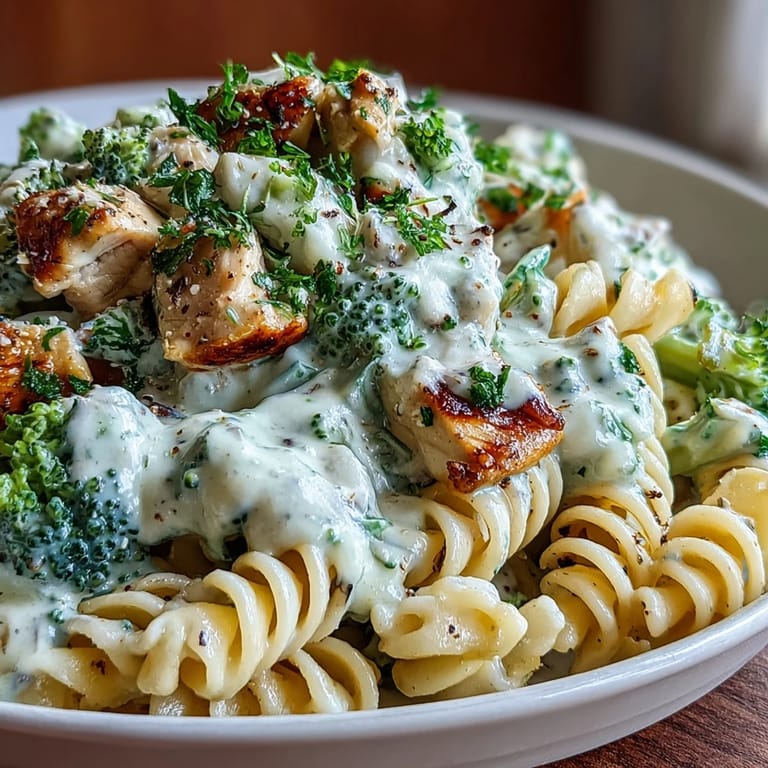
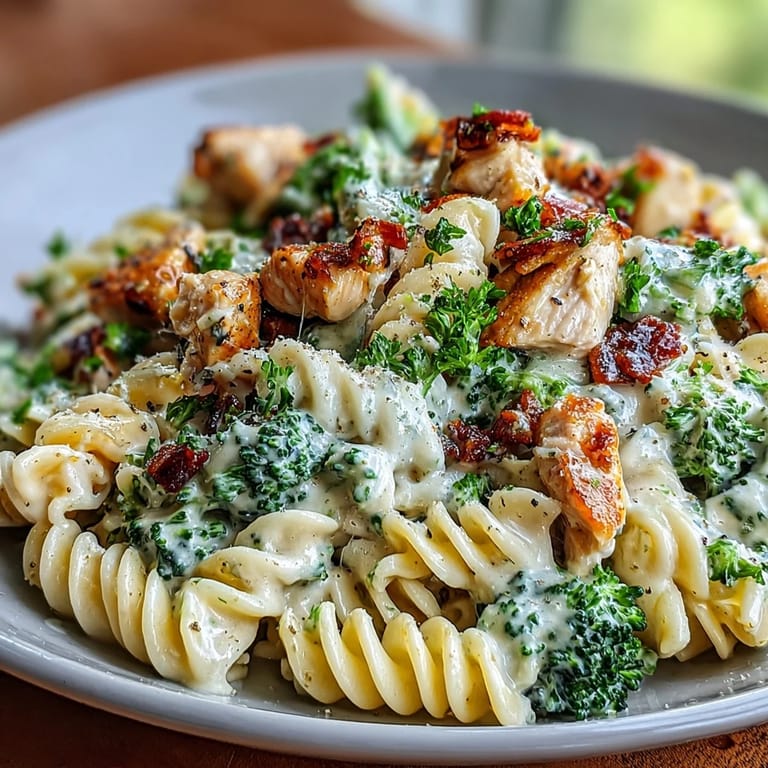
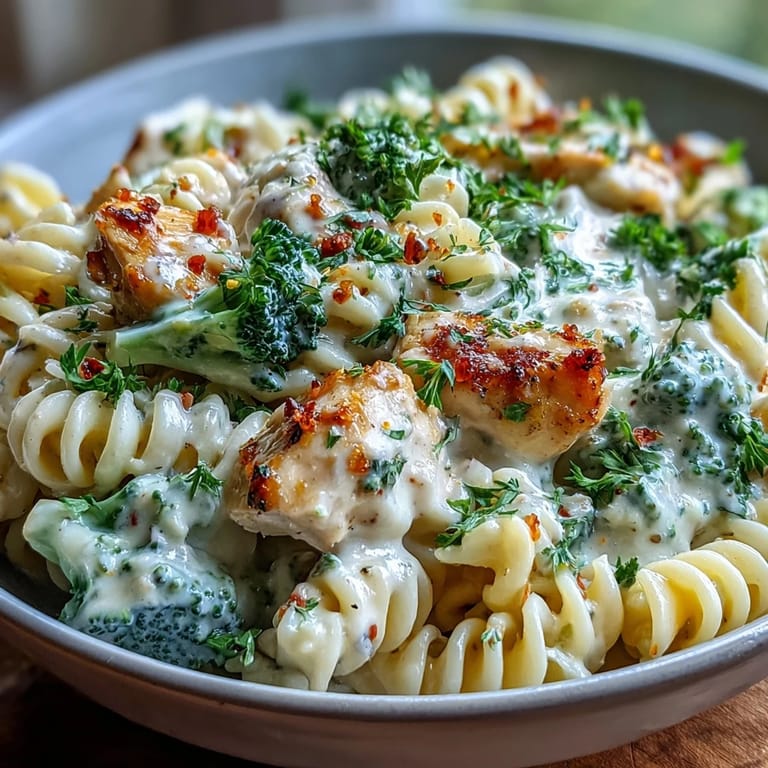
Save There was a Tuesday night when my partner came home exhausted, and I had exactly thirty-five minutes to turn kitchen basics into something that felt restaurant-worthy. That's when this garlic Parmesan broccoli and chicken pasta happened—a one-skillet miracle that somehow tastes like it simmered for hours but actually comes together faster than delivery. The creamy sauce coats every strand and piece of broccoli with this garlicky richness that reminds you why simple ingredients in the right proportions feel like magic. Since that night, it's become my emergency dinner, my weeknight anchor, the thing I make when I need to prove to myself that good food doesn't require complexity.
I made this for a friend who'd just moved and had almost nothing in her kitchen except a skillet and determination. She stood there watching the pasta soften in the simmering broth, and I watched her face shift—that quiet moment when you realize something delicious is actually happening. By the time we garnished it with fresh parsley and extra Parmesan, she'd already asked for the recipe. Now she texts me pictures of her versions with different vegetables, and somehow that feels like the whole point.
Ingredients
- Boneless, skinless chicken breasts: Dice them into roughly half-inch pieces so they cook quickly and evenly without turning rubbery—I learned this by making them too big the first time.
- Broccoli florets: Cut them smaller than you think you need to so they cook through in the final minutes and stay bright green instead of turning into mush.
- Garlic, minced: Fresh garlic is non-negotiable here; it's the entire backbone of why this tastes like comfort, and the smell when it hits the hot pan sets the tone for everything that follows.
- Yellow onion: Finely chop it so it disappears into the sauce and adds sweetness rather than texture you can identify.
- Short pasta: Penne, fusilli, or rotini all work beautifully because their shapes catch and hold the sauce; avoid spaghetti here because you need that grip.
- Whole milk and heavy cream: The combination of both is crucial—milk alone feels thin, cream alone feels heavy, but together they create that restaurant-quality silkiness.
- Parmesan cheese, grated: Always grate it fresh if you can; the pre-shredded stuff contains anti-caking agents that prevent the sauce from melting smoothly into itself.
- Unsalted butter: It combines with the olive oil to build a flavor base that's deeper than oil alone could achieve.
- Chicken broth: Low-sodium lets you control the salt and keeps the sauce from tasting aggressively salty the way a regular-sodium broth can.
- Dried Italian herbs: They add earthiness without requiring fresh herbs if you don't have them, though fresh parsley for garnish still makes a visible difference.
Tired of Takeout? 🥡
Get 10 meals you can make faster than delivery arrives. Seriously.
One email. No spam. Unsubscribe anytime.
Instructions
- Build your flavor base with chicken:
- Heat olive oil and butter together in your large skillet over medium heat—let them get warm and fragrant before adding the diced chicken. Season it generously with salt and pepper, then let it sit undisturbed for a moment before stirring, giving it a chance to develop color and that slight crust that means flavor, not just cooked-through meat.
- Wake up the aromatics:
- Once the chicken is golden, pull it out onto a plate and add your finely chopped onion to the same skillet. Stir it for about two minutes until it softens and turns translucent, then add the minced garlic and let it cook for just thirty seconds—any longer and garlic turns bitter instead of sweet and mellow.
- Cook pasta directly in the sauce:
- Pour in your uncooked pasta, chicken broth, milk, and Italian herbs all at once. Bring it to a boil—you'll hear it before you see it bubbling—then reduce to a simmer, cover with a lid, and let it cook for eight minutes, stirring occasionally so the pasta doesn't stick to the bottom.
- Add broccoli and finish cooking:
- Scatter your broccoli florets across the top, cover again, and simmer for another five to six minutes until the pasta is tender but still has a slight bite and the broccoli has turned a vivid bright green. You'll know it's right when a piece of pasta breaks easily between your teeth.
- Create the creamy finish:
- Lower the heat to low, then pour in your heavy cream and sprinkle the Parmesan cheese over everything. Stir slowly and gently until the cheese melts completely and the sauce becomes silky and clings to the pasta. Return your cooked chicken to the skillet and stir for a couple of minutes to heat it through without cooking it further.
- Taste and adjust:
- Season with additional salt and pepper if needed—remember that you've got salty elements like the broth and Parmesan already contributing. Serve it into bowls, top with fresh chopped parsley and extra Parmesan, and eat it while the steam is still rising.
 Save
Save There's something about serving a bowlful of creamy, garlicky pasta that has this quiet power to make people pause mid-conversation and just focus on eating. My family calls this "the fancy pasta" even though it takes less time than ordering takeout, and I love that contradiction. It's become the thing I reach for when someone needs feeding and feeling cared for isn't optional—when the ordinary minutes of an ordinary dinner need to become something worth remembering.
Shortcuts and Swaps That Actually Work
Rotisserie chicken shaves minutes off prep time and honestly tastes wonderful in this—just shred it instead of dicing it and add it at the very end so you're just warming it rather than cooking it twice. Frozen broccoli florets work just as well as fresh and sometimes actually cook more evenly, though fresh broccoli does have that superior bright green color that makes the bowl look more intentional. I've made this with spinach, peas, mushrooms, even asparagus depending on what's in the refrigerator, and the sauce is forgiving enough to embrace whatever vegetable you choose. The only swap I'd caution against is the pasta shape—stick with something that catches sauce rather than something smooth like spaghetti that just lets it slide right off.
Why This Works as a One-Skillet Dinner
Cooking uncooked pasta directly in the liquid is a technique that sounds risky until you do it and realize it's actually genius—the pasta releases starch as it cooks, which helps thicken the sauce naturally while also saving you from having to drain boiling water. The whole method relies on the idea that the skillet is deep enough and the lid traps steam so everything cooks evenly without drying out. By the time you add the broccoli, the pasta is almost done and the sauce is already building, so you're not starting from scratch with each ingredient. This is the kind of recipe that works because it's designed to work, not because you got lucky.
Pairing and Serving Suggestions
Pour yourself a crisp white wine like Pinot Grigio—the acidity cuts through the richness of the cream sauce and makes you feel like you're having an actual meal instead of just filling your stomach. A simple green salad with lemon vinaigrette alongside the pasta adds brightness and helps with digestion after something this creamy. Serve it immediately in warmed bowls because this pasta is best when it's still hot and the sauce hasn't started to set, and the garnish of fresh parsley and extra Parmesan is not optional—it adds color, freshness, and a textural contrast that makes the difference between good and memorable.
 Save
Save This recipe lives in that sweet spot where it feels fancy enough to impress people but casual enough that you can make it on a random Tuesday without anxiety. It's become one of those meals I don't have to think about anymore—my hands just know the motions, my nose knows when the garlic is right, and somehow that familiarity is exactly when good food starts to taste like home.
Recipe FAQ Section
- → Can I use pre-cooked chicken?
Absolutely. Rotisserie chicken or leftover cooked chicken works perfectly. Add it during the final 2 minutes just to heat through, reducing the initial sauté step entirely.
- → What pasta shapes work best?
Short pasta with ridges or curves like penne, fusilli, and rotini capture the creamy sauce beautifully. Macaroni or gemelli also work well. Avoid long strands like spaghetti.
- → Can I make it dairy-free?
Substitute whole milk with unsweetened almond milk, replace heavy cream with full-fat coconut cream, and use nutritional yeast or vegan Parmesan alternative. The sauce will be slightly thinner but still flavorful.
- → How do I store leftovers?
Store in an airtight container in the refrigerator for up to 3 days. The pasta will absorb more sauce as it sits, so add a splash of milk or broth when reheating on the stove to restore creaminess.
- → Can I add other vegetables?
Yes. Spinach, peas, diced zucchini, or bell peppers work wonderfully. Add heartier vegetables like zucchini with the pasta during simmering; quick-cooking greens like spinach should be stirred in during the last 2 minutes.
- → Why cook pasta in the skillet?
Cooking pasta directly in the broth and milk allows the starch to release into the liquid, naturally thickening the sauce. This one-pot method also infuses the pasta with flavor from garlic and herbs as it absorbs the cooking liquid.