 Save
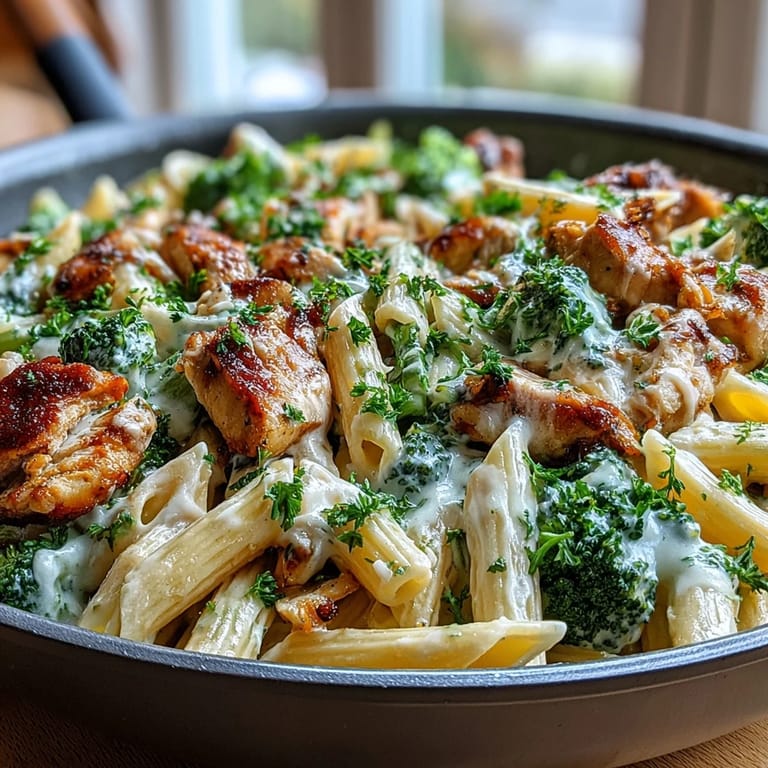
Save My neighbor stopped by one Tuesday evening asking if I had anything quick to throw together, and I remembered having chicken breasts and broccoli lingering in the fridge. What emerged from that skillet was pure comfort—tender chicken and bright green florets swimming in a silky garlic Parmesan sauce that clung to every piece of pasta. She asked for the recipe before she'd even finished her first bite, and I realized this dish had quietly become one of those meals that just works, every single time.
I made this for my family on a random weeknight when everyone was tired and hungry, and my youngest asked if we could have it again next week. That simple request told me everything—this wasn't a dish trying too hard or packed with trendy ingredients, just honest, filling food that makes people happy.
Ingredients
- Boneless, skinless chicken breasts (400 g): Cutting them into bite-size pieces means they cook evenly and stay tender, plus they nestle nicely into each forkful with the pasta.
- Penne, rigatoni, or rotini (300 g): Choose a shape with ridges or tubes because they trap the sauce beautifully—avoid tiny shapes that disappear.
- Small broccoli florets (2 cups): Keep them small so they soften just enough without turning mushy, and they distribute evenly throughout the dish.
- Garlic (3 cloves, minced): Don't skip the mincing step; garlic needs surface area to release its aroma into the cream, and pre-minced cloves taste flat by comparison.
- Onion (1 small, finely chopped): This becomes almost invisible as it sweetens the sauce and adds body without announcing itself.
- Heavy cream (240 ml): This is what gives the sauce its luxurious texture; don't substitute with half-and-half or it'll break apart.
- Freshly grated Parmesan (100 g): Grate it yourself from a wedge if you can—pre-shredded cheese contains anti-caking agents that make the sauce grainy instead of smooth.
- Unsalted butter (30 g): This is your fat for searing the chicken and building flavor; salted butter makes it hard to control the salt level.
- Milk (120 ml): This tempers the richness of the cream and keeps the sauce from coating your mouth too heavily.
- Low-sodium chicken broth (480 ml): The pasta will drink this up, so quality matters—homemade broth makes an enormous difference if you have it.
- Salt and black pepper: Taste as you go because the cheese will add saltiness later, so hold back at the beginning.
- Crushed red pepper flakes (optional): Just a pinch adds a gentle warmth that makes people say the flavor tastes more interesting without being spicy.
- Dried Italian herb blend (optional): This ties everything together and prevents the dish from tasting one-dimensional.
- Fresh parsley for garnish: A handful of bright green parsley at the end makes it look intentional and adds a fresh note that cuts through the richness.
Tired of Takeout? 🥡
Get 10 meals you can make faster than delivery arrives. Seriously.
One email. No spam. Unsubscribe anytime.
Instructions
- Sear the chicken:
- Heat butter in your large skillet over medium heat until it foams slightly, then add the chicken pieces. Let them sit for a moment before stirring so they develop a golden crust, about four to five minutes total. They won't be fully cooked yet, which is exactly right because they'll finish cooking in the cream sauce.
- Build the flavor base:
- Using the same skillet with all those browned chicken bits stuck to the bottom, add the chopped onion and minced garlic. You'll smell them transform within two minutes as they soften and release their sweetness. The sizzle tells you they're ready for the next step.
- Create the sauce:
- Pour in the chicken broth, milk, and heavy cream all at once, stirring gently to combine. Bring it to a gentle simmer—you want a soft bubble breaking the surface, not a rolling boil, because high heat can make cream separate.
- Cook the pasta and broccoli together:
- Add the dry pasta and broccoli florets directly to the simmering sauce, stirring everything together. Cover the skillet and cook over medium-low heat for ten to twelve minutes, stirring occasionally so nothing sticks to the bottom. The pasta will soften as it drinks up the liquid, and the broccoli will turn bright and tender without falling apart.
- Finish with chicken and cheese:
- Return the browned chicken to the skillet along with the Parmesan cheese, Italian herbs, and red pepper flakes if you're using them. Stir everything together over low heat for one to two minutes until the cheese melts completely and the sauce becomes silky and creamy.
- Taste and adjust:
- This is crucial—taste it before serving and add salt and pepper as needed. Everyone's broth is slightly different saltiness, so your palate is the real judge here.
- Plate and garnish:
- Serve immediately while everything is hot, topping each bowl with fresh chopped parsley and extra Parmesan if desired. The green parsley against the creamy sauce is not just pretty—it tastes better too.
 Save
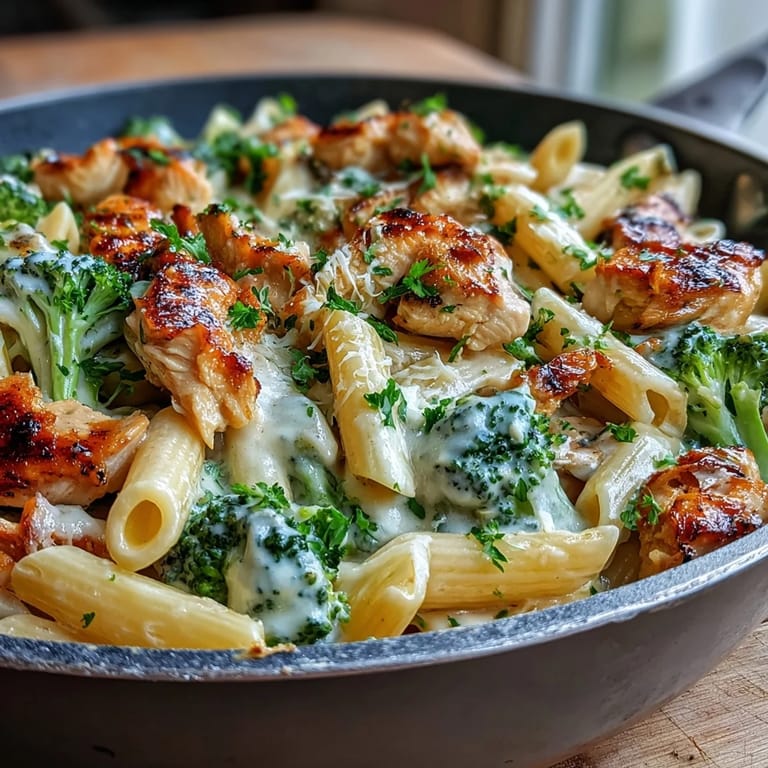
Save My mom called while I was eating leftovers the next day, and I found myself describing the sauce so vividly that she asked me to email her the recipe immediately. That moment made me realize this isn't fancy cooking or experimental—it's the kind of dish that satisfies something real, and those are the ones people actually return to.
Why This Skillet Method Works
Cooking everything in one pan means the pasta water mixes with the broth and cream, creating a sauce that's part starch-thickened, part dairy rich. You're not just coating finished pasta with a separate sauce; you're building flavor in layers as the chicken releases its juices, the garlic perfumes the cream, and the pasta releases its starch to bind everything together. The bottom of the skillet develops those golden-brown bits from the chicken, and the liquid deglazes them naturally, adding depth that you can't replicate if you cook components separately.
Making It Your Own
I've made this dish at least a dozen different ways depending on what's in the kitchen. Sometimes I add a squeeze of fresh lemon juice right before serving, which brightens everything and prevents it from feeling too heavy. Other times I use rotisserie chicken when I'm exhausted, which saves ten minutes and works beautifully. One friend uses gluten-free pasta and swears no one can tell the difference, while another made it vegetarian with vegetable broth and extra mushrooms sautéed with the onions and garlic.
Timing and Temperature Tricks
The secret to creamy, not-broken sauce is keeping your heat at medium or below once the cream goes in. I learned this the hard way when I got impatient and turned the heat up, watching my beautiful sauce separate into greasy puddles—now I'm patient and let the heat do gentle work instead of aggressive work. Watch for soft bubbles breaking the surface rather than an aggressive boil, and if you're ever unsure whether it's done, remember that slightly undercooked pasta will continue cooking in the residual heat as it sits.
- If the pasta finishes before most of the liquid is absorbed, remove the lid and increase heat to medium for a minute or two to evaporate excess liquid.
- Taste the pasta a minute before you think it's done—al dente means it should have a tiny bit of resistance when you bite it, not complete softness.
- Let the finished dish rest for one minute before serving because the sauce will thicken slightly as it cools just a touch.
 Save
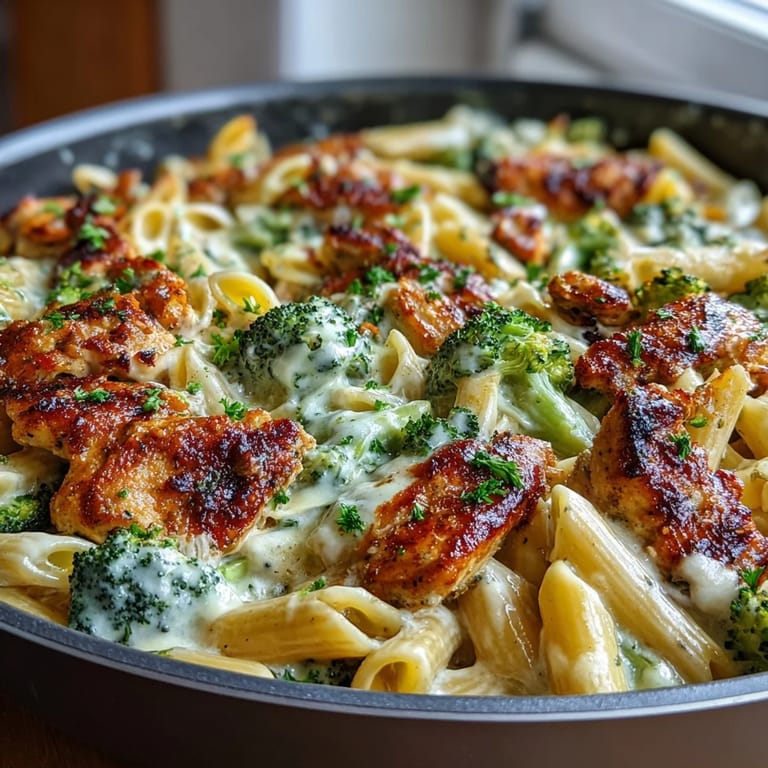
Save This is the kind of meal that lands on tables when people need comfort without fuss, when you want to cook something real but lack the energy for complexity. Every time I make it, someone asks for the recipe, and I know why—it tastes intentional and kind, which is honestly all good food needs to be.
Recipe FAQ Section
- → Can I use rotisserie chicken instead of raw chicken breasts?
Yes, rotisserie chicken works beautifully. Simply skip the initial chicken cooking step and add shredded rotisserie chicken when you return the protein to the skillet in step 5. This reduces total cooking time by about 5 minutes.
- → What pasta shapes work best for this dish?
Penne, rigatoni, and rotini are ideal because their shapes and ridges capture the creamy Parmesan sauce well. Short pasta with texture helps the sauce cling to every bite, though other short shapes like fusilli or gemelli would also work nicely.
- → Can I make this gluten-free?
Absolutely. Substitute your favorite gluten-free pasta for the wheat pasta and ensure all other ingredients, particularly seasonings and broth, are certified gluten-free. The cooking time may vary slightly depending on the pasta brand.
- → How do I store and reheat leftovers?
Store in an airtight container in the refrigerator for up to 4 days. Reheat gently in a skillet over medium-low heat, adding a splash of broth or milk to restore the creamy consistency. Avoid microwaving on high, which can cause the sauce to separate.
- → Can I add other vegetables to this skillet?
Certainly. Spinach, cherry tomatoes, or bell peppers complement the flavors well. Add delicate vegetables like spinach in the last 2-3 minutes of cooking, while heartier vegetables like bell peppers can be sautéed with the onions and garlic.
- → Why is my sauce too thick or thin?
Sauce thickness depends on pasta absorption and cooking time. If too thick, add more broth or milk a tablespoon at a time. If too thin, cook uncovered for a few more minutes until the sauce reduces and coats the pasta properly.