 Save
Save My neighbor brought over a lavender plant last spring, and I spent weeks staring at it, unsure what to do besides admire the purple spikes. Then one afternoon, the smell drifting through my kitchen window while I was baking made something click. That evening, I crushed a few buds into cake batter almost on impulse, and when the golden cake emerged from the oven, the kitchen smelled like a garden had become edible. Now whenever someone mentions floral desserts, this is the one I think of—delicate, never overpowering, just a whisper of something special.
I made this for my book club on a rainy March evening, and I remember one friend taking a bite and just closing her eyes for a second. She didn't say much, just asked for the recipe right then. That small moment—the quiet appreciation—is exactly why I keep coming back to this cake. It does what good food does best: it stops people mid-conversation.
Ingredients
- All-purpose flour (1 1/2 cups): The foundation that keeps the crumb tender and even, so don't skip weighing it if you have a scale.
- Baking powder (1 1/2 tsp): This gives you that gentle rise that makes the cake feel airy rather than dense.
- Fine sea salt (1/2 tsp): Salt in the batter might seem small, but it amplifies the honey and lavender flavors in ways you'll notice immediately.
- Dried culinary lavender buds (1 tbsp): Make absolutely sure these are food-grade, not ornamental, and store them in a cool, dark place so they don't lose their delicate scent.
- Unsalted butter (1/2 cup): Room temperature is non-negotiable here because cold butter won't cream properly and you'll lose that light, fluffy texture.
- Granulated sugar (3/4 cup): This sweetens the cake while the honey adds moisture and a subtle depth that regular sugar alone can't provide.
- Eggs (2 large): Room temperature eggs blend more smoothly into the batter, creating a more cohesive crumb structure.
- Honey (1/3 cup for batter): This isn't just sweetness; it keeps the cake moist for days and adds a gentle floral undertone.
- Pure vanilla extract (1 tsp): Don't use imitation here because it will compete with the lavender instead of complementing it.
- Whole milk (2/3 cup): Room temperature milk prevents seizing and helps the batter come together smoothly.
- Honey for drizzle (1/3 cup): This is where you taste the honey directly, so choose one you actually enjoy eating straight.
- Unsalted butter for drizzle (1 tbsp): A small amount of butter makes the honey luxurious and easier to drizzle without running everywhere.
- Flaky sea salt (1/2 tsp): The finishing salt hits your tongue distinctly, creating that sweet-salty contrast that makes this cake memorable.
Tired of Takeout? 🥡
Get 10 meals you can make faster than delivery arrives. Seriously.
One email. No spam. Unsubscribe anytime.
Instructions
- Set your oven and prepare:
- Preheat to 350°F while you grease an 8-inch round pan and line the bottom with parchment paper. This small step prevents sticking and makes turning out the cake almost foolproof.
- Combine your dry ingredients:
- Mix flour, baking powder, salt, and lavender buds in a bowl, breaking up any clumps in the lavender so it distributes evenly. Set this aside and resist the urge to sift; gentle whisking works fine here.
- Cream butter and sugar:
- Beat your softened butter and sugar for about three minutes until the mixture is pale and fluffy, almost mousse-like. You'll notice the change in color and texture when you're done, which is your signal to move forward.
- Incorporate eggs one at a time:
- Add each egg slowly, beating well after each addition so they emulsify properly into the butter mixture. This prevents the batter from looking broken or curdled.
- Add honey and vanilla:
- Stir in the honey and vanilla extract until just combined, letting the honey swirl through the batter visibly. The batter should smell floral and sweet at this point, which means you're on track.
- Alternate wet and dry ingredients:
- Add the dry mixture in two additions, alternating with the milk, and start and end with dry ingredients. Mix just until combined after each addition, stopping the moment you see no white streaks of flour.
- Transfer and bake:
- Pour the batter into your prepared pan and smooth the top gently with an offset spatula. Bake for 28-32 minutes, watching for the moment when the top turns golden and a toothpick comes out clean.
- Cool the cake properly:
- Let it sit in the pan for ten minutes before turning it out onto a wire rack to cool completely, which usually takes about an hour. Rushing this step means the cake is still warm when you drizzle, so patience matters.
- Make the salted honey drizzle:
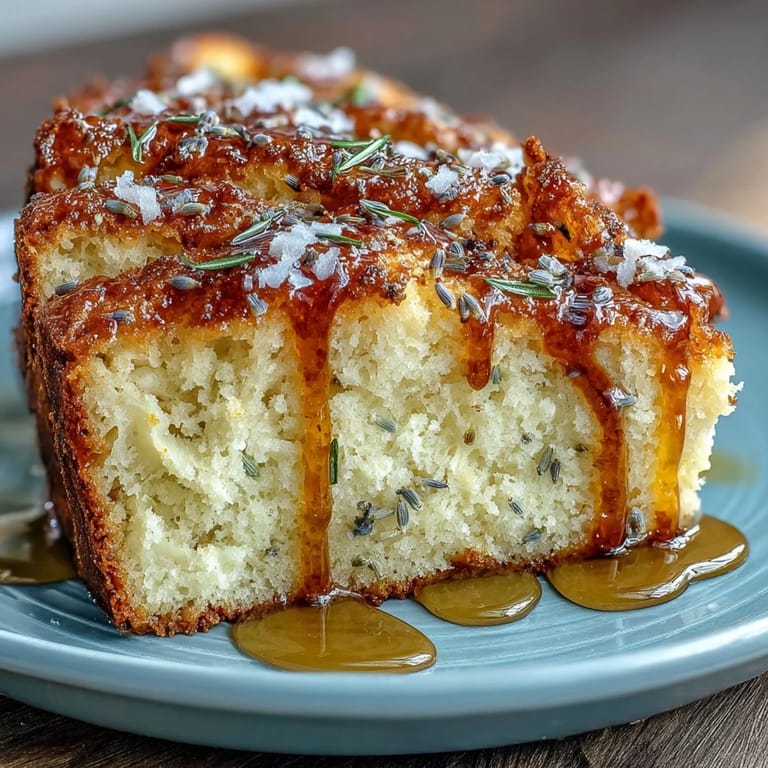
- Combine honey and butter in a small saucepan over low heat, stirring gently until the butter melts and everything is smooth and glossy. Remove from heat, stir in the flaky sea salt, and let it cool for just a minute so it's pourable but not scorching.
- Finish and serve:
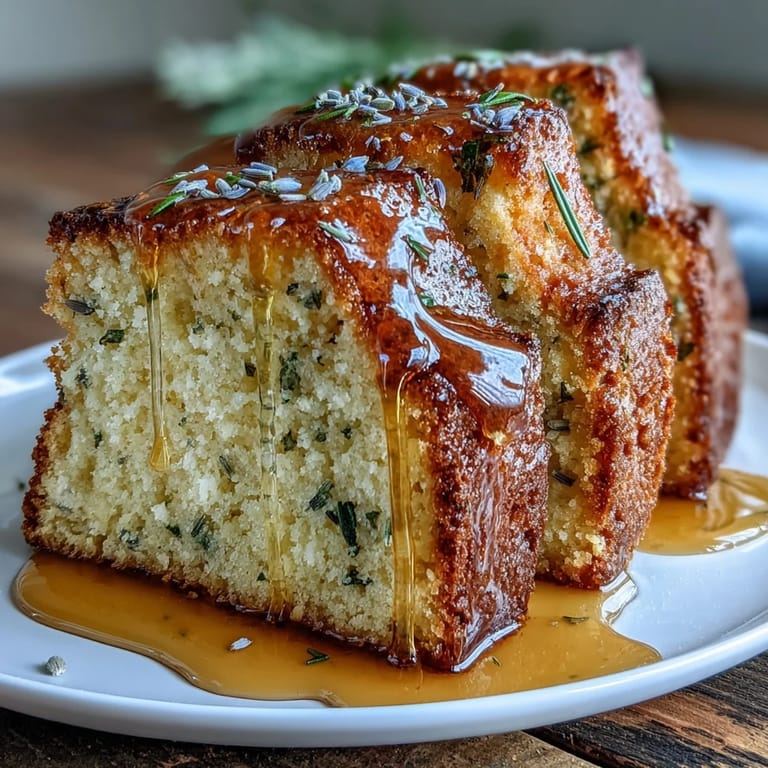
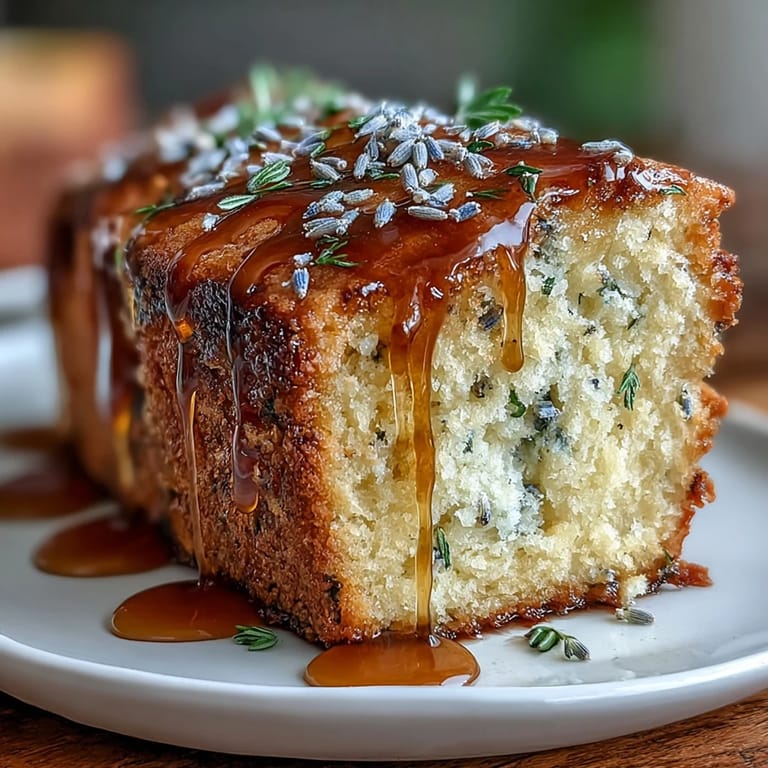
- Once the cake has cooled completely, drizzle the salted honey mixture over the top in whatever pattern feels right. Let it set for ten minutes, which gives the honey time to firm up slightly without hardening completely.
 Save
Save Last spring, my daughter decorated this cake with extra lavender buds and served it to her friends at an impromptu garden party. Watching them genuinely excited about a homemade cake—not just being polite—reminded me why I bake in the first place. This cake has a way of making ordinary afternoons feel like occasions.
The Lavender Question
People often worry that lavender will taste like their grandmother's perfume, but the amount here is gentle and the honey actually mellows it out. The key is using fresh culinary-grade buds and not over-crushing them, which releases too much of the volatile oils. I've learned that less is genuinely more with floral baking; you want people to pause and wonder what they're tasting, not immediately identify lavender.
Storage and Keeping
This cake stays moist for three days covered on the counter, thanks to the honey in the batter. The drizzle hardens slightly overnight but never becomes brittle, so you can slice it cleanly the next day without the topping cracking everywhere. If you need to keep it longer, wrap it well and refrigerate; it's excellent cold with tea or even warmed slightly in the microwave.
Variations and Pairing Ideas
This cake pairs beautifully with Earl Grey tea, which echoes the floral notes without clashing. You can also garnish the top with edible flowers like pansies or violas, or leave it simple with just the honey drizzle for an elegant, unfussy look. Some afternoons I dust the top with a tiny pinch of lavender sugar right after drizzling, but that's optional and honestly, the cake doesn't need it.
- For an extra touch, top with a dollop of whipped cream infused with a whisper of vanilla.
- A light lemon zest on top brightens the floral notes without competing with them.
- Serve slightly warm with a scoop of honey vanilla ice cream for a dessert that feels indulgent but tastes light.
 Save
Save This cake has become my go-to when I want to give someone something homemade that feels special without being complicated. It's the kind of recipe that teaches you that sometimes the simplest cakes are the ones people actually want to eat.
Recipe FAQ Section
- → How does the lavender flavor develop in the cake?
Lavender buds are mixed into the dry ingredients, allowing their floral oils to infuse the batter gently during baking, creating a subtle aromatic profile.
- → What is the purpose of the salted honey drizzle?
The drizzle adds a luscious, sweet-savory finish that complements the floral cake, enhancing flavors while providing a glossy, attractive topping.
- → Can I use fresh lavender instead of dried buds?
Fresh lavender can be used sparingly, but dried culinary lavender buds are preferred for a more controlled and consistent flavor infusion.
- → What texture should the cake have after baking?
The cake should be light and airy, with a moist crumb that holds the floral notes and pairs well with the smooth honey drizzle.
- → How can I enhance the lavender aroma?
Gently crushing dried lavender buds before adding them releases more essential oils, intensifying the floral aroma throughout the cake.