 Save
Save The first time I made a passionfruit tart, I was standing in my kitchen on a humid summer afternoon, holding a wrinkled passionfruit in my palm and wondering if I was brave enough to attempt something so elegantly French. My neighbor had just returned from Provence and wouldn't stop talking about these tarts, and somehow that quiet challenge stuck with me. When I finally cracked into that golden curd and tasted the bright, almost electric tartness balanced against buttery pastry, I understood why she'd been so enchanted. Now, whenever I see passionfruit at the market, my hands reach for them before my mind catches up.
I made this for my sister's engagement dinner, and watching her face when she took that first bite—the surprise, the delight—made every careful whisking motion worth it. She asked for the recipe immediately, and I remember thinking how food creates these small pockets of joy that people remember. Her wedding was two years ago, and she still texts me photos whenever she makes it for friends.
Ingredients
- All-purpose flour (1 1/4 cups): The foundation of your pastry; keep it cold because warmth is the enemy of flaky layers.
- Granulated sugar for pastry (1/4 cup): Adds subtle sweetness and helps with structure; don't skip this small amount.
- Salt (1/2 tsp): Cuts through richness and brings out the passionfruit's brightness later.
- Cold unsalted butter for pastry (1/2 cup): Cold is the operative word here; take it straight from the refrigerator and cube it just before using.
- Large egg yolk (1): Binds the dough together while keeping it tender.
- Ice water (2-3 tbsp): Use actual ice water, not room temperature, to maintain butter's crucial coldness.
- Passionfruit pulp (1/2 cup): Fresh or thawed frozen work equally well; strain the seeds unless you enjoy a textural surprise.
- Granulated sugar for curd (1/2 cup): Sweetens the filling while helping it set properly.
- Large eggs (2): Essential for the curd's velvety texture; room temperature eggs incorporate more smoothly.
- Large egg yolks (2): Extra yolks create that signature silky richness passionfruit tarts are known for.
- Unsalted butter for curd (1/4 cup): Added after cooking, this enriches the curd without breaking it.
- Lemon juice (1 tbsp): A quiet hero that amplifies passionfruit's tartness without adding obvious citrus flavor.
- Pinch of salt for curd: Like the pastry salt, this deepens complexity.
- Large egg whites (3): Room temperature whites whip to greater volume and glossy peaks.
- Granulated sugar for meringue (3/4 cup): Add gradually so it fully dissolves, creating a stable, shiny meringue.
- Cream of tartar (1/4 tsp): Stabilizes egg whites, giving you confidence that your meringue won't weep later.
- Vanilla extract (1/2 tsp): A whisper of warmth that complements passionfruit's tropical notes.
Tired of Takeout? 🥡
Get 10 meals you can make faster than delivery arrives. Seriously.
One email. No spam. Unsubscribe anytime.
Instructions
- Set Your Oven and Prep the Pan:
- Preheat to 350°F and grease your 9-inch tart pan; this prevents the pastry from sticking and ensures even browning.
- Mix the Pastry Dough:
- Combine flour, sugar, and salt, then add cold butter and work it with your fingertips until the texture resembles breadcrumbs with some pea-sized pieces remaining. Add the egg yolk and ice water gradually, mixing just until the dough holds together without becoming wet; overworking it creates tough pastry instead of flaky layers.
- Line and Chill:
- Press the dough into the tart pan, trim the edges, and refrigerate for 15 minutes while you preheat the oven. This resting period allows the gluten to relax and helps prevent shrinkage during baking.
- Blind Bake the Shell:
- Line the chilled crust with parchment and fill with pie weights or dried beans, then bake for 15 minutes to set the sides. Remove the weights and parchment, bake another 8-10 minutes until the bottom is golden and dry, then cool completely on the counter.
- Create the Passionfruit Curd:
- Whisk together passionfruit pulp, sugar, whole eggs, egg yolks, lemon juice, and salt in a saucepan over medium-low heat, stirring constantly with a whisk to prevent the eggs from scrambling. After about 8 minutes, when the mixture coats the back of a spoon and you can draw a line through it without the line filling in, you'll know it's ready; remove from heat immediately and whisk in the butter until completely smooth.
- Fill and Chill:
- Pour the curd into your cooled tart shell, smooth the top gently, and refrigerate for at least an hour until it's set and cool enough for the meringue.
- Whip the Meringue:
- In a scrupulously clean bowl, beat room temperature egg whites with cream of tartar until soft peaks form, then gradually add sugar while continuing to beat until the mixture is stiff, glossy, and peaks hold their shape firmly. Fold in vanilla extract gently at the end.
- Top and Brown:
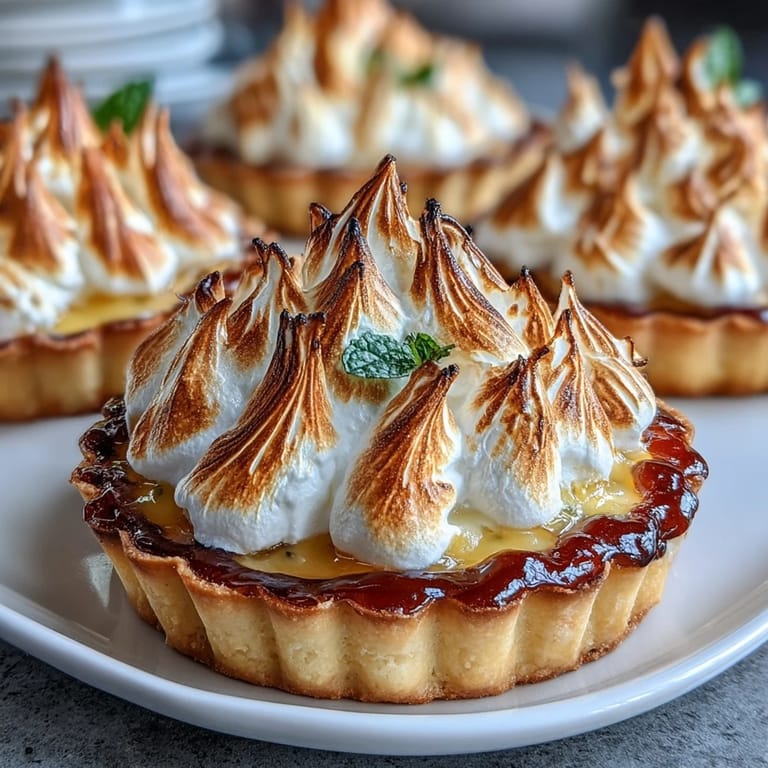
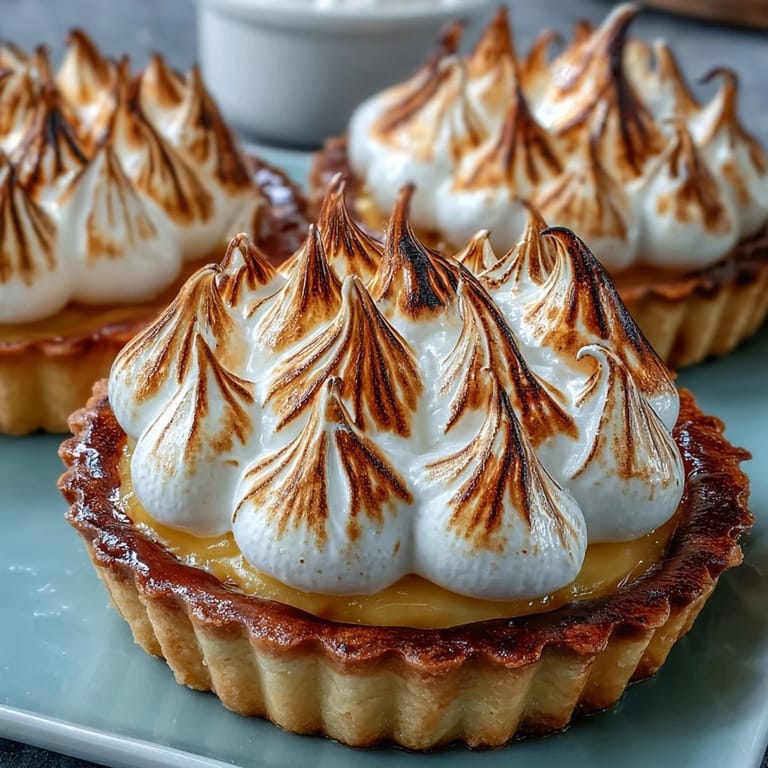
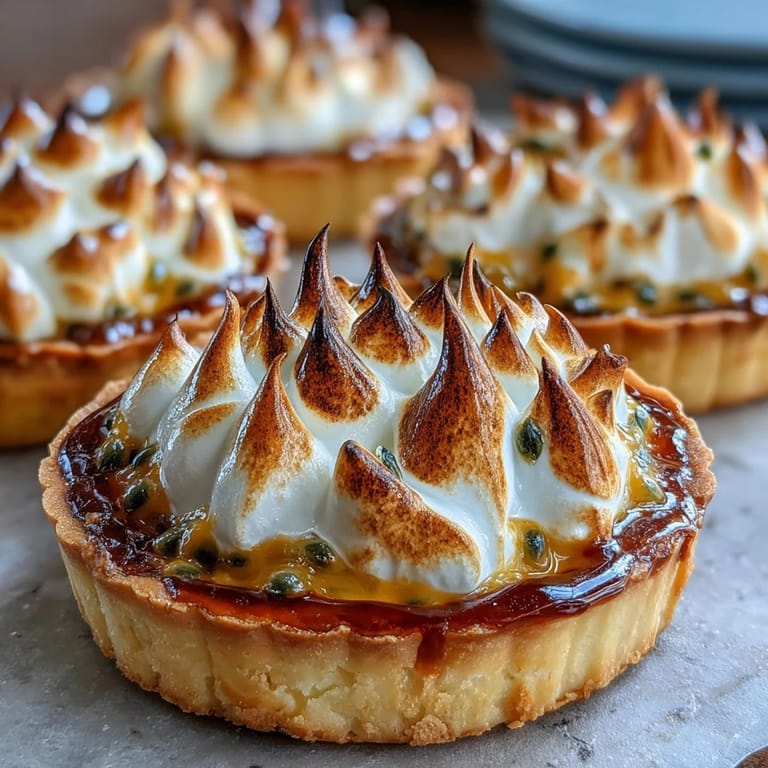
- Spread or pipe the meringue onto the chilled tart in decorative swirls, then use a kitchen torch or broiler to brown it quickly until the peaks turn golden brown. Watch constantly because this happens in seconds and burnt meringue tastes bitter.
- Final Chill and Serve:
- Refrigerate the finished tart for 30 minutes before slicing, which allows the meringue to set slightly and keeps your slices clean and defined.
 Save
Save There's a particular satisfaction in watching someone's fork cut through all three layers and seeing the layers stay intact instead of collapsing into each other. That moment when a spoon catches the meringue's crackle and releases the cloud inside—that's when you know the effort was absolutely worth it.
Mastering the Pastry Layer
The pastry is honestly where the magic happens, and it taught me patience in a way few things have. Cold butter matters more than any fancy technique; I learned this the hard way by using room temperature butter once and ending up with dense shortbread instead of flaky pastry. The key is working quickly and lightly, letting your fingertips rub the butter into flour without warming it up, which creates those tiny pockets of fat that steam during baking and create layers. If your kitchen is warm, chill your mixing bowl and even your flour beforehand.
Understanding the Curd's Behavior
Curd-making scared me the first time because I'd made scrambled eggs before and knew how easily eggs can go wrong over heat. The trick is keeping your heat at medium-low and whisking constantly; think of it as a gentle dance rather than aggressive cooking. The curd will look almost thin when it comes off the heat, with a slight shimmer on top, but it continues thickening as it cools because the eggs keep setting. I learned to trust this process after my second attempt, when I overcooked the curd trying to make it thicker immediately and ended up with something grainy and separated that no amount of whisking fixed.
Meringue Mastery and Timing
Meringue intimidates a lot of home bakers, but honestly it's mostly about cleanliness and temperature. Your bowl must be completely grease-free, your egg whites must be room temperature, and cream of tartar is your insurance policy against weeping. I've learned that adding sugar slowly while whipping creates a more stable, glossier meringue than dumping it all in at once. The browning step is where I focus all my attention now, using a kitchen torch because I can control exactly where the heat goes and stop the moment the peaks turn golden.
- Make sure your tart is completely cool before adding the meringue, or heat from below will cook the meringue unevenly.
- If you don't have a kitchen torch, a broiler works but watch it obsessively because it browns faster and less evenly.
- Serve this tart the same day you make it for the best texture, though the pastry and curd keep in the refrigerator for three days separately.
 Save
Save This tart taught me that desserts don't have to be complicated to be impressive, and that most of the magic comes from respecting individual techniques rather than rushing. Make this for someone you want to impress, and watch their eyes light up.
Recipe FAQ Section
- → How do I prevent the meringue from weeping?
Ensure the egg whites are at room temperature and beat them to stiff peaks. Gradually add sugar while beating. Brown the meringue quickly under a broiler or with a torch, then chill promptly to set.
- → Can I use frozen passionfruit pulp?
Yes, thaw frozen passionfruit pulp and strain out the seeds before using to maintain a smooth curd texture.
- → What’s the best way to get a crisp tart shell?
Chill the dough before baking, line it with parchment and weights for blind baking, and bake until golden. Removing weights halfway helps achieve even browning.
- → How can I make the curd smooth and silky?
Whisk constantly over medium-low heat until thickened and able to coat the back of a spoon. Removing from heat before adding butter prevents curd from breaking.
- → Is there a way to speed up the preparation?
Using store-bought tart dough can save time without compromising the overall flavor and texture of the tart.