 Save
Save There's something about roasting squash on a crisp autumn afternoon that makes the whole kitchen smell like caramel and possibility. I discovered miso paste's magic one evening when I was trying to deepen the flavor of what felt like a one-note soup, and that umami punch transformed something good into something I couldn't stop thinking about. Now whenever I make this silky butternut squash soup, I'm chasing that moment all over again, layering sweetness and savory depth until the bowl feels like a warm hug.
I made this for my sister on a day when she needed comfort more than conversation, and watching her take that first spoonful, eyes closing slightly, reminded me why cooking for people matters. She asked for the recipe that night, and now it's become our thing to make together when seasons change.
Ingredients
- Butternut squash (1 medium, about 2 lbs): Roasting concentrates its natural sweetness into deep caramel notes, and the cubes should be roughly uniform so they cook evenly and get those golden, slightly crispy edges.
- Yellow onion (1 medium): Dicing it finely helps it disappear into silkiness while building an aromatic foundation that carries the whole dish.
- Garlic and fresh ginger (2 cloves and 1-inch piece): These two wake up your palate and prevent the soup from tasting flat or one-dimensional.
- Low-sodium vegetable broth (4 cups): Low-sodium gives you control over the final seasoning, which matters when you're adding salty miso paste.
- White miso paste (2 tablespoons): This is the transformation agent—white or yellow miso stays subtle and slightly sweet, never overpowering, and dissolves beautifully into warm liquid.
- Olive oil (1 tablespoon total): Split between roasting and sautéing keeps everything light while still encouraging browning and flavor development.
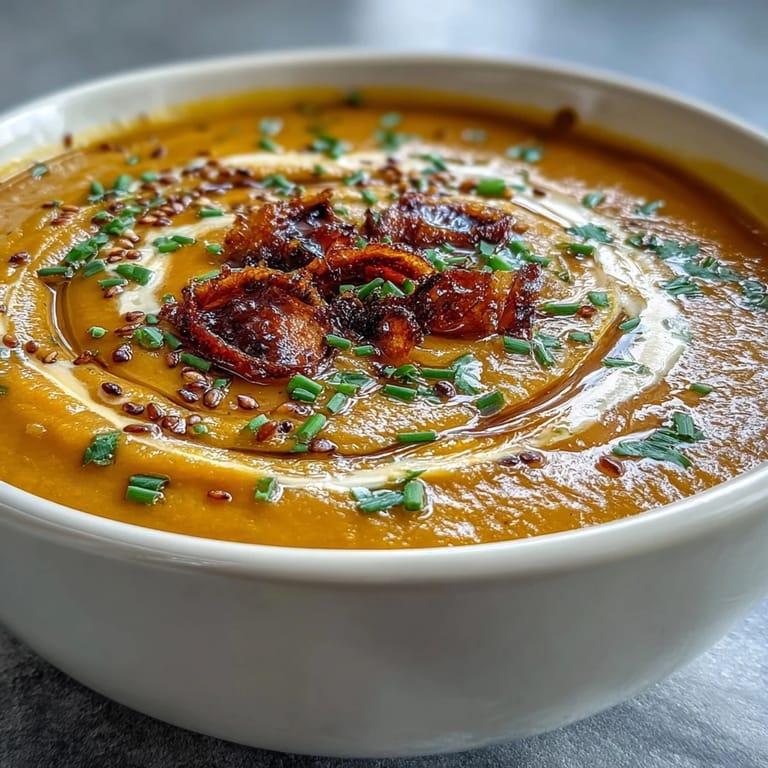
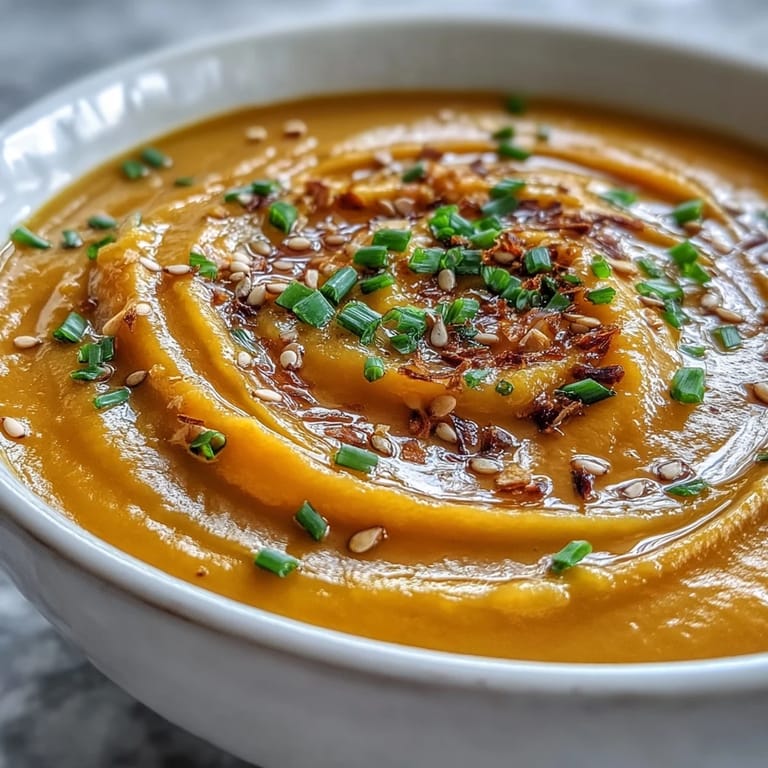
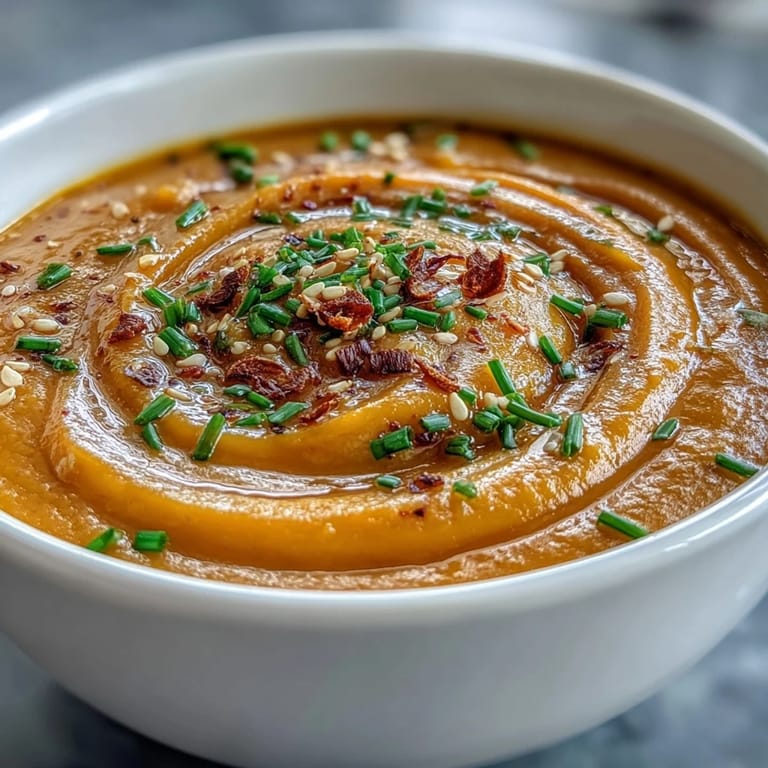
- Coconut cream, chives, and sesame seeds (for garnish): These optional finishes add texture and visual drama, turning a simple bowl into something that feels intentional.
Tired of Takeout? 🥡
Get 10 meals you can make faster than delivery arrives. Seriously.
One email. No spam. Unsubscribe anytime.
Instructions
- Get the oven ready and prep your squash:
- Heat your oven to 400°F and line a baking sheet with parchment paper so cleanup becomes someone else's problem—or at least easier. Toss your cubed squash with half a tablespoon of olive oil, a pinch of salt, and pepper, then spread it out in a single layer so each piece can caramelize without steaming itself.
- Roast until golden and tender:
- Slide the baking sheet into the oven for 30 to 35 minutes, stirring halfway through so the pieces brown evenly on multiple sides. You're looking for that moment when the edges turn deeply golden and the flesh feels almost creamy when you press it.
- Build your aromatic base:
- While the squash roasts, heat the remaining oil in a large pot over medium heat and let the diced onion, minced garlic, and grated ginger have their moment for 4 to 5 minutes. The kitchen will smell like something's about to happen, and that's exactly right.
- Combine and simmer:
- Once the squash comes out of the oven, tumble it into the pot with the aromatic vegetables, pour in your vegetable broth, and let everything bubble gently for 5 minutes so flavors can start introducing themselves. The squash should be so tender it practically collapses if you look at it too hard.
- Blend until silky smooth:
- Remove the pot from heat and use an immersion blender to puree everything until the soup is completely smooth and creamy, working in batches if you're using a countertop blender. This is meditative, repetitive work that transforms chunky ingredients into something luxurious.
- Introduce the miso:
- Let the miso magic happen:
- Scoop out a ladleful of hot soup, whisk your miso paste into it until it's completely dissolved and smooth, then stir this back into the whole pot. This extra step prevents lumpy miso and ensures even seasoning.
- Taste, adjust, and serve:
- Gently reheat if needed, taste as you go, and adjust salt or pepper to your preference, but never let the soup boil once miso is in because heat destroys its probiotic benefits and subtle flavor. Ladle into bowls, drizzle with coconut cream, scatter chives and sesame seeds over the top if the mood strikes, and serve immediately while the warmth is still a comfort.
 Save
Save The first time someone told me this soup was better than the one at their favorite restaurant, I almost didn't believe them. That moment made me understand that cooking isn't about perfection—it's about paying attention, showing up, and letting simple ingredients become something people remember.
Why Roasting Changes Everything
I learned the hard way that boiling squash in broth from the start creates a watery, one-dimensional soup, but roasting it first concentrates its natural sugars into deep, complex caramel notes that no amount of blending can replicate. The browning is where the magic lives, and that's worth the extra 35 minutes of oven time.
The Miso Advantage
Miso paste does something that salt alone can never do—it adds savory depth that makes people pause mid-spoonful and wonder what they're tasting. I started using it almost by accident, grabbing it from my pantry because I'd seen it in Asian cooking, and it completely changed how I think about building flavor in vegetable soups.
Serving Suggestions and Storage
This soup is equally at home as a weeknight dinner alongside crusty bread or as an elegant starter course for something more formal. Leftovers keep beautifully in the refrigerator for up to four days and reheat gently on the stovetop or with a splash of extra broth to loosen them up, and you can freeze it for up to three months if you're thinking ahead.
- Pair it with a grilled cheese sandwich made with sharp cheddar and crispy sage for maximum comfort.
- Swirl in a dollop of tahini or a spoonful of pesto right before serving for unexpected flavor dimensions.
- Serve it chilled on warm days as a lush, silky appetizer that surprises people who expect soup to be hot.
 Save
Save This soup has become my answer to almost every season and every mood, a reminder that sometimes the simplest ingredients, treated with care and a bit of curiosity, become the meals we crave most. Make it once and it will find its way into your regular rotation without you even planning for it to.
Recipe FAQ Section
- → What type of miso paste works best here?
White or yellow miso paste is ideal for a subtle, sweet umami that complements the butternut squash without overpowering it.
- → Can I substitute butternut squash with other vegetables?
Yes, kabocha or pumpkin can be used as alternatives, providing similar texture and sweetness.
- → How do I achieve a creamy texture without dairy?
Pureeing roasted squash with vegetable broth creates a naturally creamy base; adding coconut cream is an optional dairy-free enrichment.
- → What is the best way to roast butternut squash for this preparation?
Cut into cubes, toss with olive oil, salt, and pepper, then roast at 400°F (200°C) for 30-35 minutes until tender and caramelized.
- → How can I adjust seasoning after blending?
Gently reheat and add salt or pepper to taste, but avoid boiling once miso is incorporated to preserve its flavor and beneficial qualities.