 Save
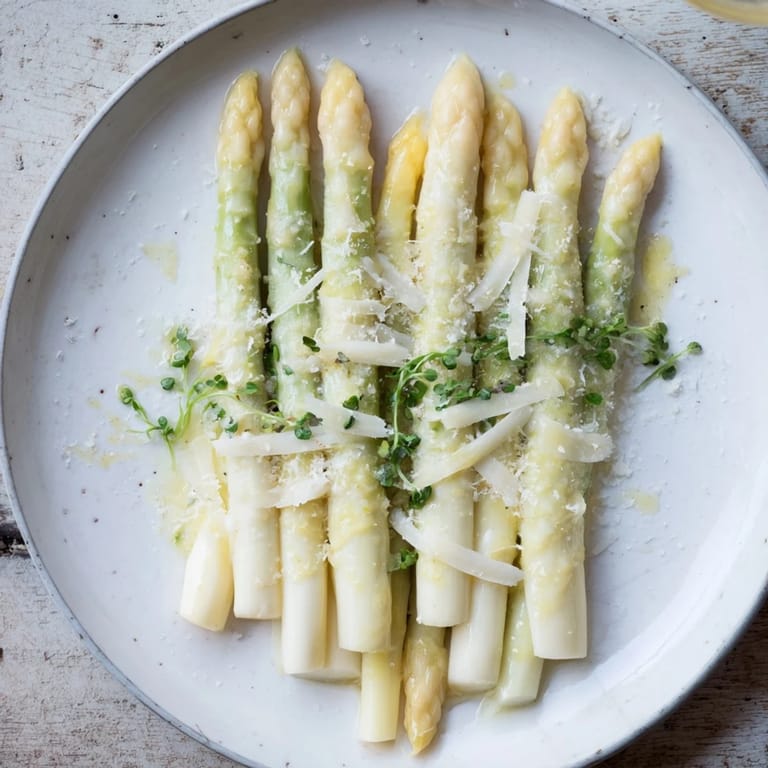
Save The first time I served white asparagus, I nearly apologized for how pale it looked against the dark plate. A chef friend stopped me mid-thought and said, "That's the point." She was right. There's something quietly luxurious about asparagus that's been kept from the sun, tender and almost buttery without needing much more than good cheese and a whisper of truffle. This dish came together one spring when I had just enough of both in the kitchen, and it changed how I think about simplicity.
I made this for my mother's birthday last April when she mentioned craving something "light but special." Watching her smile when the truffle aroma hit the table—that's the moment I realized this wasn't just a recipe, it was a way to say something without words. She ate slowly, deliberately, the way you eat something you want to remember.
Ingredients
- White asparagus, 500 g trimmed and peeled: Peeling them is essential—the outer layer can be tough and stringy, but underneath is pure tenderness. I learned this the hard way by serving unpeeled asparagus once and watching guests work through them.
- Burrata or buffalo mozzarella, 75 g drained: The drainage step matters more than you'd think; excess liquid makes the plate look careless. Burrata's creaminess is what makes this dish sing.
- Aged Comté cheese, 75 g thinly shaved: A vegetable peeler works beautifully here, giving you those delicate curls that catch the light. Don't skip the aging—young Comté won't have the same nutty complexity.
- Parmigiano-Reggiano, 50 g finely grated: This adds a salty backbone that makes every other ingredient taste more like itself.
- Fresh black truffle, 15 g or 1–2 tbsp truffle paste: Fresh truffle is worth seeking out if your budget allows; the scent alone justifies it. If using paste, choose a reputable brand—cheap truffle paste tastes like dirty water.
- Extra-virgin olive oil, 2 tbsp: This is where quality matters. A grassy, peppery oil will sing here; a bland one will disappear.
- Fresh lemon juice, 1 tbsp: Squeeze it fresh just before serving; bottled lemon juice has a flat, tinny quality that defeats the purpose.
- Flaky sea salt and white pepper: White pepper keeps the plate visually clean. Flaky salt lets you taste each crystal.
- Microgreens or chervil, optional: These are optional, but they add a whisper of color and a peppery note that brings everything into focus.
Tired of Takeout? 🥡
Get 10 meals you can make faster than delivery arrives. Seriously.
One email. No spam. Unsubscribe anytime.
Instructions
- Prepare the asparagus with care:
- Bring salted water to a gentle simmer and cook the white asparagus for 8–10 minutes—you want it yielding but still with a slight firmness when you bite it. The moment it's done, plunge it into an ice bath; this stops the cooking and sets that pale, delicate color. Pat each spear dry; water left on them will dilute your dressing and make the plate look rushed.
- Arrange like you mean it:
- Halve each cooled asparagus lengthwise and lay them on chilled plates in a way that feels intentional, not scattered. There's an art to this small gesture; it tells your guests you've thought about their experience.
- Layer the cheeses with intention:
- Tear burrata into rough, uneven pieces—precision looks sterile here—and scatter them among the asparagus. Add your Comté shavings next, letting them overlap slightly. A final drift of finely grated Parmigiano-Reggiano ties it all together.
- Add the truffle, that finishing flourish:
- If you have fresh truffle, use a truffle slicer or sharp vegetable peeler to create thin, almost translucent stripes across the top. If using paste, drizzle it in delicate lines. Either way, this is where the dish stops being pretty and becomes memorable.
- Dress and serve without hesitation:
- Whisk oil, lemon juice, salt, and white pepper together just before plating. Drizzle it evenly so every bite has flavor, then serve immediately while the asparagus is still cool and everything is still in its best moment.
 Save
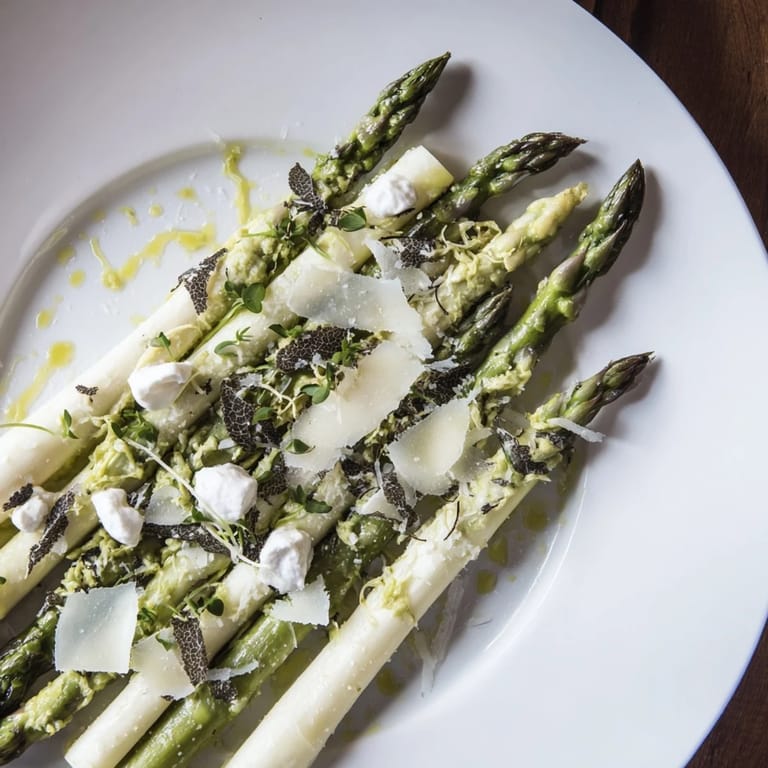
Save There's a moment, usually quiet, when you realize a simple plate of food has become something profound. I've had that moment with this dish more than once. It's not about complexity or showing off; it's about white asparagus in its purest form, made luminous by cheese and truffle, and knowing when to stop.
Why This Dish Works
The beauty of this recipe lies in restraint. Each ingredient is allowed to exist without apology—the pale asparagus, the creamy burrata, the nutty Comté, and the truffle's earthy perfume all speak for themselves. There's no sauce to hide behind, no technique to lean on, which means every ingredient has to be genuinely good. I learned this the hard way by once trying to make it work with mediocre cheese; it doesn't. This is a dish that demands the best versions of fewer things rather than many versions of everything.
Wine and Pairing
A dry white wine with mineral notes—Sancerre, Grüner Veltliner, or a crisp Albariño—becomes a conversation partner with this plate. The acidity cuts through the richness of the cheese while honoring the delicate asparagus. I've also served it with a very cold Champagne, which felt almost ceremonial. The pairing transforms the whole experience from "that's good" to "I'll remember this evening."
Substitutions and Flexibility
If white asparagus eludes you, pale green asparagus works in a pinch, though it will never quite have the same luxurious texture. Gruyère or a mild goat cheese can step in for Comté without apology. The truffle, though, is harder to replace—a few drops of really good truffle oil can add richness, but nothing quite captures that fresh truffle scent that stops people mid-conversation.
- Green asparagus will cook in 5–7 minutes, not 8–10, so adjust accordingly.
- If you find yourself without fresh truffle or quality paste, consider a drizzle of aged balsamic reduction instead—different, but still extraordinary.
- Room-temperature asparagus can work if you've no time to chill it, but the cold provides a sensory surprise that elevates the whole experience.
 Save
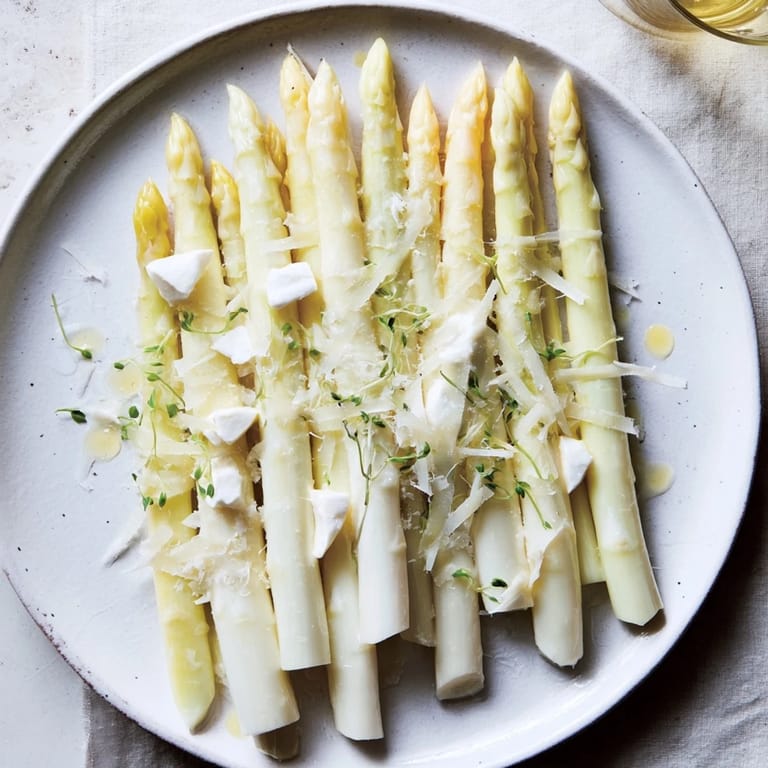
Save This is the kind of dish that reminds you why you cook in the first place. Serve it when you want to say something kind to someone, or when you simply want to sit down and taste spring.
Recipe FAQ Section
- → How do I cook white asparagus to retain its texture?
Simmer peeled white asparagus in salted water for 8–10 minutes until tender but firm. Quickly transfer to ice water to stop cooking and preserve texture.
- → What cheeses work best with white asparagus here?
Burrata or buffalo mozzarella provide creaminess, while aged Comté and Parmigiano-Reggiano add nutty and sharp notes complementing the asparagus.
- → Can I substitute black truffle in this dish?
Yes, high-quality truffle paste can be used as a substitute, drizzled in fine lines to impart similar aromatic qualities.
- → What dressing complements the flavors best?
A simple dressing of extra-virgin olive oil, fresh lemon juice, flaky sea salt, and white pepper enhances the freshness and richness without overpowering.
- → Are there garnish options that pair well?
Microgreens or chervil add a subtle herbal note and a fresh contrast to the creamy and earthy components.