 Save
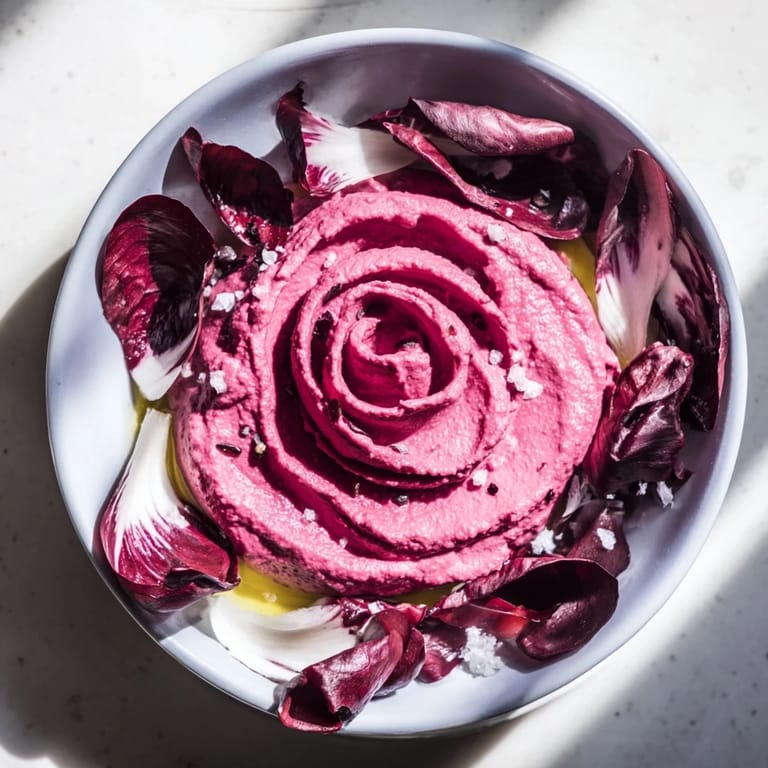
Save I was rifling through my pantry on a rainy afternoon when I spotted a can of chickpeas next to some forgotten tahini, and somehow my mind wandered to the most beautiful beet I'd seen at the farmers market that morning—deep crimson, almost jewel-like. What if I roasted it, blended it into something silky, and made it look like a rose? The idea felt a bit ambitious for a Tuesday, but I decided to try anyway. The moment I piped that first swirl onto the plate and arranged the radicchio leaves around it, I knew I'd stumbled onto something special.
I made this for a dinner party last spring when I was trying to impress some new friends, and I remember standing in the kitchen, slightly nervous, watching the beet roast while garlic scented the air from the hummus I was building. When I brought that platter to the table, the whole room went quiet for a second—not in a bad way, but in that moment when people are genuinely surprised by what they're seeing. Someone asked if they could take a photo, and suddenly everyone was pulling out their phones, laughing at themselves for treating a plate of food like fine art. It became the easiest conversation starter I've ever served.
Ingredients
- 1 large beet (about 200 g): Choose a beet with unblemished skin and no soft spots; roasting concentrates its natural sweetness and creates that deep red hue that makes the hummus so striking.
- 1 can (400 g) chickpeas: Drain and rinse them well to remove excess starch, which helps your hummus stay creamy rather than gluey.
- 2 tbsp tahini: This is what gives the hummus its luxurious texture, so don't skip it or substitute it with peanut butter—tahini brings a subtle nuttiness that pairs perfectly with beet.
- 2 tbsp extra-virgin olive oil: The quality matters here since you taste it directly; a peppery, fruity oil will lift the whole dish.
- 1 small garlic clove, minced: Go easy on garlic—you want a whisper, not a shout, so it doesn't overpower the delicate beet flavor.
- Juice of 1 lemon: Fresh lemon brightens everything and prevents the hummus from tasting heavy or one-dimensional.
- 1/2 tsp ground cumin: This warm spice is the secret that makes people ask what the flavor is; it echoes Mediterranean kitchens without announcing itself.
- Salt and black pepper, to taste: Taste as you go because salt is a volume dial—it either brings everything into focus or makes it flat.
- 2–3 tbsp cold water: Add it gradually while blending; cold water creates a silkier texture than room-temperature water would.
- Radicchio leaves: Look for ones that are deep purple and slightly firm; they'll hold up to dipping and look stunning against the red hummus.
- Flaky sea salt and optional microgreens or edible petals: These finishes are what transform dinner from nice to memorable, so don't skip them even if they seem decorative.
Tired of Takeout? 🥡
Get 10 meals you can make faster than delivery arrives. Seriously.
One email. No spam. Unsubscribe anytime.
Instructions
- Roast the beet until it yields:
- Wrap your beet tightly in foil—this steams it gently and keeps the oven from drying it out. After 40–45 minutes at 400°F, it should feel tender when pierced, almost melting on a fork. Let it cool enough to handle, then the skin should slip off with just a gentle rub under running water, which always feels like a small magic trick.
- Build the hummus base:
- Add everything except the water to your food processor and pulse until the mixture starts breaking down, then let the blade run until it's completely smooth—usually about 2–3 minutes. Scrape down the sides a few times because those chickpea bits hidden at the edges matter. You want the final hummus to feel like velvet, which means processing longer than feels intuitive.
- Achieve silky perfection:
- Pour in the cold water one tablespoon at a time while the processor runs, pausing after each addition to feel the texture shift. This gradual approach keeps you from overdoing it and creating something soupy. Taste it now, adjust lemon or salt if needed, and feel the satisfaction of having something restaurant-quality coming out of your own blender.
- Pipe the roses:
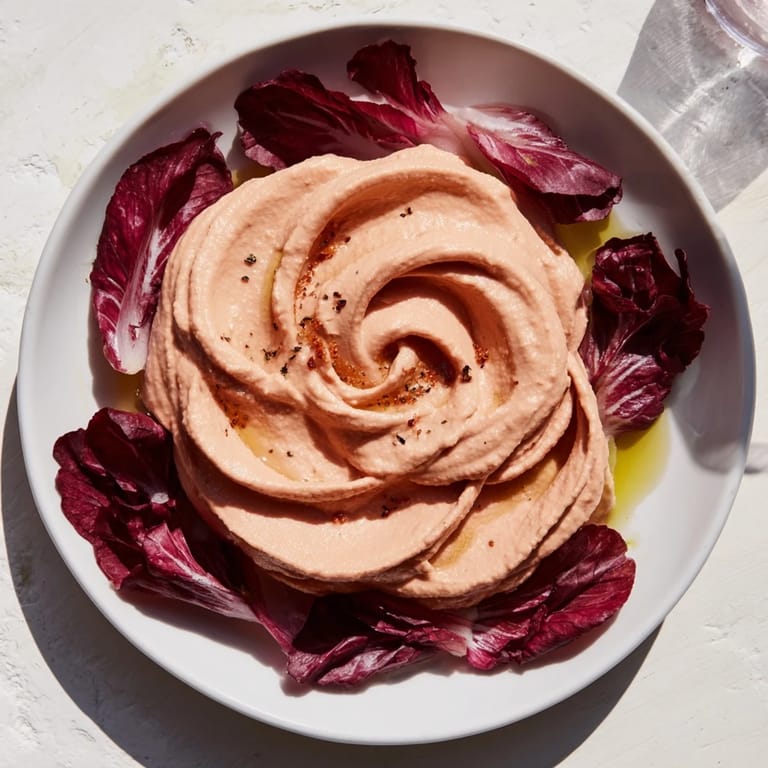
- If you have a piping bag with a large star tip, you're in luck—that's what creates those realistic petal patterns. If not, a regular spoon swirled with intention works too, just with less sculptural drama. Either way, work quickly because the hummus firms up slightly as it sits, making piping easier.
- Arrange and garnish:
- Place those radicchio leaves around your hummus roses like they're petals in a flower, overlapping slightly. Drizzle olive oil in thin threads over everything, scatter flaky sea salt so it catches the light, and add microgreens or edible petals if you're feeling fancy. The whole thing should look like something you'd see in a magazine, except you made it.
- Serve right away:
- This appetizer is best eaten fresh when the radicchio is still crisp and the hummus is at its creamiest. Set out extra leaves for dipping and watch people's faces light up as they discover it tastes as good as it looks.
 Save
Save There's something about watching someone take that first bite—dipping a radicchio leaf into the hummus and then pausing, fork frozen in the air, as the flavor hits. It stops being about appetizers and becomes a moment of small joy, the kind that makes you remember why you cook in the first place.
Making Roses Without a Piping Bag
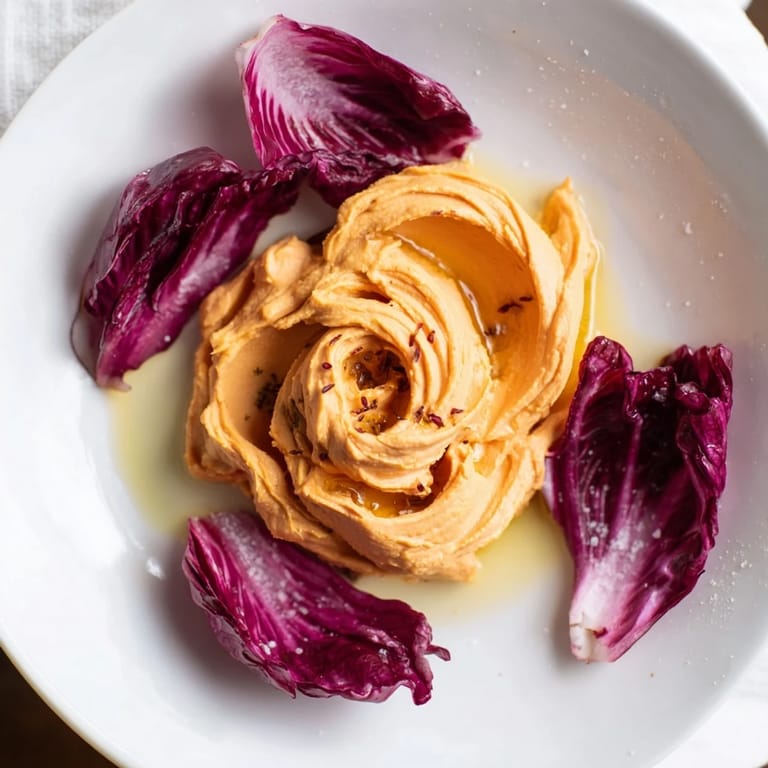
You don't need fancy equipment to make this work, though I'll admit the piping bag does create the most dramatic effect. I've swirled the hummus onto plates using just the back of a spoon, creating abstract peaks and valleys that somehow look intentional, almost more modern than traditional roses. The key is confidence—hesitant swirls look uncertain, but bold, circular motions read as deliberate design. One night I accidentally created what looked like a spiral galaxy, and honestly, my guests loved it just as much.
Flavor Variations to Explore
This recipe is a beautiful canvas, and once you've made it once, you'll start imagining what else you could add. Smoked paprika brings a campfire warmth, while a pinch of harissa adds a gentle heat that lingers. I once stirred in a tiny bit of pomegranate molasses right at the end, and it added this mysterious depth that nobody could quite name but everyone loved. Even small changes feel significant because the beet hummus is the star, and anything you add should whisper, not shout.
Beyond Radicchio: Other Leaves and Vessels
Radicchio is perfect, but if you can't find it or want to mix things up, Belgian endive offers that same bittersweet crunch and looks equally elegant, perhaps even more so with its pale ivory leaves. I've also served this with pita chips for people who prefer something sturdier, and it works beautifully for a less formal spread. One memorable evening, I arranged it on a bed of mixed salad greens and suddenly it became a starter salad rather than an appetizer—same hummus, completely different energy depending on how you frame it.
- Endive leaves hold up beautifully to the hummus and offer an almost buttery sweetness that contrasts with the earthiness.
- Pita chips or crostini work if you're serving this at a casual gathering where people want something they can grab and pop in their mouth.
- Serve with thinly sliced cucumber rounds or even roasted eggplant chips if you want to lean fully into the Mediterranean angle.
 Save
Save This dish taught me that good entertaining doesn't require hours in the kitchen or complicated techniques—sometimes the magic is simply in seeing something beautiful on a plate and taking the time to make it real. Every time I make it, I'm reminded that food is as much about the moment we create as the flavors we serve.
Recipe FAQ Section
- → How do I achieve the rose shapes with the beet hummus?
Using a piping bag fitted with a large star tip allows you to swirl the hummus gently into rose patterns. Alternatively, carefully spoon and swirl with a small spoon for similar effect.
- → Can I substitute radicchio with other leaves?
Yes, endive or Belgian endive leaves work well as a crisp, slightly bitter alternative for serving alongside the beet hummus.
- → What enhances the flavor of this beet and chickpea blend?
Adding smoked paprika can deepen the flavor profile, complementing the earthy sweetness of the roasted beets.
- → How long does roasting the beet take?
Roasting the beet at 400°F takes approximately 40 to 45 minutes until fork-tender, ensuring a soft texture for blending.
- → Is this dish suitable for gluten-free and vegan diets?
Yes, all ingredients are naturally gluten-free and vegan, with tahini as the primary allergen to consider.