 Save
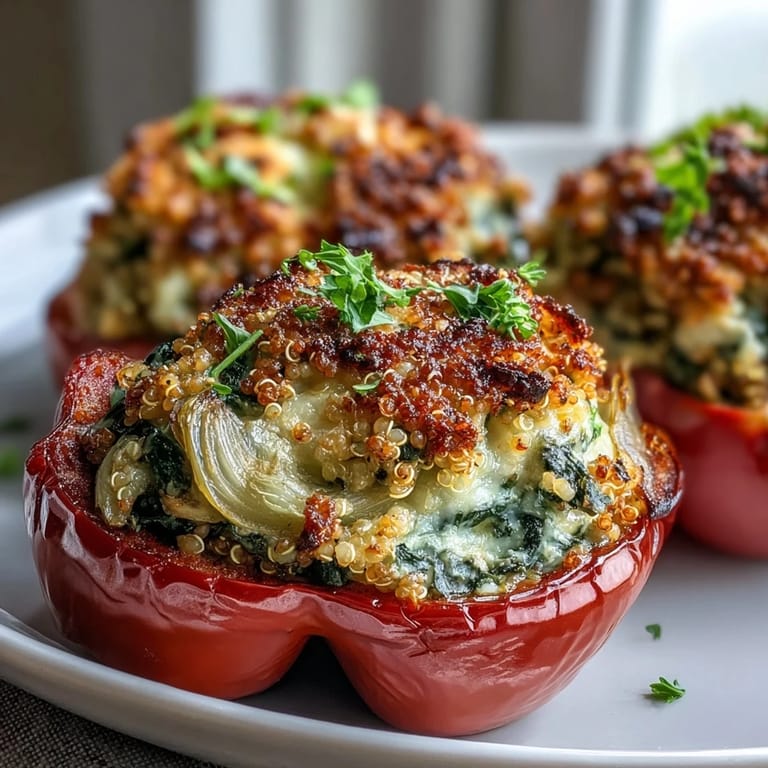
Save There's something about stuffed peppers that feels like a small celebration, even on a Tuesday night in the kitchen. I discovered this vegan version entirely by accident when my friend texted asking if I could veganize her favorite recipe, and I found myself blending soaked cashews with nutritional yeast at 6 PM, not entirely sure it would work. The moment that creamy cashew sauce came together, smooth and almost buttery, I knew this wasn't going to be just another weeknight dinner. What started as a favor turned into the recipe I now make whenever I want to feel like I'm doing something impressive without actually stressing.
I remember bringing these to a potluck where half the table was vegan and half wasn't, and watching everyone gravitate toward the peppers regardless. My uncle, who typically orders steak at restaurants, went back for seconds and asked for the recipe, which honestly felt like the highest compliment I could receive. That moment shifted something for me about what it means to cook plant-based food, not as a limitation but as an actual advantage.
Ingredients
- Bell peppers (4 large, any color): These are your edible vessels and they contribute natural sweetness when roasted, so choose ones that feel firm and have flat bottoms so they'll sit upright without tipping.
- Fresh spinach (2 cups, chopped): It wilts down significantly, so don't be intimidated by the volume, and chop it before cooking to speed things up.
- Canned artichoke hearts (1 cup, drained and chopped): Canned is perfectly fine here and saves you from wrestling with fresh artichokes, just make sure to drain them well.
- Onion (1 small, finely chopped): The base of flavor, and finely chopped means it disappears into the filling rather than creating surprise chunks.
- Garlic (2 cloves, minced): Fresh garlic makes all the difference, so don't reach for the jarred version if you can help it.
- Cooked quinoa (1 cup): Brown rice works equally well if that's what you have, and cooking it ahead of time is the real timesaver here.
- Raw cashews (1/2 cup, soaked 2 hours): This is non-negotiable for the creamy sauce, and soaking softens them enough to blend into something legitimately luxurious.
- Unsweetened plant-based milk (1/2 cup): Any kind works, though oat milk creates the richest texture.
- Nutritional yeast (2 tablespoons): This gives the sauce a subtle umami depth and that savory, almost cheesy quality that makes people pause and ask what it is.
- Lemon juice (1 tablespoon): Brightens everything and prevents the sauce from tasting heavy.
- Dijon mustard (1 teaspoon): Just enough to add complexity without making it taste like mustard.
- Salt and black pepper (1/2 teaspoon and 1/4 teaspoon): Taste as you go because the nutritional yeast already brings saltiness.
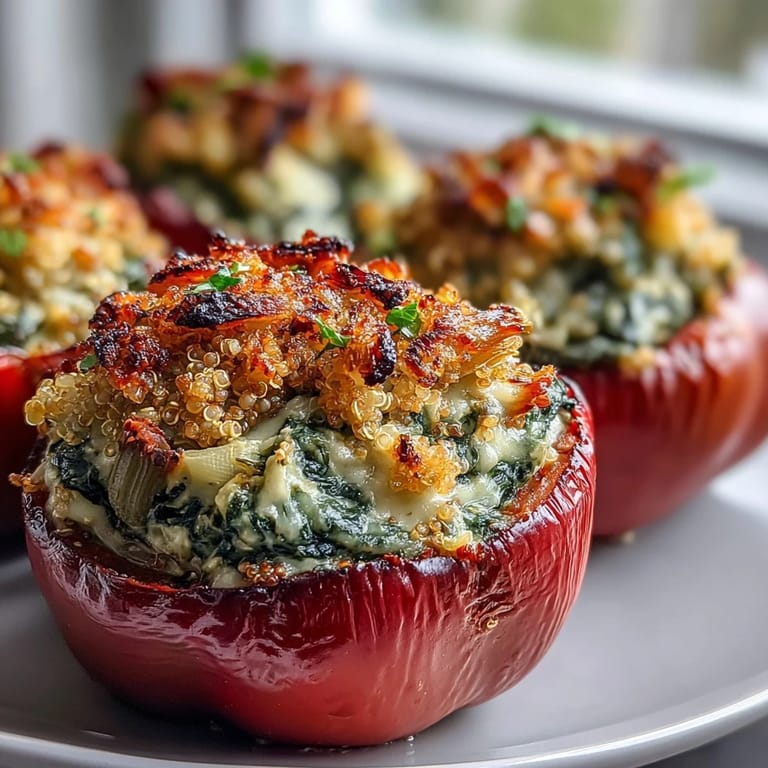
- Breadcrumbs (1/4 cup) and olive oil (1 tablespoon for topping): Mixed together, these create a golden, slightly crispy top that contrasts beautifully with the soft filling inside.
Tired of Takeout? 🥡
Get 10 meals you can make faster than delivery arrives. Seriously.
One email. No spam. Unsubscribe anytime.
Instructions
- Get your oven ready and prep the peppers:
- Preheat to 375°F and brush a baking dish lightly with olive oil so the peppers won't stick. Stand your hollowed peppers upright in the dish like little edible bowls waiting to be filled.
- Build flavor in the skillet:
- Sauté your chopped onion in a splash of olive oil until it turns translucent and soft, about 3 minutes. Add the minced garlic, fresh spinach, and drained artichokes, then cook for another 2 minutes until the spinach wilts down and everything smells intentional.
- Create the creamy sauce:
- Blend your soaked cashews with plant-based milk, nutritional yeast, lemon juice, Dijon mustard, salt, and pepper until completely smooth. This should taste savory and slightly tangy, almost like a vegan ricotta.
- Combine everything into one bowl:
- Mix the wilted vegetables, cooked quinoa, and cashew cream together until it's evenly distributed. The mixture should feel luxurious and hold together.
- Fill the peppers generously:
- Spoon the filling into each pepper, pressing down slightly so it's compact but not compressed. Overstuffing is actually your friend here because the peppers will cook down.
- Add the crispy topping:
- Toss breadcrumbs with olive oil in a small bowl, then scatter this mixture over the top of each pepper. This will turn golden and create a nice textural contrast against the soft filling.
- Bake covered, then uncover:
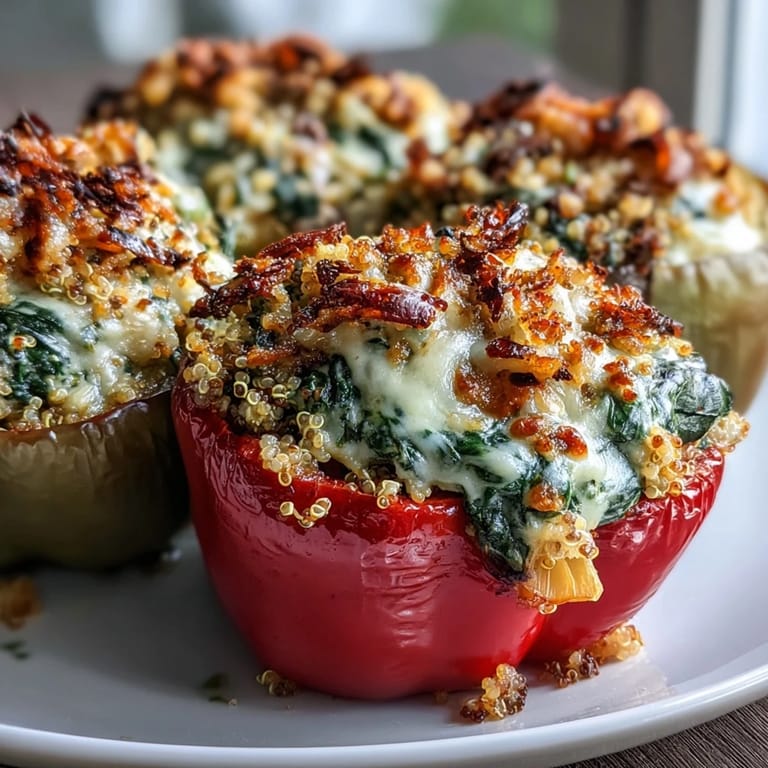
- Cover with foil and bake for 25 minutes, which allows everything to heat through and meld together. Remove the foil and bake another 10 minutes until the tops turn golden and the peppers are tender.
- Let them rest before serving:
- Give them 5 minutes out of the oven so they firm up slightly and you won't burn your mouth on a molten pepper.
 Save
Save There was this one time I made these for my neighbor who had just gone vegan, and she literally had tears in her eyes because she thought she'd have to give up comfort food. Watching her realize that vegan cooking doesn't mean deprivation, just creativity, felt like I'd done something small but meaningful in her kitchen journey.
Make It Your Own
The beauty of stuffed peppers is that they're a framework rather than a strict mandate. I've experimented with sun-dried tomatoes, roasted red peppers, fresh dill, and even a dash of smoked paprika in the filling, and every version has been delicious. The cashew cream is forgiving enough that you can add extra seasonings without it falling apart, so trust your instincts about what flavors you're craving.
Serving and Pairing Ideas
These peppers feel substantial enough to be a main course on their own, but I love serving them alongside a crisp green salad or some roasted vegetables on the side. The acidity of a salad cuts through the richness of the cashew cream beautifully, and if you're pairing with wine, a chilled Sauvignon Blanc or even sparkling water with lemon works wonderfully.
Storage and Reheating
These actually taste better the next day once the flavors have had time to get cozy with each other, so make extras without guilt. You can store them in an airtight container in the fridge for up to 4 days, and reheating them covered in the oven at 325°F for about 15 minutes brings them back to their original glory without drying them out.
- Leftovers also work beautifully shredded and mixed into grain bowls if you want to reimagine them.
- You can freeze these for up to 3 months before baking, just add an extra 10 minutes to the cooking time.
- If your peppers are on the smaller side, reduce the cooking time by 5 to 10 minutes so they don't collapse.
 Save
Save This dish has become my go-to when I want to feed people something that feels special but doesn't require hours in the kitchen. There's something quietly satisfying about handing someone a warm, colorful stuffed pepper and knowing they're about to have a genuinely delicious meal.
Recipe FAQ Section
- → Can I make these stuffed peppers ahead of time?
Yes, you can prepare the filling and hollow out the peppers up to 24 hours in advance. Store components separately in the refrigerator, then stuff and bake when ready to serve. You may need to add a few extra minutes to the baking time if starting from cold.
- → What can I substitute for cashews?
White beans or silken tofu can replace cashews for the creamy base, though the texture will be slightly less rich. For nut-free options, blend 1 cup of white beans with plant milk and nutritional yeast until smooth.
- → How do I know when the peppers are done?
The peppers are ready when they're tender when pierced with a fork and the filling is hot throughout. The breadcrumb topping should be golden brown, and the pepper skins should have slight wrinkling. This typically takes 35 minutes total baking time.
- → Can I freeze stuffed peppers?
Absolutely. Assemble the stuffed peppers, wrap individually in foil, and freeze for up to 3 months. Thaw overnight in the refrigerator before baking, or bake from frozen adding 15-20 minutes to the covered baking time.
- → What other grains work in this filling?
Brown rice, farro, wheat berries, or even millet can replace quinoa. Cook the grain according to package directions before mixing with the vegetables and cream sauce. Each grain brings slightly different texture and cooking times.
- → How can I add more protein?
Stir in white beans, chickpeas, or crumbled tofu to the filling mixture. Hemp seeds or chopped walnuts also boost protein while adding pleasant texture. Each addition increases the protein content naturally without relying on meat products.