 Save
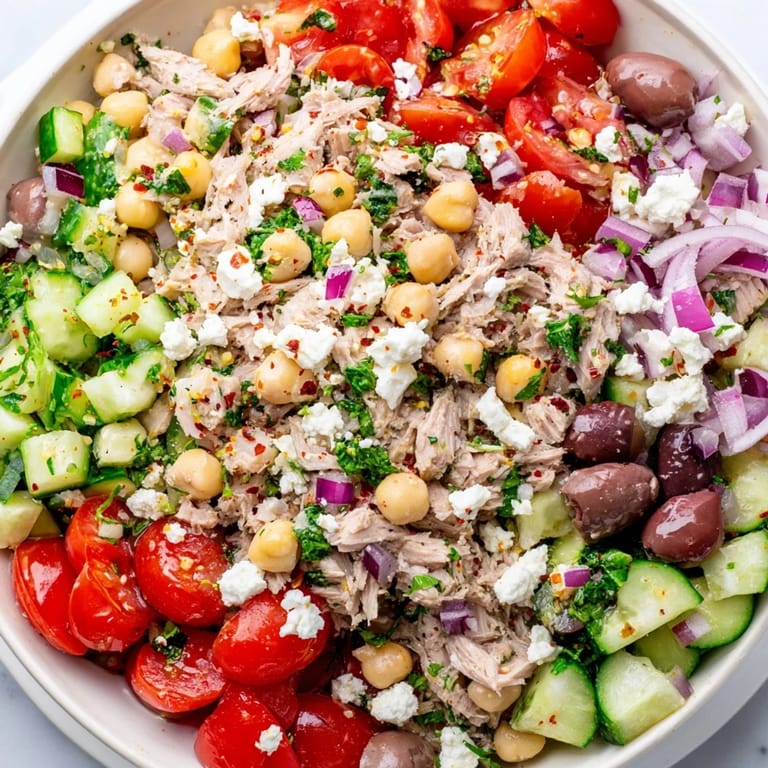
Save I discovered this salad by accident on a Tuesday when I had nothing in my pantry except two cans of tuna and a can of chickpeas staring back at me. Rather than ordering takeout again, I chopped whatever vegetables were left in my crisper drawer and threw together the simplest lemon dressing. What emerged was this bright, satisfying bowl that somehow tasted both light and substantial—the kind of meal that makes you feel genuinely nourished instead of just full.
My coworker Sarah asked what I was eating one afternoon, took one bite, and immediately started taking notes on her phone. By the next week, three people in the office were making variations of this salad, and suddenly my accidental Tuesday dinner became the thing everyone requested at potlucks.
Ingredients
- Chickpeas: Drain and rinse them thoroughly—you want to remove that starchy liquid or the salad gets gummy and loses its freshness.
- Tuna in water: I learned the hard way that oil-packed tuna makes everything greasy, so stick with water and drain it well.
- Cherry tomatoes: Halve them so they release their juice into the dressing instead of just sitting whole and tough.
- Cucumber: Dice it small so every bite has cucumber, and try to remove excess seeds if it's particularly watery.
- Red onion: Slice it paper-thin and chop finely—raw onion can be harsh, but this size lets it integrate without overpowering.
- Fresh parsley: This is where the salad gets its brightness; don't skip it or use dried.
- Kalamata olives: Slice them so you get the salty, briny flavor spread throughout rather than biting into big chunks.
- Extra virgin olive oil: This is half your dressing, so use one you actually like tasting.
- Fresh lemon juice: Never use bottled—the acidity is different and it tastes noticeably sharp in a bad way.
- Dijon mustard: Just a teaspoon acts like a flavor amplifier, bringing everything into focus.
- Garlic clove: Mince it fine so it distributes evenly and doesn't leave sharp bites.
Tired of Takeout? 🥡
Get 10 meals you can make faster than delivery arrives. Seriously.
One email. No spam. Unsubscribe anytime.
Instructions
- Prep your proteins:
- Open both cans of tuna and drain them in a fine mesh strainer, pressing gently with the back of a spoon to squeeze out water without breaking up the tuna. Do the same with the chickpeas—this step makes an actual difference in the final texture.
- Chop with intention:
- Half your cherry tomatoes lengthwise so they nestle into the salad naturally. Cut your cucumber into small, uniform dice, slice the red onion as thin as possible, and mince your garlic until it's almost paste.
- Build the base:
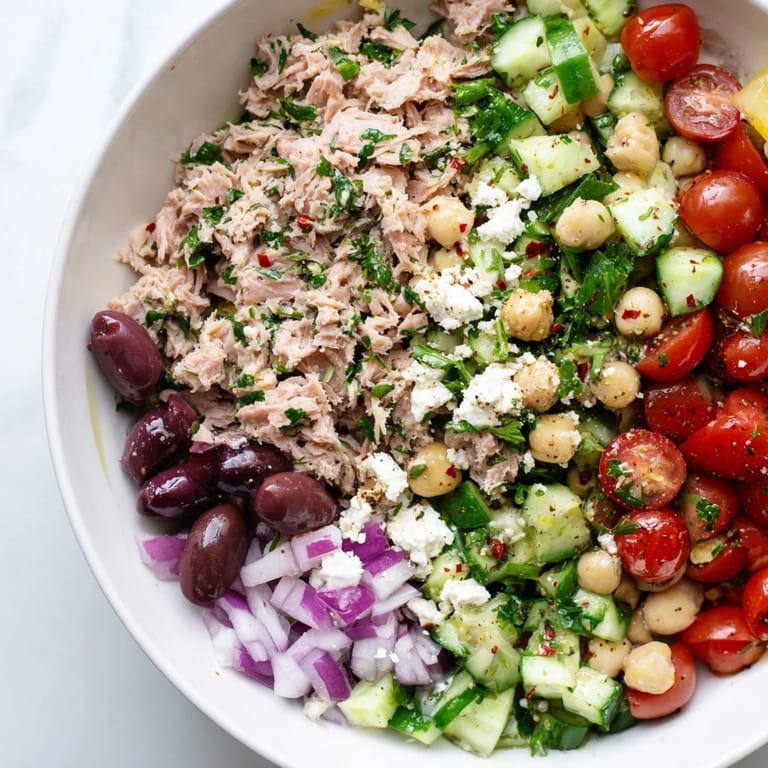
- In your largest bowl, combine the drained tuna, chickpeas, tomatoes, cucumber, red onion, parsley, and olives. Gently fold everything together so nothing gets crushed—you want distinct pieces, not a mashed situation.
- Make the dressing:
- In a small bowl, add your olive oil, fresh lemon juice, Dijon mustard, minced garlic, salt, and pepper. Whisk vigorously until it looks slightly cloudy and emulsified, which takes about 30 seconds of real whisking.
- Bring it together:
- Pour the dressing over your salad and gently toss with two forks or a large spoon, lifting from the bottom so every component gets coated. You'll feel it when it's right—the oil coats everything and nothing sits dry.
- Final touches:
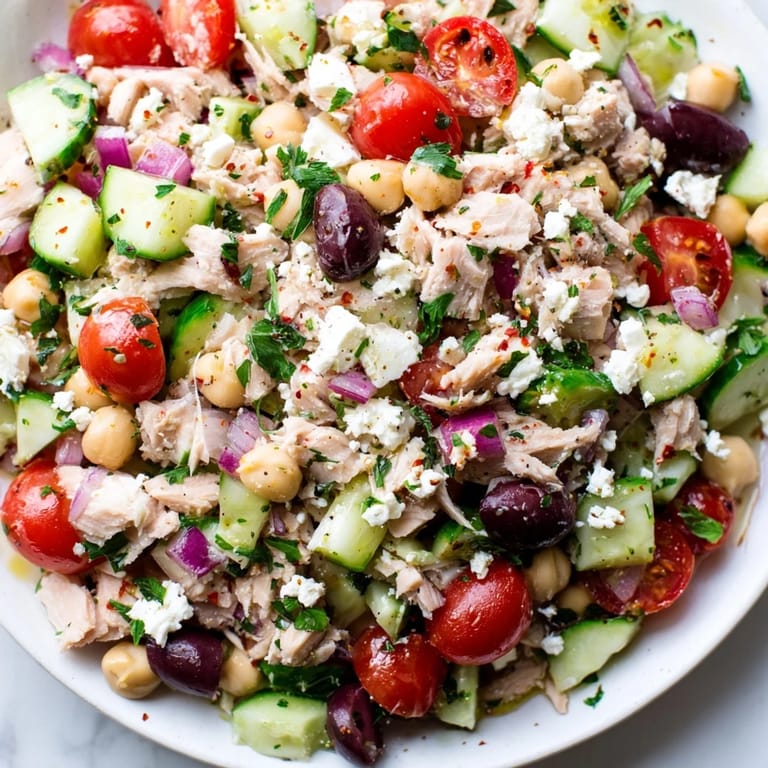
- Top with crumbled feta if you want that creamy saltiness, and dust with red pepper flakes for heat. Serve immediately while everything is still crisp, or cover and refrigerate for up to two days if you're meal prepping.
 Save
Save The moment I realized this salad had staying power was when my partner, who usually picks at my cooking experiments, asked me to make it twice in one week. There's something about a meal that nourishes without fussing, that tastes fresh and intentional but takes almost no effort, that makes people want to keep coming back to it.
Why This Salad Works
The magic is in the contrast—soft tuna and creamy chickpeas against crisp vegetables, bright acid from lemon cutting through the richness of olive oil, salty olives and feta playing against fresh herbs. It's a complete protein bowl that doesn't feel heavy, and the flavors actually improve as it sits because the acid tenderizes everything slightly and allows the garlic to mellow into the background.
Making It Your Own
This salad is forgiving enough that you can swap things around based on what's in your kitchen. Add diced bell pepper or celery for extra crunch, toss in some diced avocado if you want creaminess, or swap the feta for goat cheese if that's what you have. You can serve it on a bed of greens, stuff it into a pita pocket, or use it as a wrap filling—it works every way because the dressing and proteins are sturdy enough to hold everything together.
Storage and Serving Ideas
This is genuinely one of the best meal-prep salads because it doesn't wilt or get soggy like leafy greens do. I've kept it in glass containers for three days and it still tastes fresh, with the flavors actually deepening as everything marinates together in that lemon-garlic dressing. The key is keeping the dressing separate if you're storing it for more than a few hours, but honestly, I've eaten it straight from the fridge the next morning without any issues.
- Pack it in mason jars with the dressing on the bottom if you're taking it to work, then shake before eating.
- Make a double batch on Sunday and portion it into four containers for a protein-packed lunch all week.
- If it dries out at all, just whisk together a quick extra dressing and toss it in right before eating.
 Save
Save This salad has become my default when I'm hungry but don't want to think too hard, and somehow it always feels like I'm eating something intentional and nourishing rather than settling. That's the whole point, really.
Recipe FAQ Section
- → Can I make this bowl ahead of time?
Yes, prepare the bowl and keep it refrigerated for up to 2 days to enhance flavors. Add toppings like feta just before serving to maintain texture.
- → What can I use instead of feta cheese?
Swap feta with goat cheese for a milder tang or omit it entirely for a dairy-free option without sacrificing flavor.
- → Is this dish suitable for gluten-free diets?
Absolutely! All ingredients are naturally gluten-free, but verify canned goods and mustard labels to ensure no hidden gluten.
- → Can I add other vegetables to the bowl?
Definitely. Diced bell pepper, celery, or leafy greens can add more texture and nutrients to this vibrant bowl.
- → What dressing ingredients give the bowl its flavor?
The zesty dressing blends extra virgin olive oil, fresh lemon juice, Dijon mustard, garlic, salt, and black pepper for a bright, balanced taste.
- → How much protein does one serving provide?
Each serving delivers approximately 25 grams of protein, making it a filling option packed with nutrition.