 Save
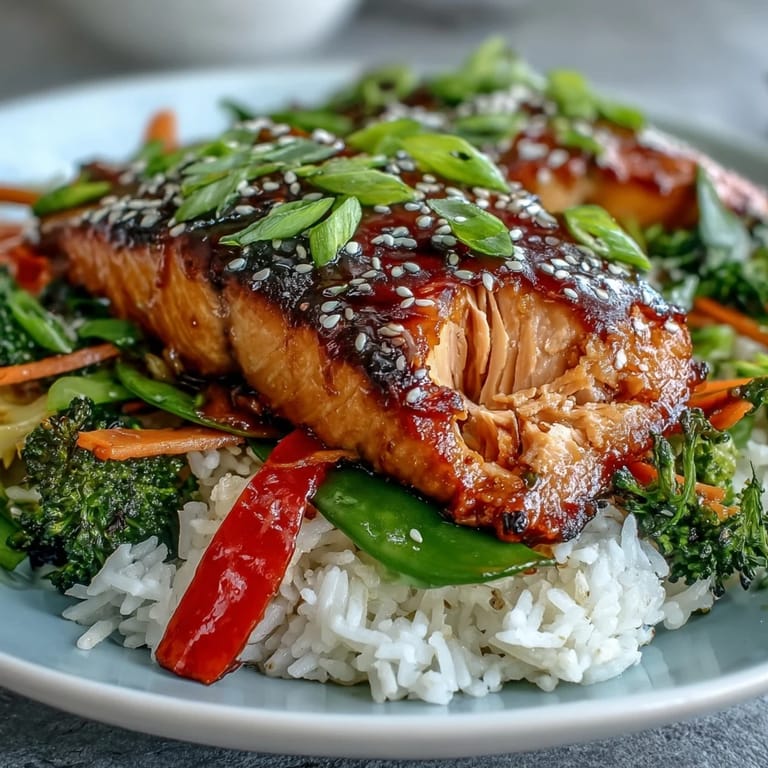
Save My neighbor knocked on the door one Thursday with a paper bag of snap peas from her garden, insisting I use them that night. I had salmon defrosting and a half-bottle of mirin I'd been meaning to use, so I just started cooking without a plan. The sauce came together in minutes, the vegetables stayed bright and snappy, and by the time I plated everything over rice, it looked like something from a restaurant. That accidental dinner became my most-requested weeknight meal.
I made this for my brother when he visited last spring, convinced he'd want to order takeout instead. He ate two bowls, scraped up every grain of rice, and texted me the next week asking for the recipe. Now he makes it for his roommates and pretends he invented it. I let him have that one.
Ingredients
- Salmon fillets: Skin-on keeps the fish from falling apart in the pan, but skinless works if you prefer, just handle them gently when flipping.
- Soy sauce: The backbone of the teriyaki, salty and umami-rich, use low-sodium if you're cautious about salt or swap for tamari if avoiding gluten.
- Mirin: This sweet rice wine adds a gentle depth you can't get from sugar alone, if you don't have it, mix a tablespoon of sake with a teaspoon of honey.
- Brown sugar: Balances the soy and helps the sauce cling to the salmon, white sugar works in a pinch but brown gives a warmer flavor.
- Rice vinegar: A splash of brightness that keeps the sauce from tasting flat, skip the seasoned kind or it'll get too sweet.
- Sesame oil: Just a couple teaspoons perfume the whole sauce with nutty warmth, don't skip it.
- Garlic and ginger: Freshly minced and grated, they bloom in the simmering sauce and fill the kitchen with the kind of smell that makes everyone wander in.
- Cornstarch slurry: This tiny trick thickens the sauce so it coats the salmon like glass instead of running off.
- Bell pepper, carrot, broccoli, sugar snap peas: A rainbow of crunch and color, stir-fry them fast so they stay bright and snappy, not soft.
- Vegetable oil: For high-heat stir-frying, neutral and reliable.
- Jasmine or sushi rice: The fluffy, slightly sticky base that soaks up every drop of sauce.
- Sesame seeds and spring onions: Optional but they add a final layer of texture and a pop of green that makes the bowl look alive.
Tired of Takeout? 🥡
Get 10 meals you can make faster than delivery arrives. Seriously.
One email. No spam. Unsubscribe anytime.
Instructions
- Prep the rice:
- Rinse the rice under cold water, swishing it around until the water runs clear, this removes excess starch so it cooks up fluffy instead of gluey. Combine it with water in a saucepan, bring to a boil, then cover tightly, drop the heat to low, and let it steam for 15 minutes before resting off the heat for 5 more.
- Make the teriyaki sauce:
- In a small saucepan, whisk together soy sauce, mirin, brown sugar, rice vinegar, sesame oil, garlic, and ginger, then bring it to a gentle simmer over medium heat, stirring until the sugar melts into the liquid. Stir in the cornstarch slurry and watch it thicken in a minute or two, turning glossy and rich, then set it aside.
- Sear the salmon:
- Pat the fillets dry, season both sides with salt and pepper, then lay them skin-side down in a hot skillet filmed with oil. Let them sizzle undisturbed for 3 to 4 minutes until the skin crisps or the bottom turns golden, then flip gently and cook another 2 to 3 minutes until just cooked through but still tender in the center.
- Glaze the salmon:
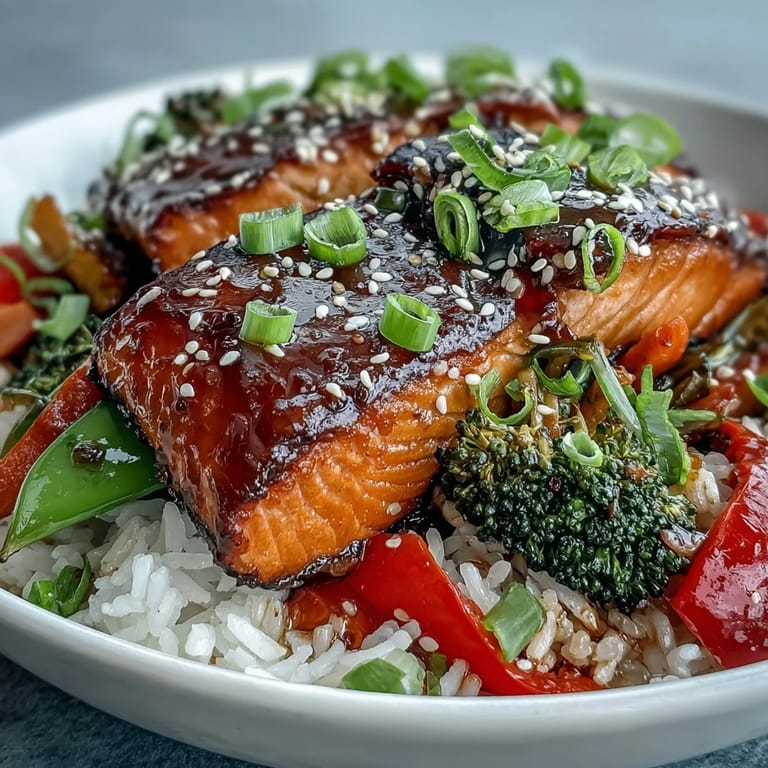
- Brush the fillets generously with teriyaki sauce, letting it bubble and caramelize on the surface for about a minute. The kitchen will smell incredible.
- Stir-fry the vegetables:
- Heat a wok or large skillet over high heat, add vegetable oil, and toss in the bell pepper, carrot, broccoli, and snap peas, stirring constantly for 3 to 4 minutes. You want them tender-crisp, still bright and snappy, not soft or dull.
- Assemble the bowls:
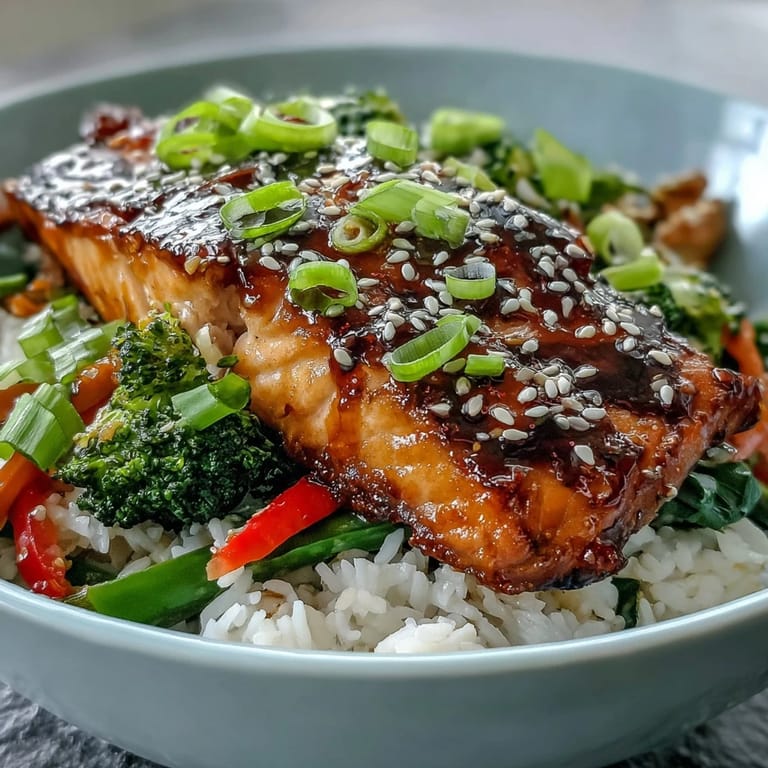
- Fluff the rice with a fork and divide it between four bowls, then arrange the stir-fried vegetables and glazed salmon on top. Drizzle extra teriyaki sauce over everything and scatter sesame seeds and sliced spring onions if you like.
 Save
Save The first time I served this to friends, one of them closed her eyes after the first bite and said it tasted like the kind of meal that makes you want to cook more often. That stuck with me. It's the kind of dish that feels like a small celebration, even on a regular Tuesday.
Choosing Your Salmon
I used to buy the thickest fillets thinking they'd be more impressive, but I've learned that medium-thick pieces around 150 grams cook more evenly and don't dry out as easily. If you're nervous about undercooking, an instant-read thermometer should read 125 to 130 degrees Fahrenheit in the thickest part for medium, which is perfect for salmon. Skin-on fillets hold together better in the pan, but if you prefer skinless, just use a thin spatula and flip gently.
Making It Your Own
I've made this bowl with zucchini, mushrooms, baby corn, and even roasted sweet potato when I had leftovers to use up. The teriyaki sauce is forgiving and coats just about any vegetable beautifully. Once, I marinated the salmon in half the sauce for 15 minutes before cooking and the flavor went even deeper, so now I do that whenever I remember to plan ahead. If you like a little heat, a pinch of red pepper flakes in the sauce or a drizzle of sriracha over the finished bowl adds a nice kick without overpowering the sweetness.
Storing and Reheating
Leftovers keep well in the fridge for up to two days, though the vegetables lose some of their crunch. I store the rice, vegetables, and salmon in separate containers so I can reheat them gently without turning everything into mush. The salmon reheats best in a low oven or even eaten cold over the rice, and the teriyaki sauce can be drizzled over just before serving to freshen everything up.
- Reheat rice in the microwave with a damp paper towel over the top to keep it from drying out.
- Warm the salmon in a 300-degree oven for about 8 minutes, covered loosely with foil.
- The sauce can be made ahead and stored in a jar in the fridge for up to a week, just shake it before using.
 Save
Save This bowl has become my answer to the question of what to make when I want something nourishing, colorful, and ready fast. It never feels like a compromise.
Recipe FAQ Section
- → What vegetables work best in this bowl?
Bell peppers, carrots, broccoli, and sugar snap peas provide excellent crunch and color. You can easily substitute with whatever vegetables you have on hand—zucchini, mushrooms, baby corn, or snow peas all work beautifully in this dish.
- → Can I use other types of fish?
While salmon is ideal for its rich flavor and ability to hold up well under the glaze, you can substitute with other fatty fish like kingfish, trout, or mackerel. Leaner fish like cod or tilapia will also work but may cook more quickly.
- → How do I store leftovers?
Store components separately in airtight containers in the refrigerator for up to 2 days. Reheat the salmon gently in the microwave or a low oven, and warm the vegetables and rice separately. The teriyaki sauce can be stored for up to a week.
- → Is the teriyaki sauce very sweet?
The sauce achieves a balanced flavor profile with equal parts soy sauce and mirin, plus brown sugar for depth. You can adjust the sweetness by reducing the brown sugar to 1 tablespoon if you prefer a more savory glaze.
- → Can I make this gluten-free?
Yes, simply substitute the regular soy sauce with tamari or a gluten-free soy sauce alternative. Ensure all other ingredients, including the mirin, are certified gluten-free if you have celiac disease or gluten sensitivity.