 Save
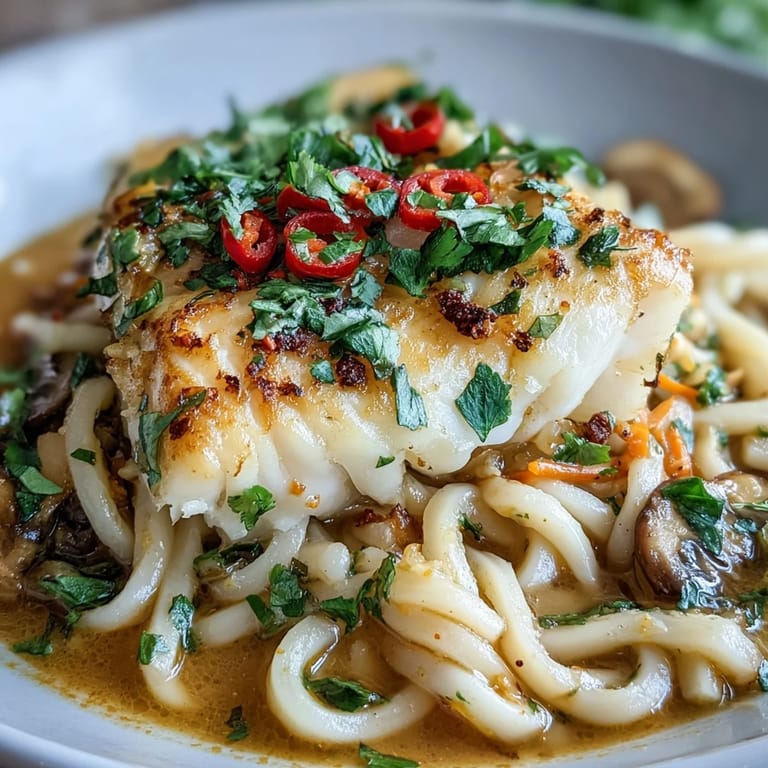
Save There's something quietly magical about watching a piece of fish transform in simmering broth—the way it goes from translucent to opaque, how the spices perfume your entire kitchen within moments. I stumbled onto this bowl on a rainy Tuesday when I had cod in the fridge and a craving for something warm that didn't feel heavy. The coconut and curry paste were already there, and fresh udon noodles seemed like the natural companion. What emerged was a dish that felt both comforting and sophisticated, the kind of meal that makes you pause between bites.
I made this for my partner one evening when they'd had a brutal day, and I watched their shoulders actually relax as they took the first spoonful. The kitchen smelled incredible—ginger, coconut, a whisper of chili—and somehow that aroma alone seemed to shift the mood. They cleaned the bowl and asked for the recipe, which meant everything to me because they rarely ask for recipes. Now it's become our quiet-evening meal, the one we make when we want to feel taken care of without any fuss.
Ingredients
- Cod fillets (4, about 150 g each): Choose pieces that are roughly the same thickness so they poach evenly; if you can only find thicker fillets, gently press them to flatten slightly before cooking.
- Neutral oil (1 tablespoon): Canola or sunflower work best because they won't compete with the spices and coconut.
- Onion (1, finely sliced): The foundation of the broth—slice it thin so it softens completely and almost dissolves into the liquid.
- Garlic and ginger (2 cloves minced, 1 tablespoon grated): Use fresh ginger, not powdered; you'll taste the difference in brightness and warmth.
- Red chili (1, thinly sliced, optional): Leave the seeds in if you want real heat, remove them for a gentle warmth that lingers.
- Red curry paste (1 tablespoon): This is where the magic lives—it builds the entire flavor foundation, so don't skimp on quality.
- Coconut milk and stock (400 ml and 500 ml): Full-fat coconut milk creates a silkier mouthfeel; vegetable stock works fine if you don't have fish stock on hand.
- Fish sauce and soy sauce (1 tablespoon each): These aren't optional—they add depth and umami that you can't replicate any other way.
- Lime juice (from 1 lime): Squeeze it fresh right before serving to brighten everything up at the last moment.
- Fresh udon noodles (300 g): Buy them from the refrigerated section if possible; they cook faster and have better texture than dried.
- Spinach, carrot, mushrooms, spring onions (150 g, 1 medium, 100 g, 2): These add color and texture—feel free to swap in other tender vegetables like bok choy or snap peas.
- Fresh coriander (handful for garnish): It's the final flourish that makes the dish feel complete and restaurant-quality.
Tired of Takeout? 🥡
Get 10 meals you can make faster than delivery arrives. Seriously.
One email. No spam. Unsubscribe anytime.
Instructions
- Build your aromatic base:
- Heat the oil in your saucepan and watch as the onion softens into translucent ribbons, about 3 minutes. Add the garlic, ginger, and chili, stirring constantly until the whole kitchen smells like you've opened a spice market—that's your signal they're releasing their fragrance, usually around 1 minute.
- Bloom the curry paste:
- Push the curry paste into the aromatics and let it cook undisturbed for a full minute, which awakens all its subtle layers. You'll notice the oil turning a deeper red and the smell becoming almost intoxicating.
- Create the broth:
- Pour in the coconut milk and stock, bringing everything to a gentle simmer over medium heat. The broth should be fragrant but never violently bubbling—this is a gentle cooking environment.
- Season with intention:
- Stir in the fish sauce, soy sauce, and lime juice, then taste as you would a friend's cooking. You're looking for a balance where nothing overwhelms—salt, umami, and brightness in harmony.
- Poach the cod gently:
- Slide the fillets into the simmering broth one at a time, cover partially, and let them cook for 6 to 8 minutes until just opaque. You'll know they're ready when they flake easily with the gentlest pressure from a fork.
- Cook the noodles simultaneously:
- While the cod poaches, get the udon going in a separate pot according to package directions. Drain them as soon as they're tender and divide them into your serving bowls.
- Add the vegetables:
- Once the cod is nearly done, toss the spinach, carrots, and shiitake mushrooms into the broth. They need just 2 to 3 minutes to become tender but still hold their shape.
- Bring it together:
- Carefully lift the cod out with a slotted spoon and set aside, then ladle the hot broth and vegetables over the noodles in each bowl. Top with the cod piece and garnish generously with spring onions and coriander.
 Save
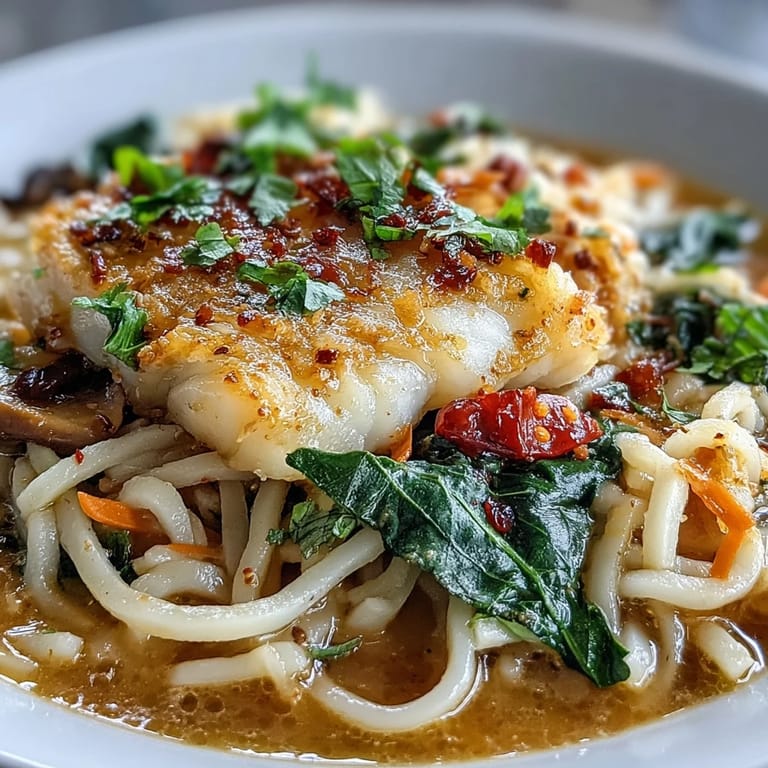
Save There was an evening when my mother tried this dish for the first time, and she said it reminded her of a meal we had together years ago in a small Thai restaurant she'd completely forgotten about. Food has this ability to unlock old memories, and watching her face as she remembered that day was worth every minute of prep work. Now whenever I make it, I think of that moment and how cooking isn't really about the ingredients—it's about the small resurrections that happen around the table.
The Gentle Art of Poaching Fish
Poaching is one of the easiest cooking techniques once you understand what's happening—you're surrounding delicate protein with gentle heat and flavor, essentially coddling it to perfection. The trick is keeping your broth at a true simmer, not a rolling boil; if you see aggressive bubbles, lower the heat slightly. I learned this the hard way years ago when I poached salmon at too high a temperature and ended up with something resembling rubber, which taught me patience in the kitchen.
Why Coconut Curry Works So Well With Fish
There's a natural affinity between coconut and fish—the richness of one complements the delicate flavor of the other without either overwhelming the plate. The curry paste brings warmth and complexity, while the lime juice cuts through everything with brightness. Together, they create a broth that's comforting but never feels heavy, which is exactly what you want when you're eating something nourishing but light.
Variations and Swaps That Work
Once you understand the bones of this dish, you can play with it endlessly and it only gets better. Swap cod for halibut or haddock if that's what's fresh, try rice noodles if you want something more delicate, or add extra vegetables depending on what's in your crisper drawer. The one thing I wouldn't change is the curry paste and coconut milk base—that's the heart of the whole thing.
- Use chili oil instead of fresh chili if you prefer more heat without the fresh texture.
- Substitute spinach with bok choy, kale, or any green that can handle brief cooking without falling apart.
- Make it vegetarian by using vegetable stock and swapping the cod for pressed tofu or thick slices of cauliflower steak.
 Save
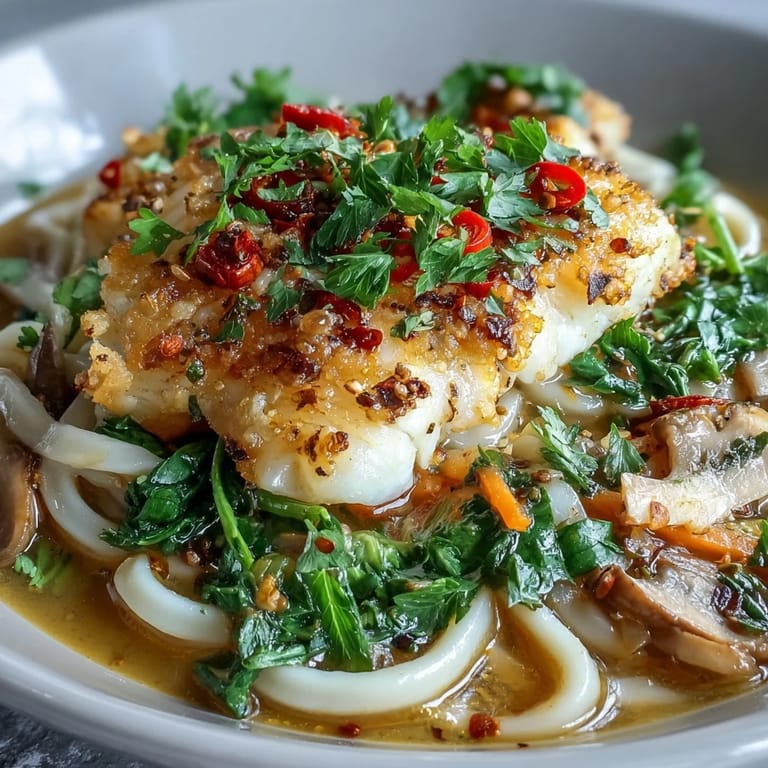
Save This bowl has become my answer to those nights when you want to feel nourished without spending hours in the kitchen. It's the kind of meal that whispers take care of yourself, and somehow that matters just as much as how it tastes.
Recipe FAQ Section
- → Can I use a different type of fish instead of cod?
Yes, you can substitute cod with other firm white fish such as haddock, halibut, or sea bass. Ensure the fish is fresh and adjust poaching time slightly depending on fillet thickness.
- → How do I make this dish gluten-free?
Replace udon noodles with rice noodles and use tamari instead of soy sauce. Check that your curry paste and fish sauce are also gluten-free by reading the labels carefully.
- → Can I prepare the broth in advance?
Absolutely. The coconut broth can be made up to 2 days ahead and refrigerated. Reheat gently before poaching the fish and adding vegetables for the freshest result.
- → What can I use if I don't have red curry paste?
You can substitute with Thai green curry paste for a different flavor profile, or use a combination of ground coriander, cumin, and turmeric with a pinch of cayenne for heat.
- → How do I prevent the cod from breaking apart during poaching?
Keep the broth at a gentle simmer rather than a rolling boil. Slide the fillets in carefully and avoid stirring. Use a slotted spoon or fish spatula to remove them gently once cooked.
- → What vegetables can I add or substitute?
Bok choy, snap peas, bell peppers, or bean sprouts work wonderfully. Add heartier vegetables like mushrooms earlier in the cooking process and delicate greens near the end.