 Save
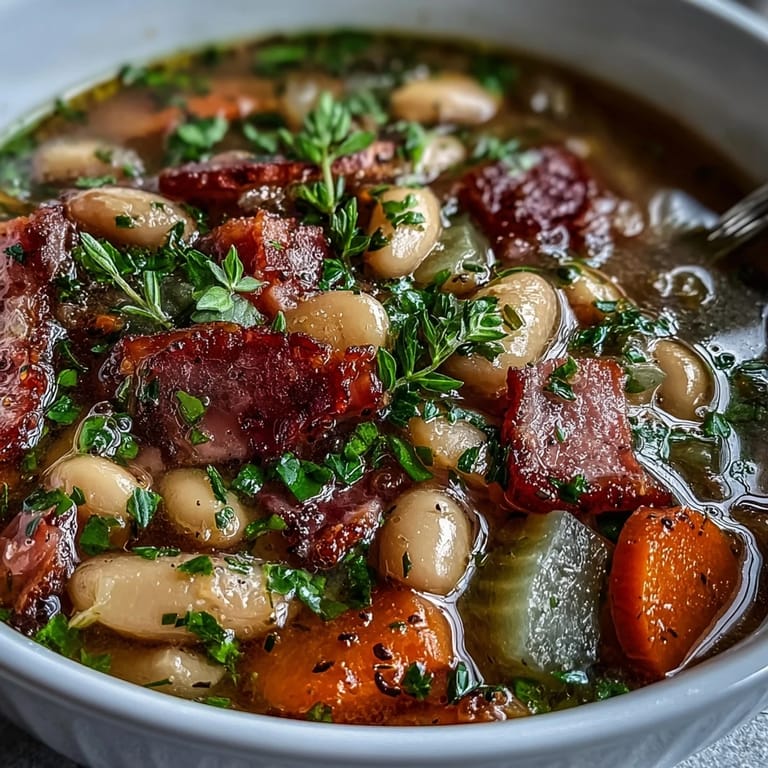
Save My neighbor stopped by on a chilly October afternoon with a container of homemade ham broth she'd been simmering all morning, and somehow that sparked the idea to finally use up the ham in my freezer. I'd been intimidating myself with soup recipes for years, thinking they required constant attention and expertise, but she laughed and said the slow cooker was honestly the easiest teacher I'd ever have. That evening, I threw everything together before work, and when I opened the door seven hours later, my whole kitchen smelled like comfort itself. It was the moment I realized I'd been overthinking something so wonderfully simple.
I made this soup for my book club meeting last winter, and watching everyone slow down to really taste it was magical. Someone asked for the recipe before finishing their first bowl, and another friend admitted she'd been living on takeout and didn't realize how much she missed homemade soup. That night taught me that food doesn't need to be complicated to bring people together—it just needs to be made with intention.
Ingredients
- Cooked ham, diced (1 lb): This is your umami anchor, giving the entire pot its savory backbone without requiring any special cooking technique.
- Carrots, peeled and sliced (2 large): They soften beautifully in the slow cooker and add natural sweetness that balances the salt from the ham.
- Celery stalks, sliced (2): Celery is the quiet backbone of flavor—don't skip it even if you think you don't like it on its own.
- Yellow onion, diced (1 medium): The onion dissolves almost completely into the broth, creating depth you can taste but not identify at first.
- Garlic, minced (3 cloves): Fresh garlic makes a noticeable difference here; resist the urge to use jarred or powder.
- Cannellini or great northern beans, drained and rinsed (2 cans): Canned beans are your shortcut to creamy, tender beans without planning ahead.
- Low-sodium chicken broth (6 cups): Using low-sodium broth lets you control the salt level and taste the actual ingredient flavors.
- Bay leaf (1): It quietly infuses the broth with herbal complexity and deserves to be fished out before serving.
- Dried thyme (1 tsp): Thyme is earthy and slightly minty, tying all the savory elements together with elegance.
- Dried parsley (1 tsp): Parsley brightens everything at the end, even though it simmers for hours unseen.
- Black pepper (½ tsp): Start here and taste as you go; black pepper's warmth builds slowly in a slow cooker.
- Salt, to taste: Always wait until the end to add salt so you can taste what you're actually seasoning.
Tired of Takeout? 🥡
Get 10 meals you can make faster than delivery arrives. Seriously.
One email. No spam. Unsubscribe anytime.
Instructions
- Gather and prep your vegetables:
- Peel your carrots and slice them into coins about a quarter-inch thick so they'll cook evenly. Slice the celery, dice the onion into small pieces, and mince the garlic until it's fine enough to disappear into the broth.
- Layer everything into your slow cooker:
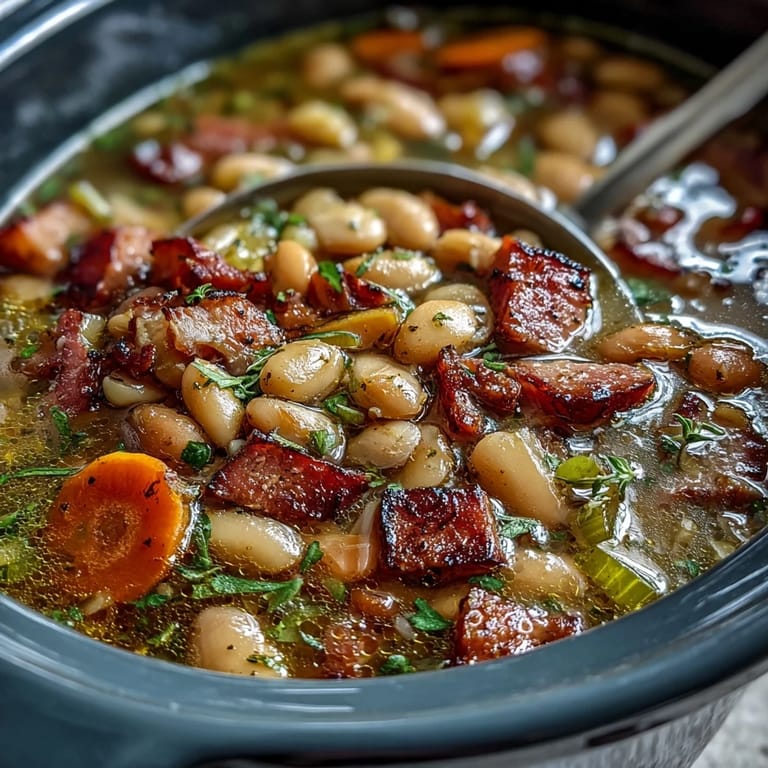
- Add the ham, carrots, celery, onion, garlic, and drained beans all together, then pour the broth over top. The slow cooker works best when you don't overthink the arrangement—everything will find its place.
- Add your seasonings and cover:
- Toss in the bay leaf, thyme, parsley, and black pepper, then give everything a gentle stir so the seasonings distribute evenly. Cover the slow cooker and set it to low for seven hours.
- Let time do the work:
- The beauty of a slow cooker is that you can leave it alone and go about your day. The flavors will meld together as the gentle heat softens everything into a cohesive, comforting whole.
- Taste and adjust before serving:
- Fish out the bay leaf with a spoon, then taste a spoonful of both broth and vegetables. Add salt gradually, tasting between each small pinch until it tastes right to you.
 Save
Save I remember my daughter asking why this soup smelled so good when nothing fancy was happening in the kitchen. I realized then that simple ingredients treated with patience and presence create something that feels luxurious without any pretense.
Customizing Your Soup
This soup is genuinely forgiving and actually improves when you make it your own. The vegetable base is flexible—if you have zucchini or spinach sitting around, they'll integrate beautifully in the last hour of cooking. I've also swapped in smoked ham hocks for a deeper, richer flavor, though you'll need to remove any bones and shred the meat before serving. Some people add a splash of apple cider vinegar at the very end for a subtle brightness that ties everything together.
Storage and Reheating
This soup gets better after a day or two in the refrigerator as the flavors continue to marry and deepen. You can store it in glass containers for up to four days, and it reheats beautifully on the stovetop over medium heat with a splash of broth to loosen it up. I've also frozen portions in individual containers and pulled them out on mornings when I needed lunch without thinking.
Serving Suggestions and Final Thoughts
Serve this soup hot with crusty bread, oyster crackers, or cornbread to soak up every bit of broth. A simple green salad on the side keeps things balanced, and a cup of tea afterward feels like the perfect way to close out a satisfying meal. This is the kind of soup that wraps around you like a hug, and I promise it's worth the seven hours of patient waiting.
- If you're short on time, you can reduce the cooking to six hours on high, though the flavors won't meld quite as richly.
- A dollop of sour cream or a drizzle of good olive oil at the table adds a small luxury that guests always notice.
- Make a double batch and freeze half—your future self will thank you on a day when cooking feels impossible.
 Save
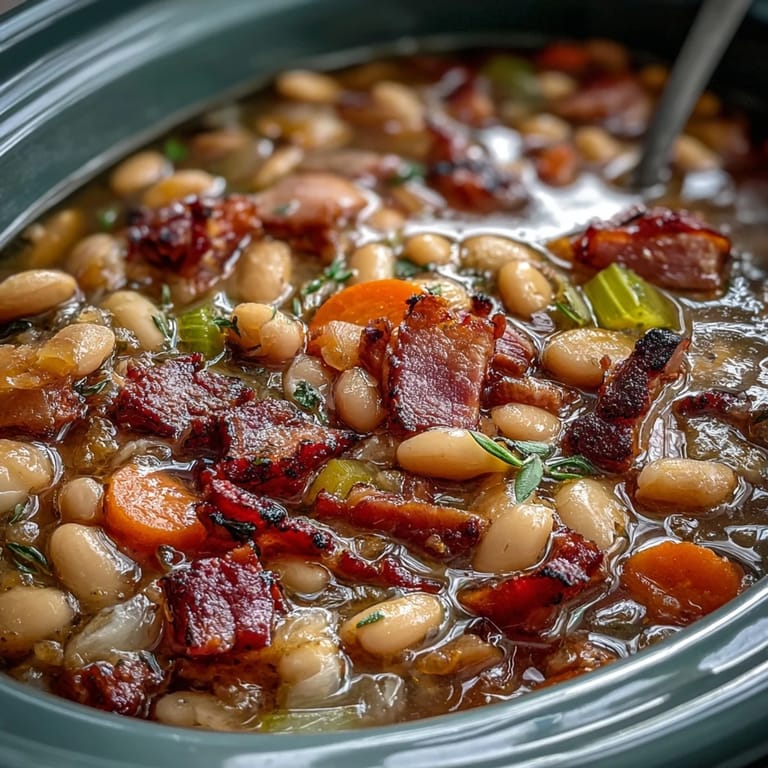
Save There's something profound about a soup that asks so little of you while giving so much back. Make this when you need comfort, when you want to feed people you love, or when you simply need proof that good food doesn't require complexity.
Recipe FAQ Section
- → Can I substitute smoked ham hocks for diced ham?
Yes, smoked ham hocks add a deeper smoky flavor. Remove bones and shred the meat before serving to maintain texture.
- → How can I make the soup thicker?
Mash a portion of the beans before serving to create a creamier, thicker consistency without additional additives.
- → Is it possible to add greens to the soup?
Adding chopped spinach or kale during the last 30 minutes of cooking boosts flavor and nutrition with a fresh touch.
- → What type of beans work best in this dish?
Cannellini or great northern beans are ideal for their creamy texture and ability to absorb flavors well.
- → Can I prepare this soup ahead of time?
Yes, the soup tastes even better the next day as flavors continue to meld. Store refrigerated and reheat gently.
- → What bread pairs well with this ham and bean soup?
Crusty bread or crackers complement the hearty texture and soak up the savory broth beautifully.