 Save
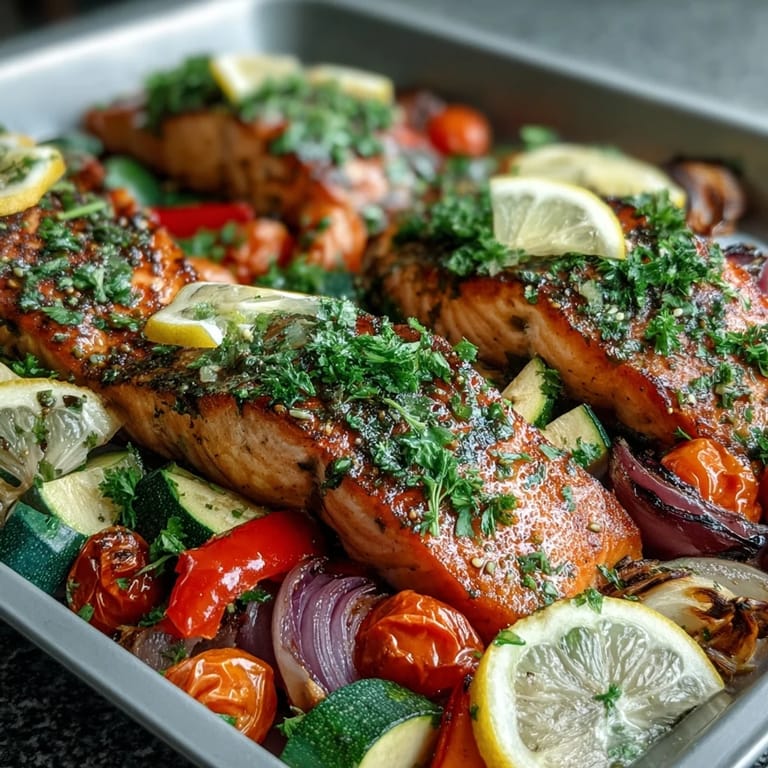
Save I was standing in my kitchen on a Tuesday night, staring at a salmon fillet and a drawer full of half-used vegetables, when this recipe was born out of sheer necessity. My partner had texted saying they'd be home in forty minutes, and I had no plan, no energy for multiple pots, and a serious craving for something that tasted like effort without actually requiring it. I grabbed the biggest sheet pan I owned, started chopping everything in sight, and tossed it all together with a hope and a prayer. Twenty-five minutes later, the kitchen smelled like a seaside bistro, and I realized I'd accidentally created the easiest weeknight dinner of my life.
The first time I made this for friends, I was nervous because it felt too simple to be impressive. But when I pulled that sheet pan out of the oven, with the salmon perfectly flaky and the vegetables glistening and golden, everyone went quiet for a moment before diving in. One friend actually asked if I'd taken a cooking class, and I had to laugh because the whole thing had taken me less than ten minutes of actual hands-on work. That night taught me that the best meals aren't always the most complicated ones, they're the ones that let good ingredients shine without getting in their own way.
Ingredients
- Salmon fillets (4, about 5 to 6 oz each): Look for fillets that are evenly thick so they cook at the same rate, and if you can, ask your fishmonger to remove the skin, it saves you a step and makes serving easier.
- Olive oil (3 tablespoons total): This is what helps everything caramelize and keeps the salmon moist, so don't skimp or try to use cooking spray, it just won't taste the same.
- Lemon zest (1 teaspoon): The zest gives you bright citrus flavor without adding moisture that could make the salmon steam instead of roast, and it smells incredible as it cooks.
- Red onion (1 medium): Cut it into wedges instead of thin slices so the pieces hold their shape and get sweet and jammy in the oven.
- Carrots (2 medium): Slice them into half-inch rounds so they have enough surface area to caramelize but still cook through in the same time as the other vegetables.
- Bell peppers (1 red, 1 yellow): The mix of colors makes the dish look vibrant, and they add a subtle sweetness that balances the savory salmon beautifully.
- Zucchini (1 small): Cut into half-moons so they don't turn mushy, and try to keep the pieces roughly the same size as your other vegetables for even cooking.
- Cherry tomatoes (1 cup): Halve them so they burst and release their juices, which mingle with the olive oil and herbs to create a light, natural sauce.
- Italian herbs (1 teaspoon dried): A blend of basil, oregano, and thyme works perfectly, but you can use whatever dried herbs you have on hand.
- Fresh parsley (2 tablespoons): Chop it right before serving so it stays bright green and adds a fresh, grassy note that cuts through the richness of the salmon.
- Lemon wedges: Serve these on the side so everyone can squeeze as much or as little as they want over their portion.
Tired of Takeout? 🥡
Get 10 meals you can make faster than delivery arrives. Seriously.
One email. No spam. Unsubscribe anytime.
Instructions
- Get the oven ready:
- Preheat your oven to 425°F and line a large sheet pan with parchment paper or foil. This high heat is what gives you those crispy, caramelized edges on the vegetables.
- Toss the vegetables:
- In a large bowl, combine the onion wedges, carrot rounds, bell pepper slices, zucchini half-moons, and halved cherry tomatoes with 2 tablespoons of olive oil, the dried Italian herbs, and a generous pinch of salt and pepper. Spread them evenly on the sheet pan in a single layer so they roast instead of steam.
- Start roasting the veggies:
- Slide the pan into the oven and roast for 10 minutes. This head start ensures the denser vegetables like carrots get tender without overcooking the salmon later.
- Prep the salmon:
- While the vegetables roast, pat the salmon fillets completely dry with paper towels, then brush them with the remaining tablespoon of olive oil and sprinkle with lemon zest, salt, and pepper. Drying the salmon helps it develop a nice surface instead of steaming.
- Add the salmon to the pan:
- After 10 minutes, pull the sheet pan out and use a spatula to move the vegetables slightly, creating space for the salmon fillets. Nestle the fillets among the vegetables so they all finish cooking together.
- Finish roasting:
- Return the pan to the oven and roast for another 12 to 15 minutes, until the salmon flakes easily with a fork and the vegetables are tender with golden, caramelized edges. The salmon should be opaque and just cooked through in the center.
- Garnish and serve:
- Remove the pan from the oven, sprinkle the chopped fresh parsley over everything, and serve immediately with lemon wedges on the side. The parsley adds a pop of color and freshness that makes the whole dish feel complete.
 Save
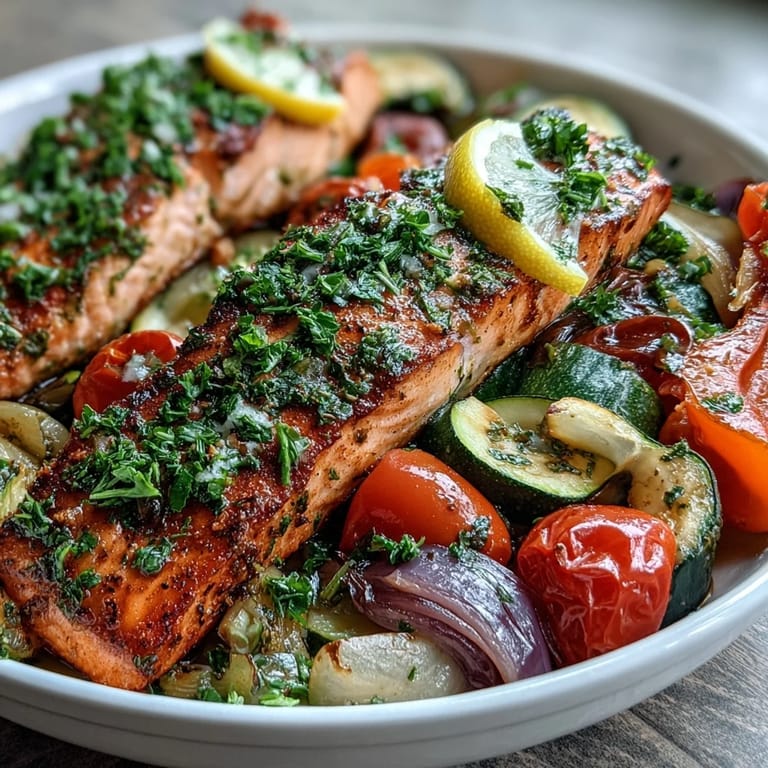
Save There was a Sunday evening last spring when I made this for my mom, who was visiting and had been eating too much takeout. She sat at my kitchen counter with a glass of wine, watching me pull the sheet pan from the oven, and said it reminded her of the kind of meal she used to dream about making when she was too busy raising us to cook anything that wasn't from a box. We ate slowly that night, talking about nothing important, and she went home with the recipe scribbled on a Post-it note. Now she texts me photos of her own versions, usually with whatever vegetables she grabbed at the farmers market that week.
Choosing Your Vegetables
The vegetables in this recipe are completely flexible, and I've learned that almost anything that roasts well will work beautifully here. In the fall, I swap in cubed sweet potatoes and Brussels sprouts, which take the same amount of time and add a heartier, earthy flavor. During summer, I'll use asparagus and snap peas, though I add them halfway through the vegetable roasting time so they don't overcook. The key is to cut everything into similar-sized pieces so they finish at the same time, and to choose vegetables that can handle high heat without turning to mush. I always keep the tomatoes, though, because their juices create a light, flavorful base that ties everything together.
Wine Pairing and Serving Ideas
This dish pairs perfectly with a crisp, citrusy white wine like Sauvignon Blanc or a light Pinot Grigio, which echoes the lemon and doesn't overpower the delicate salmon. If you're not a wine person, sparkling water with a squeeze of lemon or a light iced tea works just as well and keeps the meal feeling fresh. I sometimes serve this over a bed of couscous or quinoa to soak up the pan juices, or alongside a simple arugula salad dressed with olive oil and lemon. For a slightly fancier presentation, I'll crumble a bit of feta cheese over the top right before serving, which adds a creamy, tangy contrast that everyone seems to love.
Storage and Reheating Tips
Leftovers keep well in an airtight container in the fridge for up to three days, and I've found they make an excellent next-day lunch served cold or at room temperature. If you do want to reheat, I recommend using the oven at 350°F for about 10 minutes rather than the microwave, which can make the salmon rubbery and the vegetables soggy. You can also flake the leftover salmon and toss it with the vegetables and some mixed greens for a quick grain bowl, or fold everything into scrambled eggs for a protein-packed breakfast.
- Store the salmon and vegetables separately if you plan to reheat them, since they warm at different rates and this prevents overcooking.
- Squeeze fresh lemon juice over leftovers right before eating to brighten up the flavors that can dull a bit in the fridge.
- If you're meal-prepping, you can chop all the vegetables the night before and store them in the fridge, then just toss and roast when you're ready to cook.
 Save
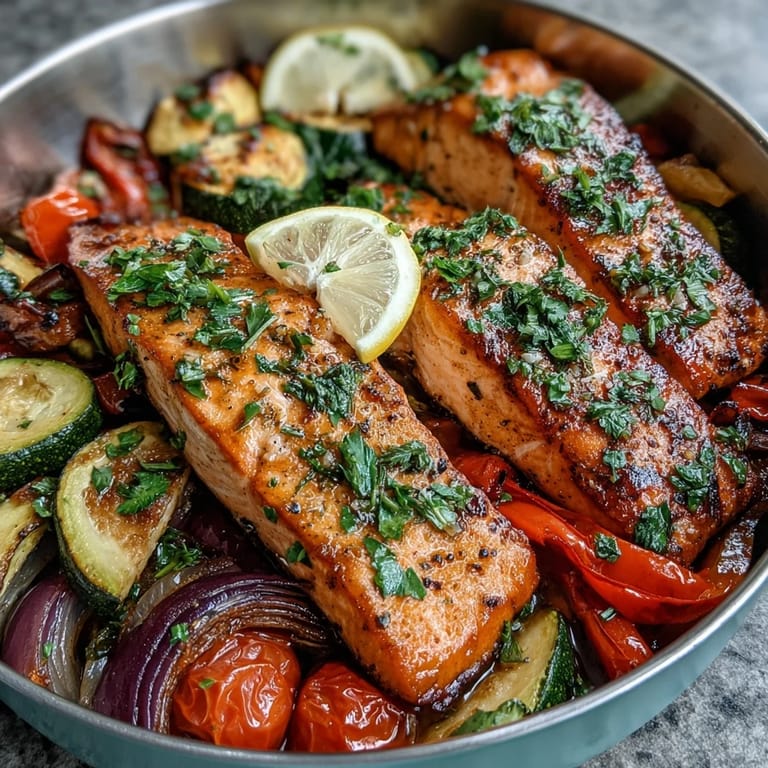
Save This recipe has become my default answer when someone asks what I'm making for dinner, because it never disappoints and always feels like a small victory against the chaos of weeknight cooking. I hope it becomes that kind of recipe for you too, the one you turn to when you want something nourishing and delicious without the fuss.
Recipe FAQ Section
- → What temperature should the oven be set to for roasting salmon and vegetables?
Preheat your oven to 425°F (220°C) for optimal roasting. This high heat helps caramelize the vegetables while cooking the salmon through without drying it out.
- → How do you know when the salmon is fully cooked?
The salmon is done when it flakes easily with a fork and reaches an internal temperature of 145°F (63°C). The flesh should appear opaque throughout and separate gently along the natural lines.
- → Can other vegetables be substituted in this dish?
Absolutely. Try asparagus, broccoli florets, sweet potato wedges, Brussels sprouts, or green beans. Just adjust cooking times accordingly—denser vegetables like sweet potatoes may need a few extra minutes.
- → Why are the vegetables roasted before adding the salmon?
Roasting the vegetables for 10 minutes first gives them a head start since they take longer to cook than the salmon. This ensures everything finishes at the same time with perfectly tender-crisp vegetables and moist, flaky fish.
- → What seasonings work well with this salmon and vegetable combination?
Beyond Italian herbs and lemon zest, try garlic powder, smoked paprika, cumin, or fresh dill. A honey-garlic glaze or pesto drizzle after roasting also adds wonderful flavor dimensions.
- → How should leftovers be stored and reheated?
Store cooled leftovers in an airtight container in the refrigerator for up to 3 days. Reheat gently in a 350°F oven or microwave at 50% power to maintain the salmon's moisture and prevent the vegetables from becoming mushy.