 Save
Save Spring arrived quietly that year, marked by the first bright stalks of rhubarb poking through the garden soil. My neighbor knocked on the door with an armful of the stuff, grinning apologetically, and I suddenly remembered why my grandmother kept these bars in her tin during April and May. There's something about that tart-sweet combination, layered with custard and crumble, that feels like dessert and comfort all at once. I spent an afternoon reconstructing what I could remember, adding my own touches, and by evening the whole kitchen smelled like butter and vanilla.
My sister texted me a photo of these bars stacked on a plate during her daughter's birthday party, and I realized I'd never actually served them to anyone before. That first time, I was nervous about the custard curdling or the rhubarb being too sharp, but when everyone went quiet after the first bite, I knew I'd found something worth repeating. Now they appear in my kitchen every spring without fail, and somehow they've become the thing people ask for when they visit during the season.
Ingredients
- Fresh rhubarb, 400 g: Choose stalks that are firm and bright pink or red; older rhubarb can be stringy and unpleasant, and never use the leaves as they're toxic.
- Granulated sugar (for rhubarb), 75 g: This mellows the rhubarb's sharpness just enough without making it cloying, though you can adjust slightly if your rhubarb seems particularly fierce.
- Lemon juice, 1 tbsp: Brightens the rhubarb's flavor and prevents it from tasting one-dimensional; without it, the bars feel flat.
- Cornstarch (for rhubarb), 1 tbsp: Absorbs excess moisture and keeps the rhubarb from turning the custard into soup during baking.
- All-purpose flour, 250 g: Use whatever you have on hand; I've never found a significant difference between brands for this particular application.
- Rolled oats, 100 g: These add texture and a subtle nuttiness to the crumble; don't use instant oats as they'll turn to mush.
- Unsalted butter, 150 g (cold and cubed): Cold butter is non-negotiable here—warm it and your crumble will be greasy instead of light and sandy.
- Light brown sugar, 100 g: The molasses content gives the crumble depth and helps it brown evenly in the oven.
- Salt, 1/2 tsp: Just enough to balance sweetness and bring out the buttery flavor; don't skip it.
- Whole milk, 300 ml: Full-fat milk creates a richer, smoother custard than lower-fat versions; temperature matters too so don't let it boil.
- Egg yolks, 2 large: Room-temperature yolks whisk more smoothly and create a silkier custard than cold ones straight from the fridge.
- Granulated sugar (for custard), 60 g: This sweetens the custard without overpowering the rhubarb's tartness.
- Cornstarch (for custard), 2 tbsp: This is what thickens the custard and keeps it from breaking; it's more reliable than flour for this application.
- Vanilla extract, 1 tsp: A good quality extract makes a noticeable difference in the final flavor, though imitation works in a pinch.
Tired of Takeout? 🥡
Get 10 meals you can make faster than delivery arrives. Seriously.
One email. No spam. Unsubscribe anytime.
Instructions
- Prepare your pan and preheat:
- Set your oven to 180°C and line a 23cm square baking pan with parchment paper, letting it overhang the edges so you can lift the entire thing out later without wrestling with it. This small step saves frustration and keeps the bars intact when you slice them.
- Cook the rhubarb down:
- Combine the rhubarb, sugar, lemon juice, and cornstarch in a saucepan and cook over medium heat, stirring occasionally, until the rhubarb breaks down and the mixture thickens into something jam-like (about 8–10 minutes). You'll notice the color deepen and the kitchen will smell gorgeously tart, which is your signal it's ready.
- Make the crumble base:
- In a bowl, mix together flour, oats, brown sugar, and salt, then work in the cold butter pieces using your fingertips or a pastry cutter until everything resembles rough breadcrumbs. This takes about 5 minutes if you're patient and don't rush it.
- Press the base layer:
- Transfer two-thirds of the crumble mixture into your prepared pan and press it down firmly and evenly with the back of a spoon, reserving the rest for topping. Don't worry about it being perfectly level—slight variations actually look nice in the finished bars.
- Bake the shortbread base:
- Bake for 15 minutes until the edges start to turn golden and the whole thing smells like butter and toasted oats. This partial bake prevents the base from staying raw and soggy once you add the wet layers.
- Prepare the custard layer:
- Heat the milk in a saucepan until it steams (don't let it boil or you'll scald it and create a skin on top), then whisk together egg yolks, sugar, and cornstarch in a separate bowl until completely smooth. Slowly pour the hot milk into the egg mixture while whisking constantly, then return everything to the pan and cook over medium heat, stirring, for 2–3 minutes until it thickens enough to coat the back of a spoon. Remove from heat and stir in the vanilla extract.
- Layer everything together:
- Spread the cooled rhubarb evenly over the baked base, then pour the custard over top, spreading it out gently so it settles into an even layer. Top with the reserved crumble mixture, scattering it loosely so there are some peaks that will turn crispy and golden.
- Final bake:
- Bake for 30 minutes until the crumble on top is golden and the custard underneath looks just set (it should jiggle slightly if you gently shake the pan, not wiggle like jello). The custard will continue to set as it cools, so don't overbake or it'll become grainy.
- Cool and chill:
- Let the bars cool completely in the pan, then refrigerate for at least 2 hours so the layers firm up and are easier to slice cleanly. Use the parchment overhang to lift the whole block out, then cut into 16 bars with a sharp knife.
 Save
Save The moment I understood why these bars mattered came when my dad arrived home on an ordinary Tuesday to find them cooling on the rack, and without a word, he poured tea and we sat in the afternoon light eating straight from the pan. That's when dessert becomes something more than sweet—it becomes the thing that makes an ordinary day feel intentional.
Why the Layers Matter
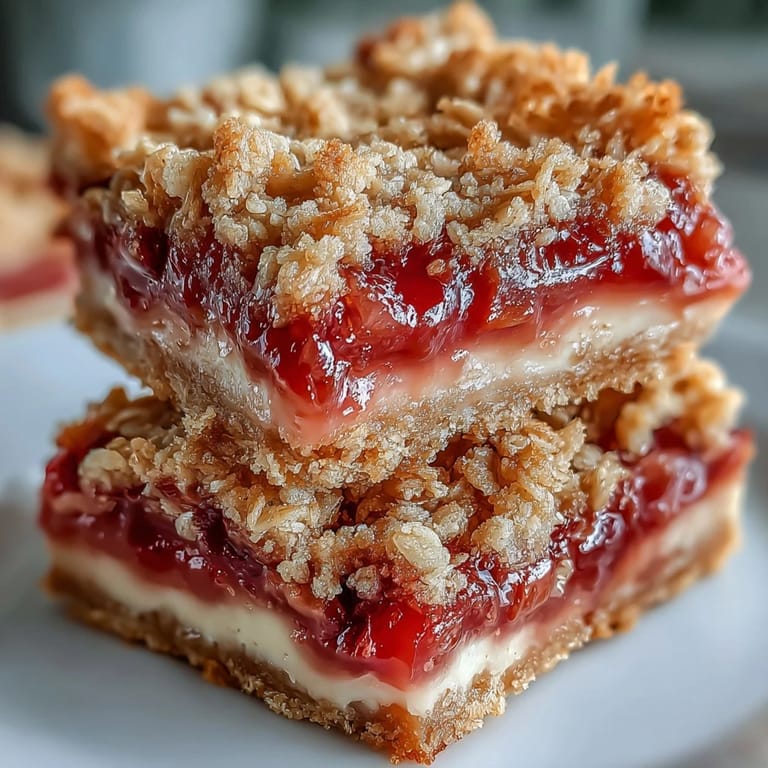
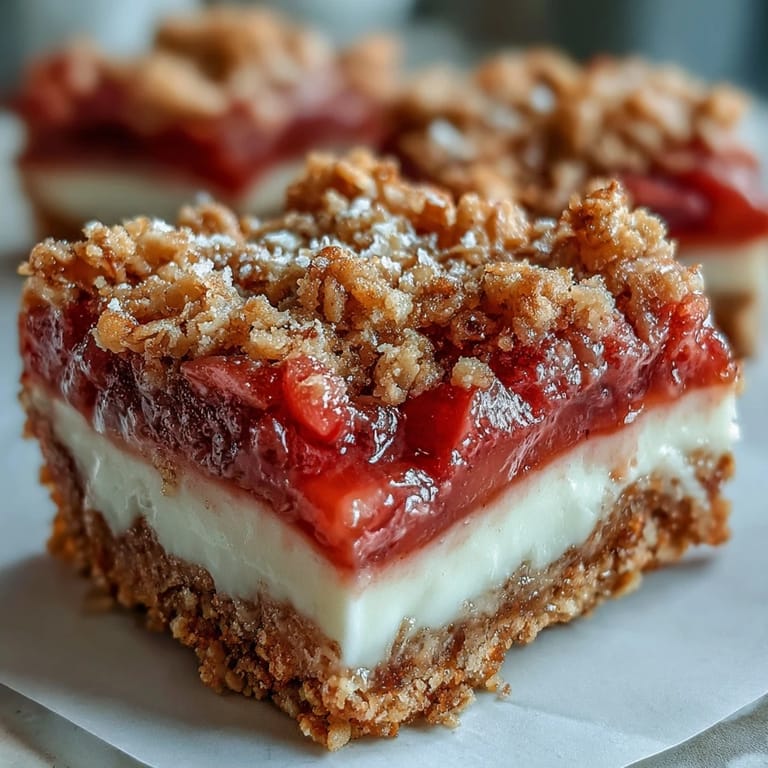
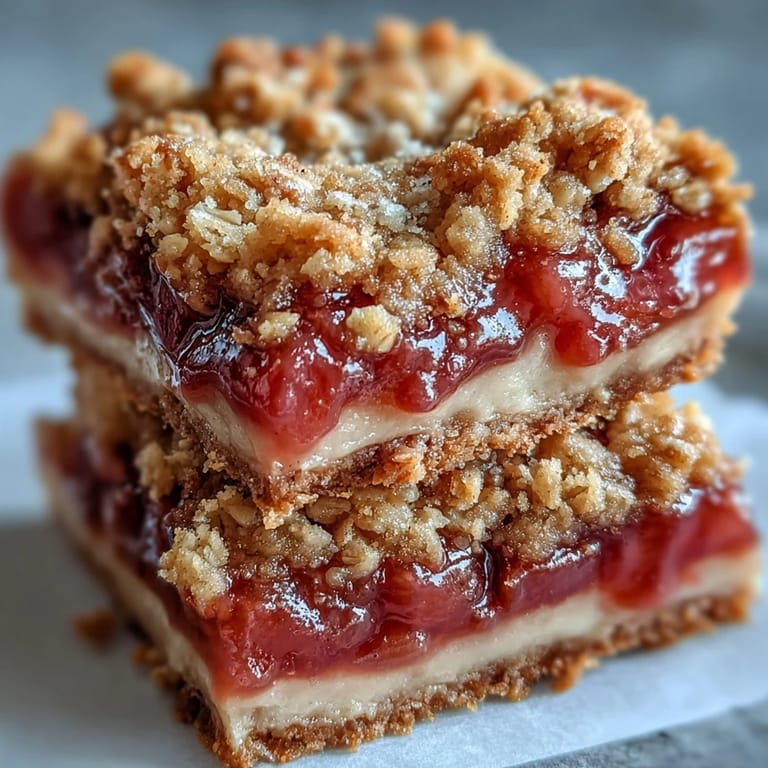
This recipe works because each layer does something different—the shortbread base anchors everything with its buttery crunch, the rhubarb cuts through richness with bright tartness, and the custard binds it all together with creamy smoothness. If you removed any single layer, the whole thing would feel incomplete, which is exactly why this combination has survived in British baking for so long. It's a lesson in balance that applies to more than just baking.
Timing and Temperature
The biggest difference between bars that are just okay and bars that people actually remember comes down to respecting temperatures and timing. Letting the rhubarb cool before adding the custard prevents it from cooking the egg yolks, and chilling everything afterward gives you clean slices instead of a beautiful mess. I learned this the hard way by trying to rush, cutting warm bars into chaos, and accepting that some kitchen lessons require patience.
Serving and Storage
These bars are wonderful cold straight from the fridge, at room temperature with a cup of tea, or even slightly warmed through with a scoop of vanilla ice cream melting on top. They keep beautifully in an airtight container in the refrigerator for up to three days, though honestly they rarely last that long once people know they're there.
- A light dusting of powdered sugar right before serving adds elegance without changing the flavor.
- For a sharper, more complex taste, scatter a handful of raspberries into the rhubarb layer before cooking it down.
- If your rhubarb is particularly stringy, chop it smaller and cook it a minute or two longer until it breaks down completely.
 Save
Save Spring comes around again, and without thinking much about it, I find myself trimming rhubarb and pulling butter from the cold box. These bars taste like the season itself—tart and bright and hopeful.
Recipe FAQ Section
- → Can I use frozen rhubarb instead of fresh?
Yes, frozen rhubarb works well. Thaw and drain excess liquid before cooking to prevent the bars from becoming too watery.
- → How do I know when the custard layer is properly set?
The custard should be just set with a slight jiggle in the center. It will firm up further as it cools and chills in the refrigerator.
- → Can I make these bars ahead of time?
Absolutely. These bars actually taste better after chilling overnight, allowing the flavors to meld and the layers to set properly. Store covered in the refrigerator for up to 3 days.
- → What can I substitute for rhubarb if it's not in season?
Try using tart apples, plums, or a mix of berries like raspberries and strawberries. Adjust sugar levels based on the fruit's natural sweetness.
- → Why is my crumble topping not crispy?
Ensure your butter is cold when mixing, and don't overwork the mixture. The crumble should resemble coarse breadcrumbs before baking.
- → Can I freeze these bars for later?
Yes, freeze individual bars wrapped in plastic wrap and foil for up to 2 months. Thaw in the refrigerator overnight before serving.