 Save
Save Last spring, I was invited to a garden party where everything felt impossibly elegant, and I wanted to bring something that matched the moment. A friend had just given me a bottle of elderflower cordial, and I found myself standing in the kitchen on a quiet morning, thinking about how to use it. That's when the idea struck: a tart that tasted like spring itself, with white chocolate so creamy it melts on your tongue and rhubarb that's been roasted until it's both tender and tart. It became the dessert I kept making, and honestly, it's the one people still ask me about.
I'll never forget serving this at a dinner party where my neighbor brought her teenage daughter, who announced loudly that she didn't like rhubarb. Twenty minutes later, she was asking for the recipe. There's something about the way the tartness of the roasted rhubarb plays against the sweet, creamy custard that converts even the skeptics. That moment taught me that sometimes a dish's real power isn't in impressing people, it's in changing their minds.
Ingredients
- All-purpose flour: The foundation of a pastry that's crisp and tender, and using a good-quality flour makes a noticeable difference in how the crust shatters when you bite into it.
- Cold unsalted butter: The temperature matters more than you'd think; if it's too warm, your crust becomes greasy instead of flaky, so I keep mine in the freezer for ten minutes before starting.
- Powdered sugar: A small amount adds a subtle sweetness to the crust and helps it brown evenly, a trick I learned after making tough, pale shells for years.
- Egg yolk: This single yolk brings richness and helps bind the dough without making it heavy or tough.
- White chocolate: Finely chopped white chocolate melts smoothly into the hot custard, creating that silky texture; avoid the cheap stuff, as it can taste waxy and one-dimensional.
- Heavy cream and whole milk: The combination of both creates a custard that's rich but not overwhelming, and the milk lightens it just enough that you can actually eat more than one slice.
- Elderflower cordial: This is the secret ingredient that ties everything together, adding a floral note that feels both unexpected and familiar.
- Egg yolks: Three yolks create a custard that's velvety and sets properly; use fresh ones from a good source if you can.
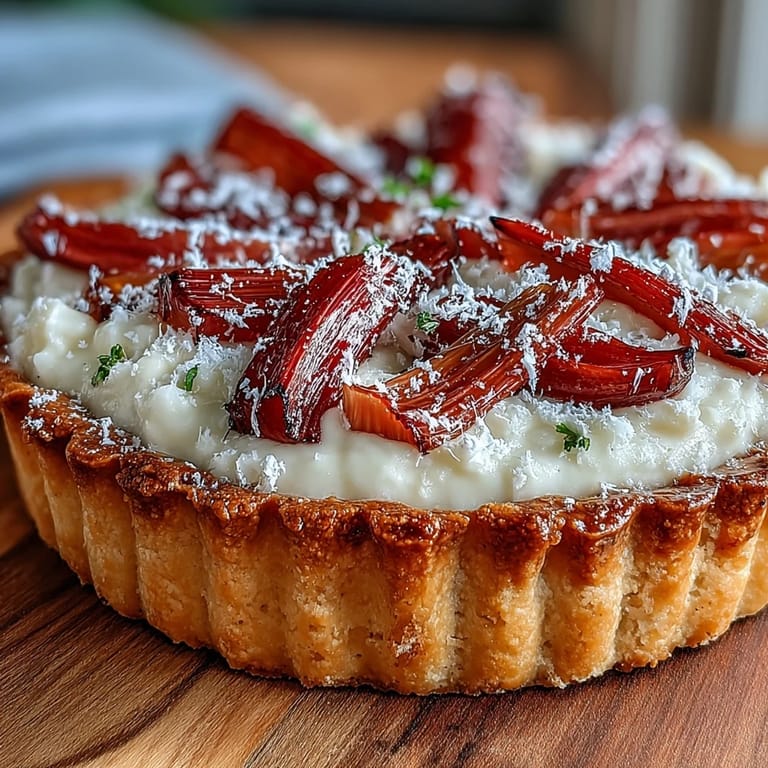
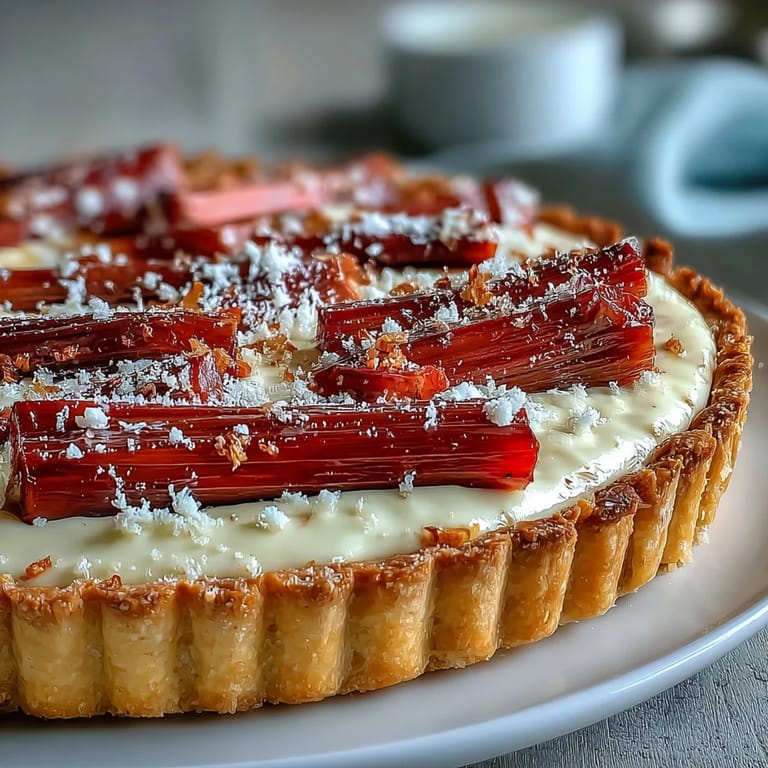
- Rhubarb: Cut into batons so they cook evenly and look beautiful on top of the tart when they're roasted until they collapse slightly at the edges but still hold their shape.
- Lemon zest: Just enough to brighten the rhubarb without overwhelming the delicate floral notes of the custard.
Tired of Takeout? 🥡
Get 10 meals you can make faster than delivery arrives. Seriously.
One email. No spam. Unsubscribe anytime.
Instructions
- Pulse the pastry dough:
- In a food processor, combine flour, cold cubed butter, powdered sugar, and salt, pulsing until the mixture looks like rough breadcrumbs. This takes about thirty seconds, maybe less, so don't overthink it. Add the egg yolk and one tablespoon of cold water, then pulse again until the dough just begins to clump together.
- Rest the dough:
- Shape the dough into a disk, wrap it in plastic, and slide it into the refrigerator for thirty minutes, or longer if you're not ready to roll. Cold dough is forgiving dough, and this rest makes all the difference in texture.
- Roll and line the tin:
- On a lightly floured surface, roll the dough out to about three millimeters thick, then transfer it to your tart tin and press it gently into the corners. Trim any overhang and chill for another fifteen minutes while you preheat the oven to 180°C.
- Blind bake the crust:
- Line the crust with parchment paper and fill it with baking beans or rice, then bake for fifteen minutes. Remove the beans and parchment, then bake for another five to seven minutes until the shell is pale golden and smells toasty. Cool completely before filling.
- Heat the cream and milk:
- In a saucepan, pour the heavy cream and whole milk and place it over medium heat, watching until steam rises from the surface. You want it hot but not boiling, which usually takes about four or five minutes.
- Whisk the egg yolks:
- In a separate bowl, whisk together the egg yolks, granulated sugar, and vanilla extract until the mixture is pale and slightly thickened, which takes about two minutes of steady whisking. This step aerates the yolks and helps prevent them from scrambling when you add the hot liquid.
- Temper the yolks:
- Slowly pour the hot cream mixture into the whisked yolks while whisking constantly. Pouring slowly is key; if you rush this step, you'll end up with scrambled eggs instead of custard. Once combined, return the mixture to the saucepan over low heat.
- Cook until thickened:
- Stir the custard continuously over low heat until it coats the back of a spoon, which should take about five to eight minutes. You'll feel it thicken slightly under your spoon, and that's when you know it's done; don't let it boil.
- Add the chocolate and cordial:
- Remove the pan from heat and stir in the finely chopped white chocolate and elderflower cordial until smooth and completely melted. The residual heat is enough to melt the chocolate if you wait a few seconds before stirring.
- Chill the custard:
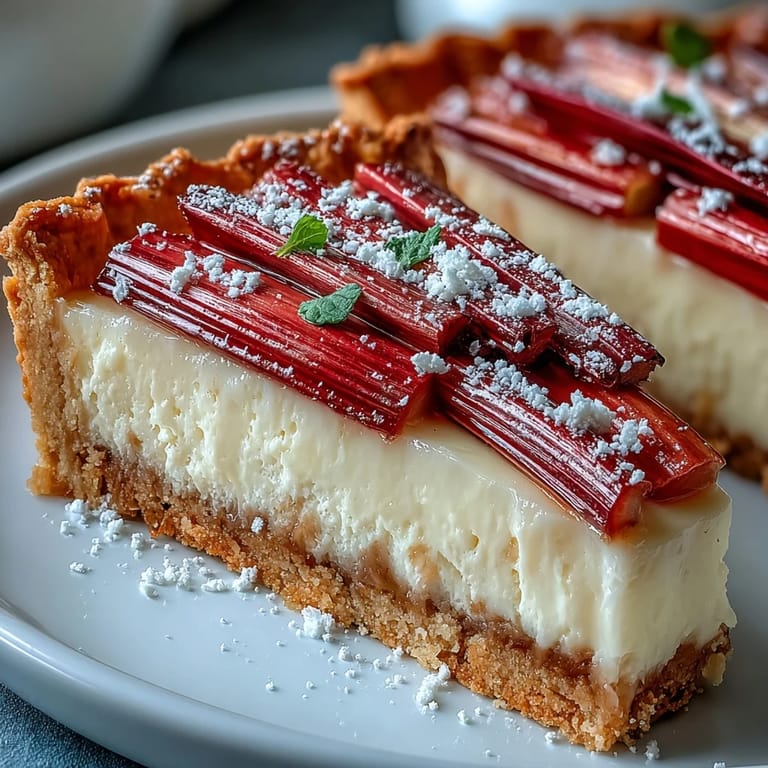
- Pour the custard into the cooled tart shell and refrigerate for at least one hour, or until it sets to a silky firmness. You can make this the morning of a dinner party and it'll be ready by evening.
- Roast the rhubarb:
- Arrange the rhubarb batons in a single layer in a baking dish, then sprinkle with sugar, lemon zest, and elderflower cordial. Cover loosely with foil and roast at 190°C for fifteen minutes, then remove the foil and roast for another five to eight minutes until the rhubarb is tender but hasn't collapsed completely.
- Cool and arrange:
- Let the roasted rhubarb cool completely at room temperature, then arrange it gently over the set custard. A light brush of extra elderflower cordial adds a subtle shine and a final floral note.
 Save
Save There's something special about the moment when you pull this tart from the refrigerator and it glistens under kitchen light, each rhubarb baton exactly where you placed it. It looks like something you'd buy from a French patisserie, but you made it in your own kitchen, and that's a feeling worth chasing in the kitchen.
Why White Chocolate Works Here
White chocolate has a terrible reputation in baking circles, mostly because cheap versions taste like sweetened wax. But good white chocolate, the kind with real cocoa butter, brings a vanilla-forward creaminess that plays beautifully against the tartness of rhubarb and the delicate florals of elderflower. It doesn't compete for attention; instead, it softens the edges and makes the whole dessert feel luxurious and indulgent. I started using it after a pastry chef friend explained that the point of white chocolate isn't to taste like chocolate, it's to add texture and a subtle sweetness that ties other flavors together.
About Elderflower Cordial
Elderflower cordial might seem like a fancy ingredient, but it's actually becoming easier to find in regular grocery stores, and a bottle lasts forever because you only use a small amount at a time. If you can't find it, you can substitute a splash of honey and a tiny pinch of lavender, though the tart will taste slightly different. The beauty of elderflower is that it has this bright, almost grape-like quality that works with both sweet and tart flavors, so it acts like the glue holding all these different elements together. When you taste that first bite, you'll understand why bakers have been using it for centuries.
Make-Ahead Magic and Storage
This tart actually tastes better the next day, once all the flavors have settled and the custard has firmed up completely. You can make the tart shell a day ahead and store it in an airtight container, prepare the custard filling up to two days in advance, and roast the rhubarb the morning of serving. The only step you can't do far ahead is the final assembly, but arranging the rhubarb on top takes about five minutes, which means you can have an impressive, elegant dessert ready with almost no last-minute effort. Store the finished tart covered in the refrigerator, and it will keep beautifully for two days, though it's honestly best eaten within twenty-four hours when the crust is at its crispest.
- Make the tart crust up to three days ahead and store it wrapped in plastic in the refrigerator, or freeze it for up to three months.
- The custard filling can be made two days ahead and stored covered; the custard will actually improve in texture as it rests.
- Roasted rhubarb keeps for up to three days in the refrigerator, so you can prepare it a day or two before you assemble the tart.
 Save
Save Every time I make this tart, I'm reminded that the most elegant desserts don't require complicated techniques, just good ingredients and a little attention to detail. It's the kind of dish that makes people feel cared for, and honestly, that's what matters most.
Recipe FAQ Section
- → Can I make this tart ahead of time?
Yes, this is an excellent make-ahead dessert. The tart shell and custard can be prepared a day in advance and stored in the refrigerator. Add the roasted rhubarb just a few hours before serving for the best presentation and texture.
- → What can I substitute for elderflower cordial?
If elderflower cordial is unavailable, try using rose water, orange blossom water, or a light honey syrup. You can also use a splash of white wine or champagne for a different floral note, though the flavor profile will be slightly different.
- → How do I prevent the tart crust from becoming soggy?
Blind baking the crust until golden is essential. Make sure the crust is completely cooled before adding the custard filling, and ensure the custard has thickened properly. Some bakers brush the cooled crust with a thin layer of melted white chocolate before adding the filling for extra protection.
- → Can I use frozen rhubarb instead of fresh?
Fresh rhubarb is recommended for the best texture and presentation. Frozen rhubarb tends to release more moisture and may become mushy when roasted. If you must use frozen, thaw and drain it thoroughly, then reduce the roasting time slightly.
- → What type of white chocolate works best?
Use good-quality white chocolate with at least 25% cocoa butter for a smooth, creamy custard. Avoid white baking chips or compound chocolate, as they won't melt as smoothly and may affect the texture of the filling.
- → How should I store leftover tart?
Cover the tart loosely with plastic wrap or store in an airtight container in the refrigerator for up to 3 days. The rhubarb may soften slightly over time, so it's best enjoyed within the first two days for optimal texture.