 Save
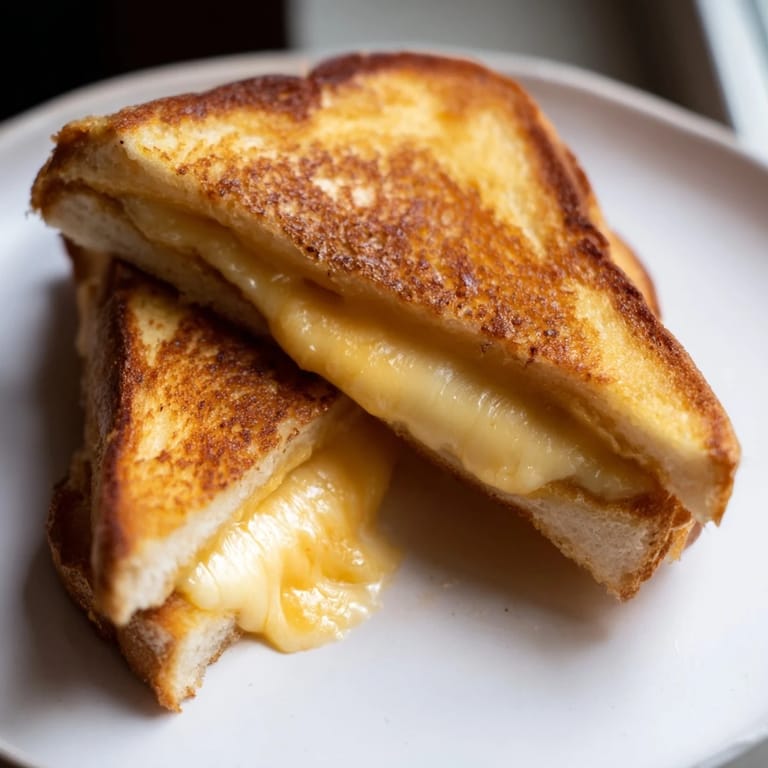
Save There's something about the smell of butter hitting a hot pan that makes me abandon whatever I was supposed to be doing that morning. One lazy Sunday, I found myself staring at a half loaf of brioche and a wedge of gruyère, and somehow my brain mashed together two completely separate cravings: the custardy indulgence of French toast and the gooey comfort of a grilled cheese. The result was so ridiculously good that I've made it at least a dozen times since, each time wondering why it took me so long to realize these two classics were meant to be together.
I tested this on friends who showed up expecting regular brunch, and watching their faces when they bit into that first golden slice was honestly worth more than the ingredients cost. My friend Marcus said, "Wait, is this... is this savory French toast with melted cheese inside?" and then just went silent for a while, which I took as a compliment.
Ingredients
- Eggs, whole milk, and heavy cream: The holy trinity of any proper custard—the cream is what makes this silky instead of just eggy.
- Granulated sugar: Just a tablespoon keeps things balanced without tipping into dessert territory.
- Kosher salt and black pepper: Season generously here since bread absorbs everything without complaint.
- Dijon mustard (optional but really not): This is the secret that makes people say "what's different?" and then get mad when you finally tell them.
- Brioche or challah bread: Use thick slices—thin bread falls apart and won't give you that perfect contrast between custardy inside and crispy outside.
- Gruyère or sharp cheddar: Gruyère melts like a dream and adds nuttiness, but sharp cheddar works beautifully too and costs less.
- Unsalted butter and neutral oil: The combination keeps your pan from smoking while the butter does the flavor work.
Tired of Takeout? 🥡
Get 10 meals you can make faster than delivery arrives. Seriously.
One email. No spam. Unsubscribe anytime.
Instructions
- Whisk the custard:
- Combine eggs, milk, cream, sugar, salt, pepper, and mustard in a shallow bowl, whisking until the mixture is completely smooth with no streaks of white. This takes about 30 seconds of actual whisking—don't overthink it.
- Build the sandwiches:
- Lay out four bread slices and top each with two slices of cheese, then cap with the remaining bread. The double layer of cheese is non-negotiable here because it creates pockets of melted luxury.
- Heat your pan:
- Medium heat is your friend—too high and the outside burns before the cheese melts inside, too low and you'll just have sad, soggy bread. Let the butter foam and the oil shimmer together for about 30 seconds before you start.
- Dip and coat:
- Work quickly here, submerging each sandwich for just two to three seconds per side so it absorbs the custard without becoming waterlogged. You want it thoroughly wet, not swimming.
- Pan-sear with purpose:
- Place sandwiches in the hot skillet and resist the urge to fidget—let them sit for three to four minutes to develop that gorgeous golden crust, then flip gently and repeat. Press down lightly with your spatula just before flipping to help the cheese melt into every corner.
- Rest and slice:
- Let the finished sandwiches rest for two minutes on a cutting board so the cheese sets just enough to hold together when you slice them diagonally.
 Save
Save The moment that cemented this as a regular in my kitchen was when my partner asked if we could have it again the next week, and then the week after that. Suddenly it wasn't just a clever breakfast idea—it was something we actually craved.
The Savory Custard Game-Changer
Most people think French toast has to be sweet, but that's only because they haven't tasted it with a whisper of Dijon mustard and black pepper in the custard. The mustard doesn't announce itself loudly; it just adds depth and makes you wonder what the secret ingredient is. If you're nervous about it, taste a tiny spoonful first to convince yourself it's not weird, then watch it transform the whole dish.
Cheese Selection Matters
Gruyère is the gold standard here because it melts smoothly and adds a subtle nuttiness that elevates the whole thing. But don't feel locked into that choice—sharp cheddar brings a bolder punch, fontina adds earthiness, and Swiss is reliable if you're playing it safe. I've even done a mix of two cheeses, which is a little fancy but honestly not much more work.
Make It Your Own
The beauty of this recipe is how well it takes improvisation. I've made it with caramelized onions tucked under the cheese, spread fig jam on the bread before assembling, and even added a thin layer of prosciutto for a salty edge. Once you understand the mechanics, you're free to get creative.
- Caramelized onions or fig jam turn this into something almost fancy enough for company.
- A light dusting of fresh thyme on the cheese before cooking adds an herbaceous note that's surprisingly perfect.
- Serve it with a simple arugula salad dressed in lemon vinaigrette instead of soup if you want something lighter alongside.
 Save
Save This is the kind of recipe that makes you feel clever in the kitchen without actually being complicated, which is pretty much the best thing a dish can do. Make it once and it becomes your thing, the one you text friends about.
Recipe FAQ Section
- → What type of bread works best?
Brioche or challah work best due to their soft texture and slight sweetness, which complements the custard mixture well.
- → Can I use different cheeses?
Yes, Swiss, mozzarella, or fontina can replace Gruyère or cheddar for different flavor profiles.
- → How do I prevent soggy bread?
Dip the sandwiches briefly in the custard to coat without soaking through, and cook on medium heat to achieve a crisp exterior.
- → Any tips for perfect melting cheese?
Using good melting cheeses and cooking the sandwiches slowly on medium heat helps achieve a gooey interior without burning the bread.
- → Can these be prepared ahead of time?
Yes, you can assemble and refrigerate the sandwiches before dipping and cooking just prior to serving.