 Save
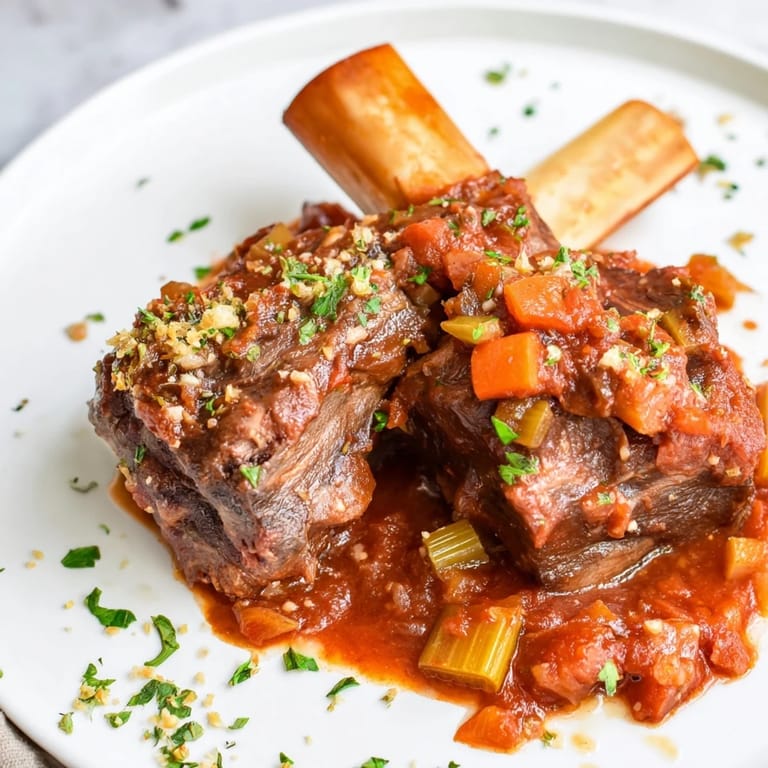
Save The first time I really understood what slow cooking meant was in a Milan kitchen on a gray afternoon, watching veal shanks turn from ordinary to extraordinary as they braised low and gentle for hours. There's something about the ritual of it—the initial sear, the layering of flavors, the way the whole apartment fills with that deep, savory perfume—that made me stop rushing through dinner and actually sit with the process. Osso buco taught me that the best dishes aren't about speed; they're about patience and letting time do the work your hands can't.
I made this for my partner on a night when we both needed to slow down, and somewhere between the second glass of wine and stirring those shanks into the pot, we stopped talking about our week and just... existed together in that warm kitchen. That's when I realized osso buco isn't just dinner—it's an excuse to be present.
Ingredients
- Veal shanks (4 pieces, about 350 g each): Cross-cut pieces with the bone intact are everything here; the marrow adds depth you can't replicate, and the bone helps the meat hold its shape during that long braise.
- Salt and freshly ground black pepper: Don't skip the freshly ground part—it makes a real difference in how the flavors open up.
- All-purpose flour (1/3 cup): This light dredge creates a subtle crust that helps capture all those pan flavors; just shake off the excess so nothing gets gummy.
- Olive oil and unsalted butter (2 tbsp each): The combination gets you a sear that's both rich and clean, and butter gives you that nutty depth.
- Onion, carrots, celery (1 large, 2 medium, 2 stalks): This is your flavor base, and chopping them fine means they meld completely into the sauce rather than staying separate.
- Garlic cloves (4, minced): Fresh garlic becomes almost sweet during a long braise, so don't hold back.
- Dry white wine (1 cup): A wine you'd actually drink; cheap wine makes cheap sauce, and you'll taste it for two hours.
- Diced tomatoes with juice (1 can, 400 g): The juice is liquid gold—don't drain it.
- Beef or veal stock (1.5 cups): Homemade is better, but good quality store-bought works; it's what carries all those flavors into the meat.
- Tomato paste (2 tbsp): A small amount concentrated flavor without making the sauce taste like tomato soup.
- Bay leaves and dried thyme (2 and 1 tsp): These herbals provide a subtle backbone; don't skip them thinking they won't matter.
- Lemon zest (from 2 lemons): Half goes into the braising liquid for complexity, the other half becomes gremolata—that final zing that makes people sit up and notice.
- Fresh flat-leaf parsley and garlic for gremolata (2 tbsp and 1 clove): This is your ace card; the brightness right at the end transforms the whole dish.
Tired of Takeout? 🥡
Get 10 meals you can make faster than delivery arrives. Seriously.
One email. No spam. Unsubscribe anytime.
Instructions
- Prepare your veal:
- Pat those shanks completely dry—moisture is the enemy of browning. Season them generously with salt and pepper, then give them a light coat of flour, shaking off anything that doesn't cling naturally. You want just enough to create a delicate crust, not a thick coating.
- Sear for color and flavor:
- Heat your oil and butter together until it's shimmering and smells almost nutty. Working with two or three shanks at a time so you don't crowd the pan, sear each piece until it's golden brown on all sides—this takes about 3 to 4 minutes per side. You're not cooking the meat through; you're building flavor on the surface.
- Build your flavor base:
- In that same pot with all those browned bits still clinging to the bottom, add your chopped vegetables and sauté gently until they're soft and the onion turns translucent, which takes about 6 minutes. The vegetables should smell sweet, not burnt.
- Deepen the sauce:
- Add the tomato paste and let it cook for just one minute, stirring constantly so it doesn't burn. Then pour in your wine, scraping the bottom of the pot with a wooden spoon to release all those caramelized bits—that's flavor gold.
- Build the braising liquid:
- Add the tomatoes with their juice, the stock, bay leaves, thyme, and about half your lemon zest. Give everything a good stir, tasting as you go to make sure the balance feels right to you.
- Return the veal and start braising:
- Nestle those browned shanks back into the pot in a single layer, spooning some of that liquid over each piece. Bring it all to a gentle simmer—you should see just a few lazy bubbles breaking the surface, not an aggressive boil.
- Low and slow in the oven:
- Cover your pot and slide it into a preheated 160°C/325°F oven for 2 hours. The veal should be fork-tender by the end, the meat pulling easily from the bone but not falling apart. This is where the magic happens—time and gentle heat transforming tough cuts into something sublime.
- Make your gremolata:
- While everything braises, finely chop your parsley and mince a fresh garlic clove, then combine with the remaining lemon zest. This only takes 2 minutes and tastes freshly alive against all that deep, long-cooked richness.
- Finish and serve:
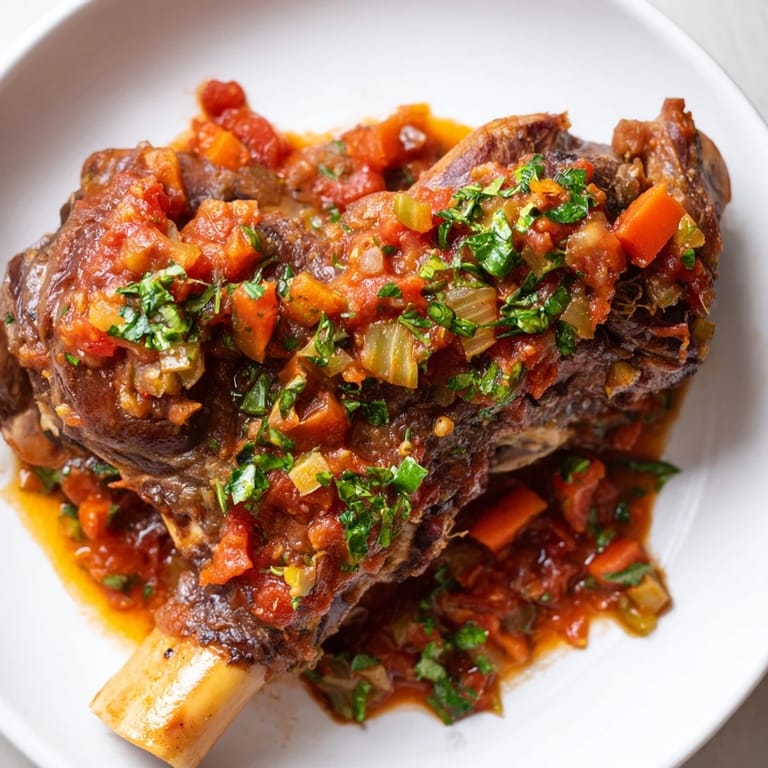
- Remove the shanks to a warm platter. Skim any excess fat from the surface of the sauce if you like it less rich, then let it simmer gently on the stovetop for a few minutes if it seems too thin. Spoon the sauce over the shanks and finish each one with a generous pinch of that bright green gremolata just before serving.
 Save
Save There's a moment near the end of the braise, maybe at the hour-and-45-minute mark, when you open the oven and that steam hits your face and you smell something so completely, deeply satisfying that you suddenly understand why people cook. That's osso buco.
What to Serve Alongside
Saffron risotto is the traditional pairing, creamy and golden and elegant, but I've had just as much success with soft polenta or mashed potatoes—anything that can soak up that incredible sauce. The vegetables in the braise are soft enough that you don't really need another vegetable, but I sometimes add a simple green salad on the side just for color and acidity, which feels nice after such a rich main course.
Building Flavor Layers
What makes osso buco work is never skipping a step or rushing the browning. That initial sear creates a crust that traps flavor, the wine deglazes all those caramelized bits into the sauce, and the long braise lets every element meld into something bigger than its parts. Think of it like building a story—each layer adds depth that you'd miss if you skipped ahead.
Timing and Make-Ahead
The hands-on work is only about 25 minutes, which means you can sear and sauté everything in the afternoon and then braise for 2 hours while you do other things—or even make it a day ahead and reheat it gently before serving. In fact, the flavors get even better after sitting overnight, which sometimes tempts me to make this on Sunday and look forward to Monday dinner. The one thing you should do fresh is the gremolata, made no more than an hour before serving so it stays bright and alive.
- Make this dish one day ahead through the braising step for deeper flavor and easier final assembly.
- Reheat gently and slowly, covered, at low temperature so nothing dries out.
- Always make gremolata fresh, no more than an hour before eating.
 Save
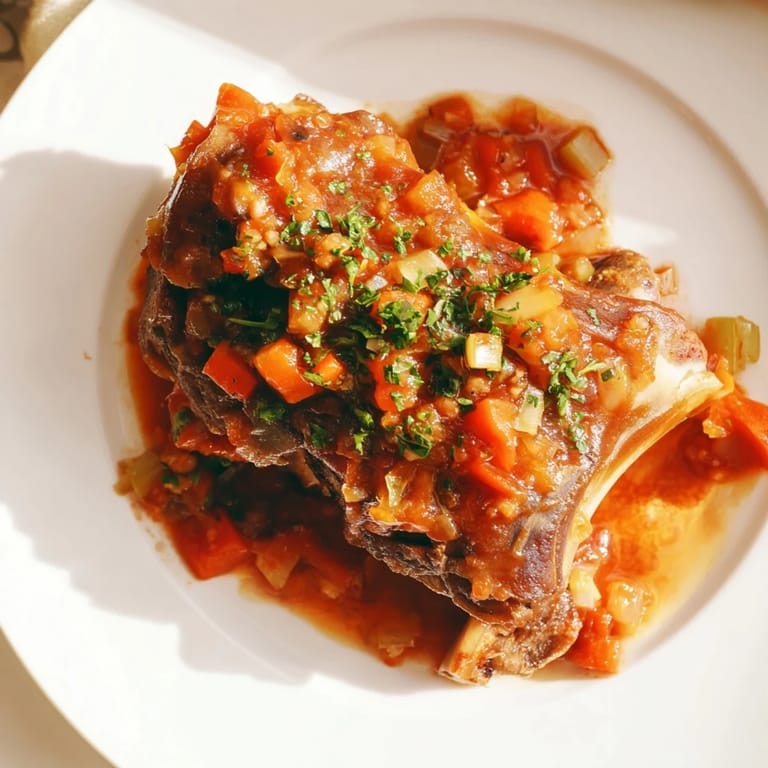
Save Osso buco is what happens when you decide that dinner matters, that the time spent cooking and eating together is time well spent. Make it, and you'll understand why it's stayed on tables for centuries.
Recipe FAQ Section
- → What cut of meat is best for Osso Buco?
Veal shanks that are cross-cut and bone-in are ideal, providing tender meat and rich marrow for flavor.
- → How long should Osso Buco be cooked?
It requires about 2 hours braising in the oven at a low temperature until the meat is fork-tender.
- → What is gremolata and why is it used?
Gremolata is a mix of parsley, garlic, and lemon zest that adds a fresh, zesty finish balancing the rich braised flavors.
- → Can I use gluten-free flour for dredging?
Yes, gluten-free flour can replace all-purpose flour to accommodate gluten sensitivities without altering the dish's texture.
- → What are good side dishes to serve with Osso Buco?
Classic sides include saffron risotto, polenta, or creamy mashed potatoes, which complement the savory sauce well.
- → Can beef shanks be substituted for veal?
Beef shanks can be used as an alternative, but cooking time may need to be extended to achieve tenderness.