 Save
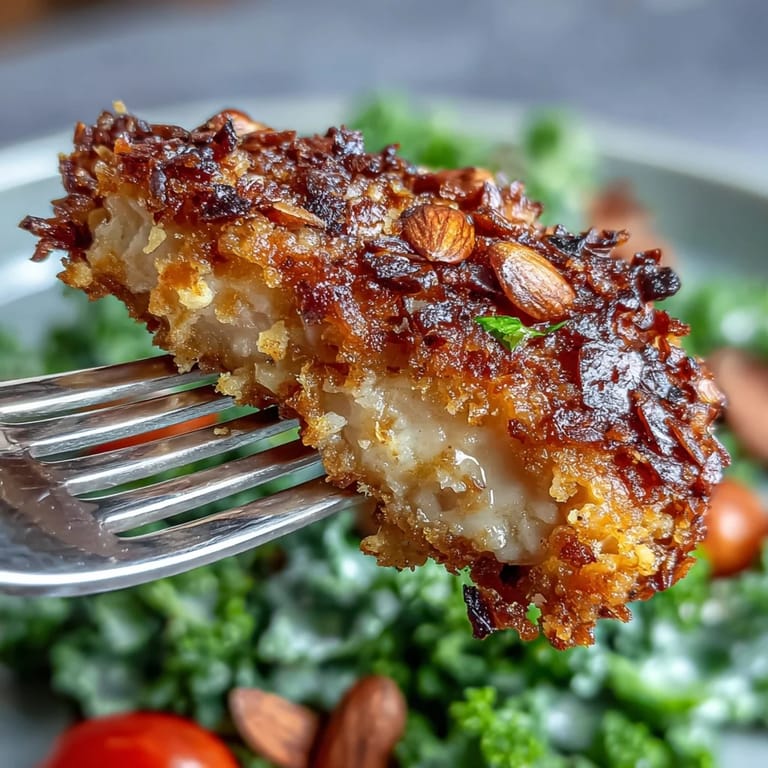
Save There's something about the sound of almonds hitting hot oil that signals you're about to make something special. I discovered this dish on an ordinary Tuesday when I had a bunch of kale that needed rescuing and chicken breasts staring at me from the fridge. The combination seemed unexpected at first—nutty, crunchy coating meeting tender meat and that bright, lemony salad with its subtle tang from sumac. But that first bite convinced me this wasn't just dinner; it was the kind of meal that makes you feel like you're taking care of yourself without any sacrifice.
I made this for my sister when she went through a phase of trying to eat less bread, and watching her close her eyes after that first bite was worth every minute of prep work. She asked for the recipe immediately, which I took as the highest compliment. Now it's become our go-to when we want something filling that doesn't leave us feeling heavy afterward.
Ingredients
- Boneless, skinless chicken breasts: Pat them completely dry before breading—moisture is the enemy of that golden, crunchy exterior you're after.
- Almond meal or finely ground almonds: Make sure it's truly fine; coarse pieces won't adhere properly and you'll lose that satisfying crunch.
- Grated Parmesan cheese: Don't use pre-shredded here; freshly grated melts into the coating and adds savory depth that boxed versions can't match.
- Garlic powder, smoked paprika, salt, and black pepper: These aren't optional flavor boosters—they're what transforms simple almonds into something crave-worthy.
- Eggs: Your binding agent and the reason this coating sticks; use them beaten and ready.
- Olive oil for frying: Use a good quality oil you actually like the taste of; you'll notice it in every bite.
- Kale: The massaging step matters more than you'd think; it softens the leaves and makes them actually pleasant to eat raw.
- Olive oil and lemon juice for salad: This simple dressing awakens the kale and prevents it from tasting bitter or tough.
- Red onion: Thin slices add bite and visual appeal without overwhelming the other flavors.
- Cherry tomatoes: Halving them instead of leaving them whole lets the acid and sweetness distribute better.
- Fresh parsley: Chopped and scattered at the end, it adds freshness that feels like you're eating something alive and good for you.
- Sumac: This is the secret weapon—it brings lemony brightness without acidity, and a little goes a long way.
- Toasted slivered almonds: Toast them yourself if you can; the flavor is brighter and the crunch more pronounced than store-bought.
Tired of Takeout? 🥡
Get 10 meals you can make faster than delivery arrives. Seriously.
One email. No spam. Unsubscribe anytime.
Instructions
- Set up your station and prep the oven:
- Preheat to 375°F and line your baking sheet with parchment paper so cleanup is painless. This is one of those moments where five minutes of setup saves you from a frustrating mess later.
- Build your breading station:
- Combine almond meal, Parmesan, garlic powder, smoked paprika, salt, and pepper in one shallow bowl, then beat your eggs in another. Having both ready before you touch the chicken means the whole process flows smoothly.
- Prepare the chicken:
- Pat your chicken breasts dry with paper towels—this step is non-negotiable for that crunchy crust. One at a time, dip each breast in egg, then press firmly into the almond mixture, making sure every side gets covered.
- Sear for color and flavor:
- Heat olive oil in a large skillet over medium heat until it shimmers slightly. Sear the coated chicken for 2 to 3 minutes per side until golden brown; you're looking for that gorgeous color that tells you the coating is set.
- Finish in the oven:
- Transfer your seared chicken to the prepared baking sheet and bake for 12 to 15 minutes until the internal temperature reaches 165°F. The oven does the gentle cooking while the crust stays intact.
- Meanwhile, massage and marry the kale:
- While chicken bakes, put your torn kale in a large bowl with olive oil, lemon juice, and salt. Use your hands to massage it for about 2 minutes—you'll feel it soften and darken slightly, which means it's ready to carry the rest of the flavors.
- Build your salad:
- Add sliced red onion, halved cherry tomatoes, fresh parsley, and sumac to the massaged kale and toss everything together gently. The sumac should distribute evenly so every bite carries that subtle tang.
- Final flourish:
- Just before serving, scatter the toasted slivered almonds across the top of the salad. This timing keeps them crunchier than if they sit with the dressing.
- Plate and serve:
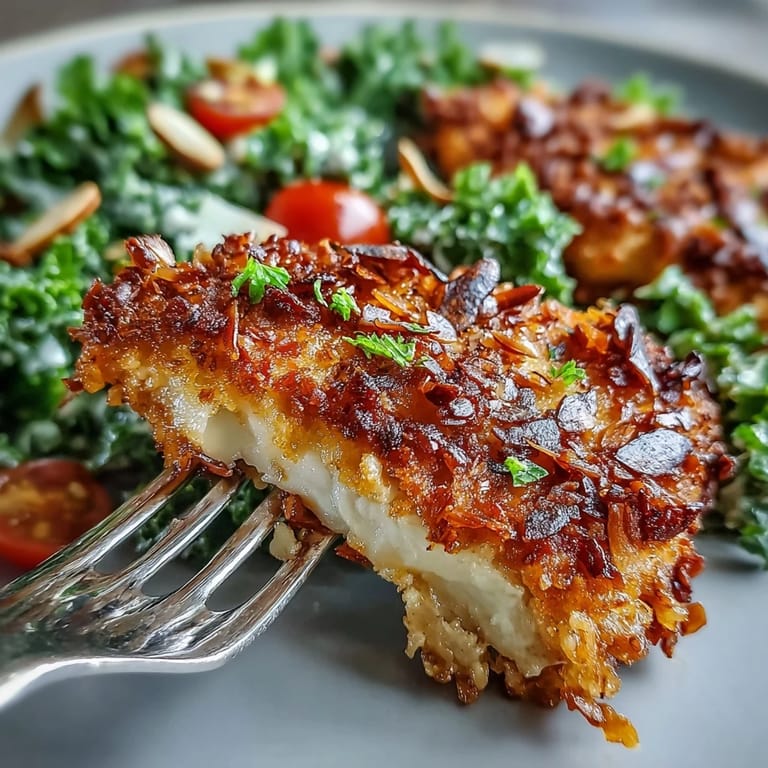
- Place a piece of almond-crusted chicken alongside a generous portion of the salad. The contrast between the warm, crunchy chicken and the cool, vibrant kale is what makes this dish feel balanced and satisfying.
 Save
Save There was a moment while standing over the stove, watching the almond coating turn golden, when I realized this dish had become my quiet way of saying I care about nourishing the people I feed. It's simple enough for a regular Tuesday, but intentional enough to feel celebratory.
The Magic of Sumac
Sumac was one of those spices I kept seeing in recipes but never quite understood until I tasted it in this context. It's bright and slightly tangy without the harsh acidity of lemon or vinegar, which means you can build layers of flavor without making the salad taste acidic or tired. Once you have it in your pantry, you'll find yourself reaching for it constantly—on roasted vegetables, scattered over hummus, even on buttered toast.
Why Oven Finishing Works
Finishing the chicken in the oven rather than pan-frying the whole way through is the technique that changed everything for me. The stovetop sear locks in that golden crust and flavor, while the oven's gentle, dry heat cooks the interior without the risk of burning the outside. It's also one less thing to watch, which means you can focus on getting the salad ready without stress.
Serving and Variations That Keep It Interesting
This dish feels complete as written, but it's also flexible enough to bend with what's in your kitchen or what you're craving. The salad can go in different directions depending on the season or what vegetables you have, and the chicken coating is sturdy enough to handle some creative additions. Think of it as a framework rather than a rigid formula—once you understand how the components work together, you can play.
- Add pomegranate seeds or thinly sliced radishes to the salad for extra crunch and visual pop if you want something more festive.
- Turkey cutlets work beautifully instead of chicken if you're looking for a change of pace or want something slightly leaner.
- Pair with a crisp Sauvignon Blanc or a light Pinot Noir to complete the meal with something refreshing.
 Save
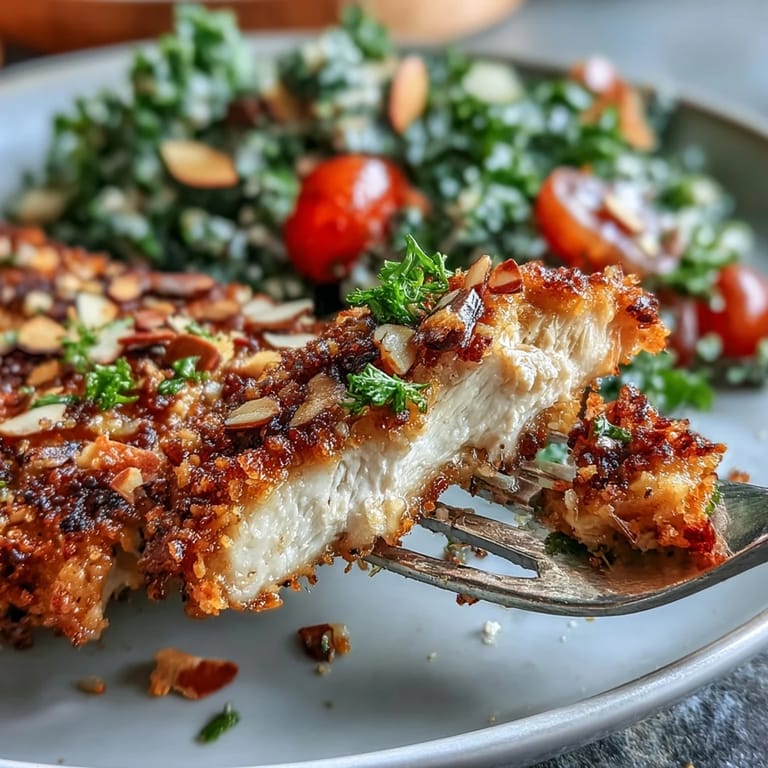
Save This almond-crusted chicken with marinated kale and sumac salad has become one of those recipes I return to again and again because it never feels like a chore and always tastes like care. Make it once, and you'll understand why.
Recipe FAQ Section
- → Can I prepare the chicken ahead of time?
Yes, you can bread the chicken breasts up to 4 hours ahead and refrigerate them covered. Sear and bake just before serving for the crispiest crust.
- → What can I substitute for almond meal?
Crushed pork rinds work well for a low-carb option, or use panko breadcrumbs if tree nut allergies are a concern. The texture will differ slightly but still provide great crunch.
- → How do I know when the chicken is fully cooked?
Use a meat thermometer to check that the internal temperature reaches 165°F (74°C) at the thickest part. The juices should run clear when pierced.
- → Can I make the kale salad in advance?
The massaged kale actually improves after sitting for 30 minutes to 2 hours. Add the tomatoes and almonds just before serving to maintain their texture.
- → What other greens work well with this dish?
Baby spinach or arugula can replace kale for a milder flavor. Swiss chard also works nicely, though it requires less massaging time.
- → How should I store leftovers?
Store chicken and salad separately in airtight containers for up to 3 days. Reheat chicken in a 350°F oven for 10 minutes to restore crispness. The salad is best enjoyed cold.