 Save
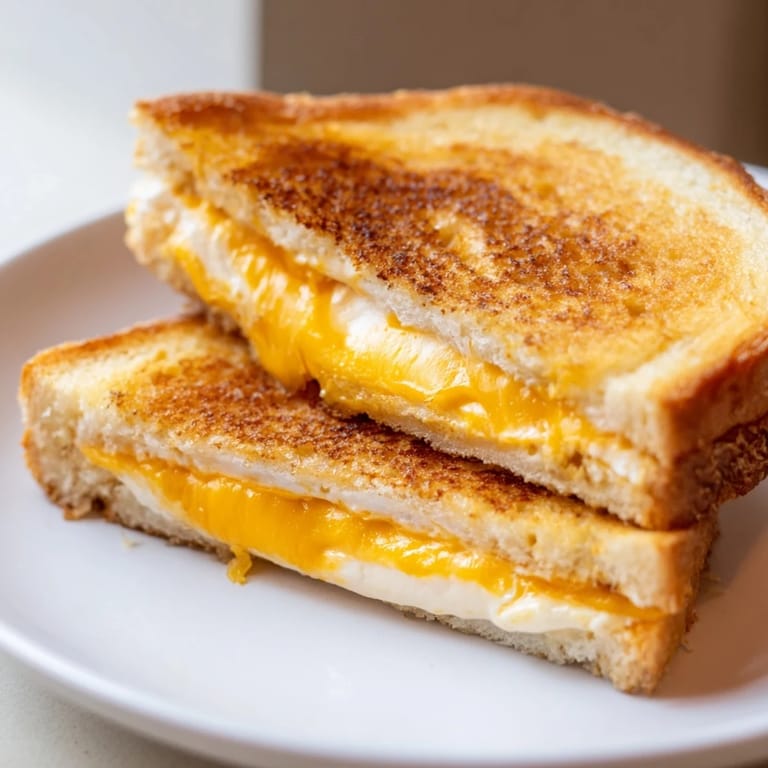
Save My roommate in college made these one rainy Tuesday afternoon, and I remember standing in our tiny kitchen doorway, completely mesmerized by how the mayonnaise was creating this impossibly golden, crispy exterior that butter never quite delivered. She'd learned the trick from her grandmother, who swore by it, and one bite made me understand why. The cheese was melting from the inside out while the crust shattered under my teeth—it was the most elegant simple thing I'd ever tasted, and suddenly my entire approach to grilled cheese changed forever.
I made this for my friend Sarah on a Saturday afternoon when she was going through a rough breakup, and she sat at my counter saying very little except, 'This is exactly what I needed.' There's something about a perfect grilled cheese that transcends being just lunch—it becomes proof that someone is taking care of you. She asked for the recipe, made it for herself the next week, and told me it tasted like things were getting better.
Ingredients
- Bread: Use white for nostalgic softness or sourdough for tang and chew; either will brown beautifully in mayo.
- Cheddar cheese: Sharp cheddar gives you deeper flavor, but mild works too—just pick a cheese that actually melts smoothly without getting rubbery.
- Mayonnaise: This is the secret weapon; the emulsified oil in mayo browns faster and more evenly than butter ever could, and creates that impossible texture.
- Dijon mustard (optional): A tiny spread adds just enough sophistication to make you feel like you're eating something more than a sandwich.
Tired of Takeout? 🥡
Get 10 meals you can make faster than delivery arrives. Seriously.
One email. No spam. Unsubscribe anytime.
Instructions
- Prep your bread:
- Lay out all four slices on your work surface and take a moment to assess which sides look nicest—you'll want those facing outward for the best golden finish.
- Spread the mayo:
- Use about a teaspoon per slice, spreading it thin and even across one side of each slice; this thin layer is what gives you that crispy crust without making things greasy.
- Add mustard if you're feeling it:
- Spread a whisper-thin layer on the opposite side of two bread slices if you want that subtle, complex flavor.
- Assemble your sandwiches:
- Layer two slices of cheese between two bread slices, mayo-sides facing outward, and press gently so the cheese stays put.
- Heat your skillet:
- Medium-low heat is your friend here—too hot and the outside burns before the cheese melts, too cool and you never get that golden crust.
- First side:
- Place sandwiches mayo-side down and listen for that gentle sizzle; you'll know it's ready to flip when the bottom is deep golden and feels crispy when you lift it gently.
- Flip and finish:
- Cook the second side for about the same time, pressing down once or twice with your spatula so the cheese melts into every crevice and the bread gets evenly golden.
- Rest and serve:
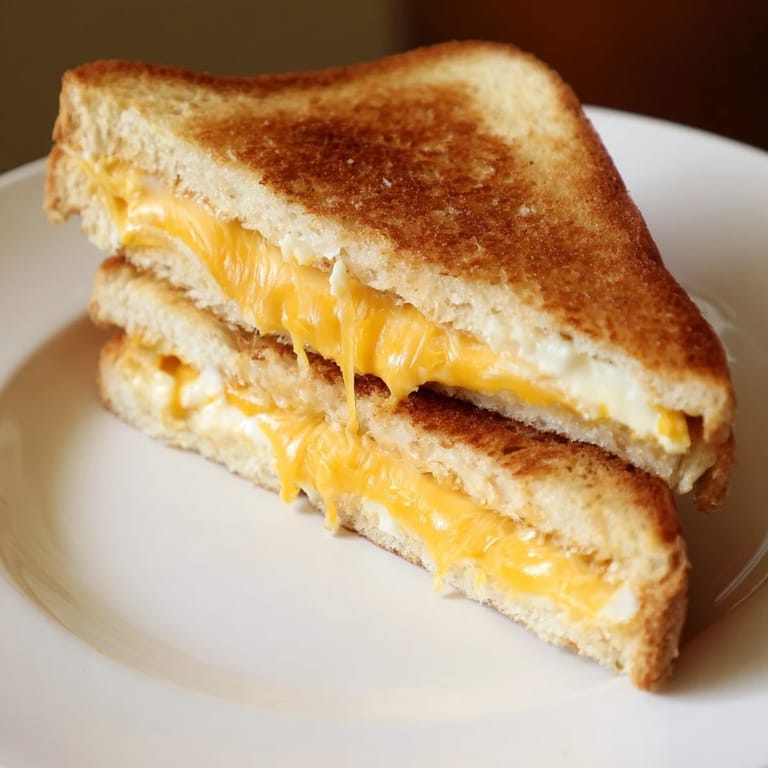
- Let them sit for one minute—this gives the cheese a moment to set up, making it less likely to spill out when you cut into it.
 Save
Save I made this for my niece who had just declared herself a vegetarian, and watching her face light up as she bit into the warm, cheesy goodness reminded me that sometimes the simplest foods carry the most meaning. She's seventeen now and still texts me asking me to make them when she visits.
The Mayo Magic
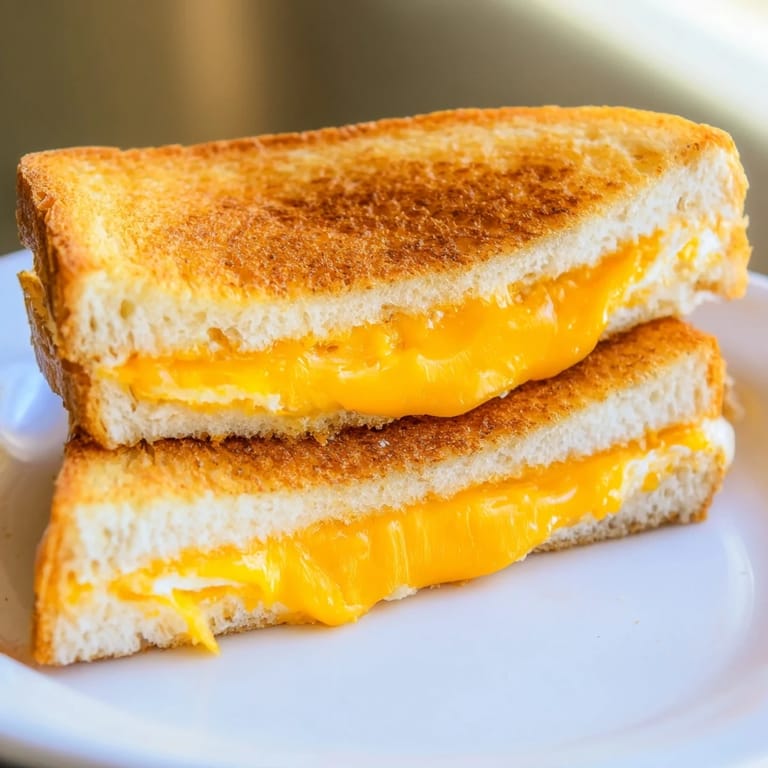
There's real chemistry happening when you use mayonnaise instead of butter, and it took me a while to understand why it worked so much better. Mayonnaise is mostly oil, but it's oil that's been emulsified with water and egg, which means it spreads thinner than butter and browns more evenly. Butter has milk solids that can burn or create hot spots, but mayo's consistency stays smooth and forgiving. The result is a crust that's uniformly golden and crispy, with none of those burnt patches you get when butter decides to go dark on you.
Cheese Selection and Melting
Not all cheese melts the same way, and I've learned this through plenty of kitchen disappointments. Cheddar is the classic for good reason—it melts smoothly without becoming stringy or separating. Monterey Jack, Gruyère, and mozzarella are all beautiful alternatives, each bringing their own subtle shifts in flavor and texture. The key is avoiding cheese that's too low-moisture (like aged parmesan) or too high-moisture (like fresh mozzarella), because those either won't melt properly or will leak out the sides. I always buy cheese from the deli counter when I can, because pre-sliced cheese sometimes has additives that keep it from melting as beautifully.
Variations That Actually Work
Once you've made the basic version a few times, it's fun to start playing with additions that enhance rather than overwhelm the simplicity. Sliced tomatoes add brightness and a tiny bit of moisture (but pat them dry first so you don't make the sandwich soggy). Crispy bacon adds smokiness. Thinly sliced caramelized onions bring sweetness and depth. Some people add a small handful of arugula or fresh herbs right before closing the sandwich. Each of these feels like it's improving something that was already good, rather than fixing something broken.
- Fresh tomato slices should be patted very dry and layered between the cheese so they don't make the bread soggy.
- Caramelized onions are best added sparingly, just a thin layer, so they don't overpower the cheese and bread.
- Save any fresh herbs or greens for right before you eat, as they'll wilt if they hang around in the warm sandwich.
 Save
Save This grilled cheese taught me that sometimes the smallest changes create the biggest improvements, and that food doesn't have to be complicated to be memorable. Make it for someone you love, and you'll see what I mean.
Recipe FAQ Section
- → Why use mayonnaise instead of butter?
Mayonnaise creates a crisp, golden crust that browns evenly and adds a subtle tangy flavor while keeping the sandwich moist inside.
- → Can I use different types of bread?
Yes, white, sourdough, or any sturdy bread that toasts well can be used to achieve a crispy crust and hold the filling.
- → What cheeses work best for melting?
Cheddar, Monterey Jack, Gruyère, and mozzarella are great melting cheeses that provide gooey, creamy texture inside the sandwich.
- → How can I add extra flavor?
Adding Dijon mustard inside or including ingredients like caramelized onions or sliced tomatoes can enhance flavor complexity.
- → What’s the best cooking method?
Cooking on medium-low heat in a nonstick skillet ensures the mayo browns without burning while melting the cheese thoroughly.