 Save
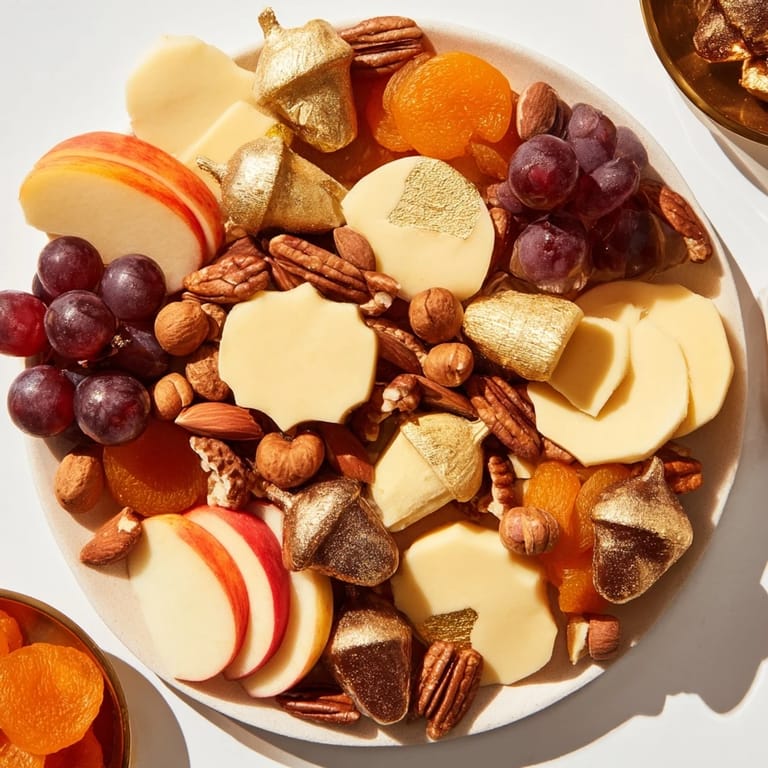
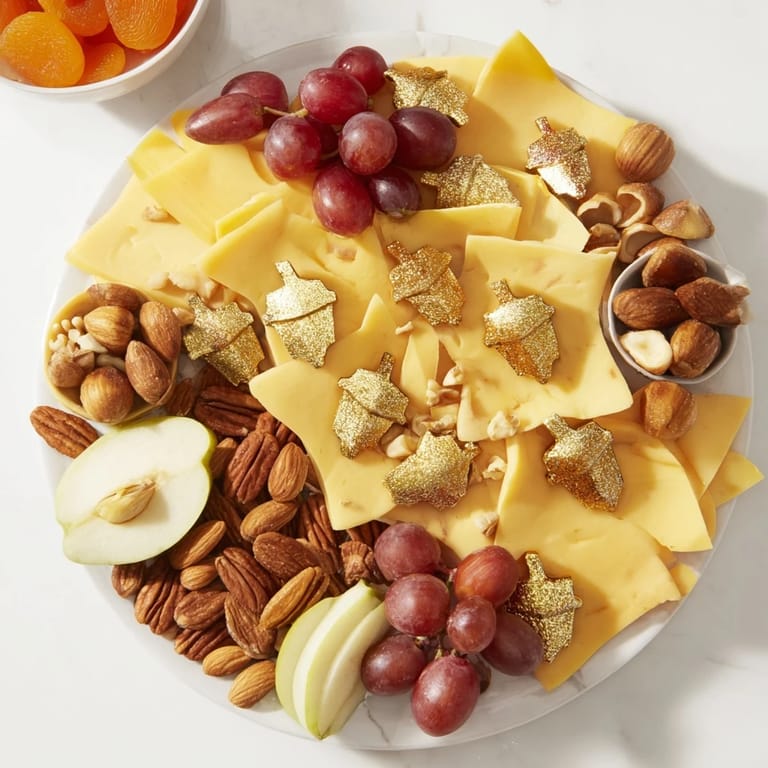
Save I discovered the magic of a thoughtfully composed charcuterie board the moment I caught my friend's face lighting up at a dinner party, not from hunger, but from sheer delight at seeing edible gold catching the candlelight. That evening, I realized a board wasn't just about feeding people—it was about creating a moment, a conversation starter, something that felt intentional and celebratory. The Gilded Acorn was born from that impulse to elevate the ordinary, turning humble cheese and nuts into something that felt like stepping into a gallery opening. Now whenever I arrange one, I'm really crafting an experience.
I'll never forget the first time I made this for my partner's family gathering—I was nervous about whether the gold dust would look tacky or elegant, but watching his mom carefully select a gold almond first, with almost reverent delight, told me everything. The board sat on our dining table for hours, and people kept gravitating back to it, not just to eat, but to admire it. It became the focal point of the evening, a reason to linger and talk longer than anyone expected.
Ingredients
- Whole almonds (1 cup plus 1/2 cup for gilding): Almonds are your board's anchor, offering a subtle sweetness and satisfying crunch that grounds the richer cheeses.
- Pecans (1/2 cup): Slightly sweeter and buttery, pecans add warmth and complexity to your nut mix.
- Walnuts (1/2 cup): Their earthy undertone balances the sweetness of dried fruits beautifully.
- Hazelnuts (1/2 cup): A touch unexpected, hazelnuts whisper elegance and give the board texture variety.
- Edible gold dust or gold leaf flakes (1/2 tsp): This is your showstopper—make sure it's labeled food-grade, as some products aren't safe to eat.
- Sharp cheddar cheese block (8 oz): Its bite cuts through richness and holds its shape beautifully when cut into acorns.
- Gouda cheese block (8 oz): Creamy and slightly smoky, gouda brings depth and pairs wonderfully with dried fruit.
- Brie or camembert (8 oz, optional): If you add this, use a small acorn cutter on the rind to create visual contrast.
- Dried apricots and figs (1/2 cup each): These jewel-toned fruits add pops of color and a natural sweetness that tempers salty elements.
- Fresh grapes and apple slices (1/2 cup each): Fresh elements keep the board feeling bright and give guests a refreshing contrast to rich cheeses.
- Honey or fig jam (1/4 cup): Serve this alongside; it's the silent hero that ties disparate flavors together.
- Assorted crackers and baguette slices: Use these as edible vehicles, not as fillers—choose ones that won't overshadow the board's stars.
Tired of Takeout? 🥡
Get 10 meals you can make faster than delivery arrives. Seriously.
One email. No spam. Unsubscribe anytime.
Instructions
- Gold-dust your almonds first:
- Place 1/2 cup almonds in a small bowl and lightly mist them with water using your fingertips—you want them barely damp, not wet. Sprinkle the gold dust in small pinches, tossing gently between each addition so it adheres evenly and doesn't clump.
- Cut your cheese into acorn shapes:
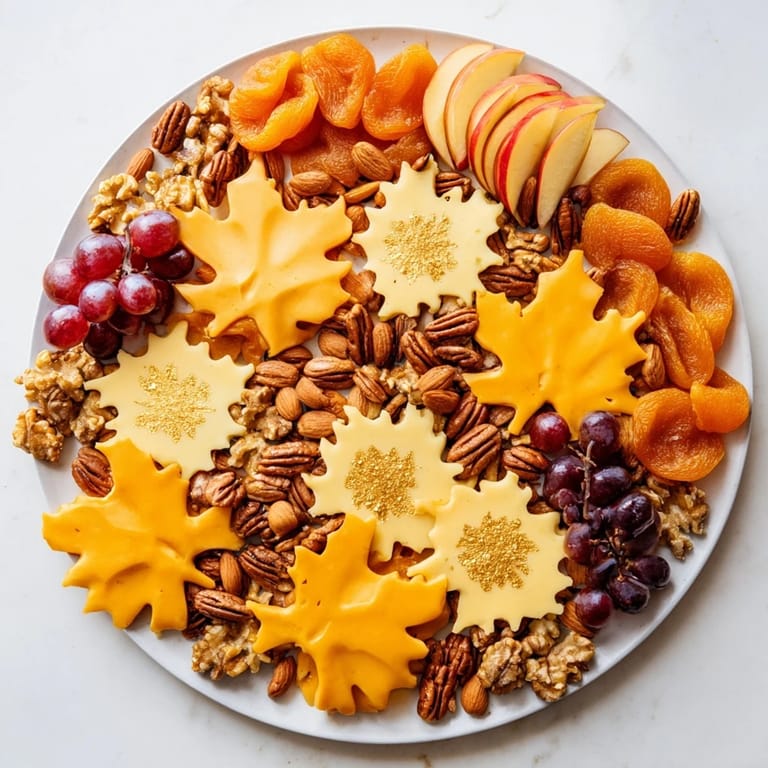
- Slice the cheddar and gouda into 1/4-inch thick slabs using a cheese knife or sharp knife, then press your acorn-shaped cookie cutter firmly through each slice with a slight rocking motion to cut cleanly. For extra drama, create two-tone acorns by stacking a thin slice of cheddar on top of gouda before cutting, or use a paring knife to etch details into the cheese surface.
- Cluster your nuts with intention:
- Group the plain almonds, pecans, walnuts, and hazelnuts in separate small bowls or directly on your board in casual mounds—this creates visual rhythm and lets guests taste each variety individually without them blending together.
- Position your cheese artfully:
- Scatter the acorn cutouts around the board in a loose pattern, tucking them between nut clusters and leaving room for other elements. If using brie or camembert, place small wedges nearby to create visual and textural variety.
- Add the bright elements:
- Distribute dried apricots, fig halves, grapes, and apple slices in small piles or light fans across the board, aiming for a balance of color rather than trying to hide empty spaces.
- Create your condiment station:
- Pour honey or fig jam into a small serving dish and nestle it into a corner of the board with a small spoon, giving guests easy access without making a mess.
- Fill strategically with crackers and bread:
- Arrange your assorted crackers and baguette slices in the remaining gaps, propping some up at angles so the board has dimension rather than looking flat.
- Final presentation:
- Step back and look at your work—if something feels unbalanced, shift a cluster or add a few more gold almonds to catch light. Serve immediately, or cover loosely with plastic wrap and refrigerate for up to an hour before guests arrive.
 Save
Save There's a quiet magic in watching someone approach a board like this—they slow down, they look carefully, they consider their choices rather than just grabbing whatever's closest. It transforms eating into something more intentional, almost ceremonial, which is the whole point of bringing people together in the first place.
Personalizing Your Board
The beauty of this format is that it's a foundation, not a prescription. I've made versions with manchego instead of cheddar, swapped out hazelnuts for pistachios when almonds seemed boring, and once used blue cheese simply because it was what I had. The only rule I follow is balance—make sure you have something salty, something sweet, something creamy, and something crunchy. Everything else flows from there.
The Gold Factor
Edible gold dust feels extravagant, but it's genuinely worth it for a board like this. It catches light in ways that make the whole presentation feel elevated, and it costs just a few dollars. I learned to buy mine online rather than searching specialty shops, as it's now stocked by most baking supply retailers. The key is finding food-grade varieties—check the label carefully, as non-food-grade gold dust exists and tastes distinctly unpleasant.
Serving and Pairing
This board shines alongside crisp white wines like Sauvignon Blanc or a sparkling rosé, both of which cut through the richness of cheese without overwhelming the delicate nuts. I've also served it with sparkling cider at non-alcoholic gatherings, and the acidity works beautifully. The key is choosing beverages with enough character to stand up to the board without demanding center stage.
- Prep your honey or jam in its serving dish ahead of time so guests don't have to hunt for it mid-board.
- If you're concerned about timing, cut your apple slices just before serving and toss them lightly with lemon juice to prevent browning.
- Consider adding fresh herb sprigs like rosemary or thyme for color and aroma—they add almost nothing calorically but transform the board's fragrance.
 Save
Save At its heart, this board is an act of love—taking the time to arrange something beautiful for people you care about speaks volumes, even if it takes barely twenty-five minutes. Watching guests gravitate toward it, choosing their combination, enjoying the abundance of choices, reminds me why I keep coming back to this format again and again.
Recipe FAQ Section
- → How do you prepare the gold-sprinkled almonds?
Lightly mist or brush almonds with water then toss evenly with edible gold dust. Let them dry for a few minutes before arranging.
- → What cheeses work best for acorn-shaped cutouts?
Sharp cheddar and gouda cut into thin slices hold shape well, with optional brie or camembert added for variety and softness.
- → Can I customize the nuts and cheeses used?
Yes, you can swap in favorites like manchego, blue cheese, pistachios, or macadamia nuts to suit your taste.
- → What accompaniments enhance the board’s flavor?
Dried apricots, figs, grapes, fresh apple slices, and a small dish of honey or fig jam add sweetness and balance.
- → Are there suggestions for serving or storing?
Serve immediately for best presentation, or lightly cover and refrigerate up to 1 hour before serving.