 Save
Save I remember the first time I put together a Fireside Comfort & Cocoa platter was on a cold December evening when my sister surprised me with a visit. The weather had turned bitter, and instead of cooking an elaborate dinner, I decided to create something that celebrated the season itself. I pulled out aged cheeses I'd been saving, arranged dark chocolate pieces like precious gems, and heated milk for the richest hot cocoa I could manage. There was something magical about how that simple act of arranging beautiful things on a board and sharing warm cocoa transformed an ordinary night into something deeply memorable. That platter became our tradition.
Years later, I made this platter for my partner's colleagues during a winter gathering, and I watched how people naturally gravitated toward it. Someone would reach for a wedge of cheddar, taste it, then deliberately choose a piece of dark chocolate to follow. Others would dip the apple slices in honey first. The hot cocoa sat warming in mugs beside the board, and I realized this wasn't just food. It was an invitation to slow down, to notice flavors, to connect with people you genuinely wanted to spend time with.
Ingredients
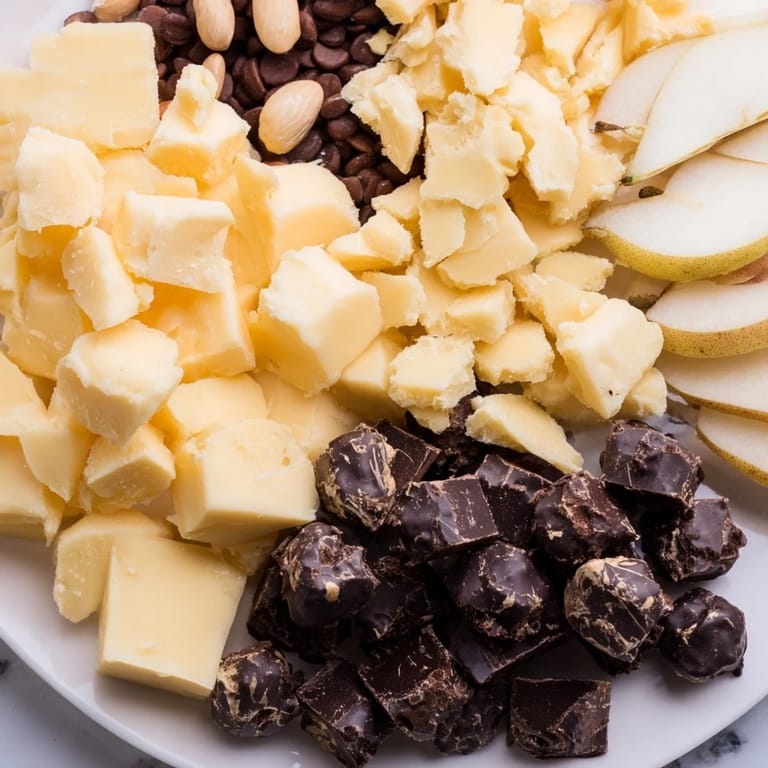
- Aged Cheddar (200 g): Cut into large, irregular chunks rather than neat cubes. The rough edges catch light beautifully and give your guests something substantial to hold. Aged cheddar has crystalline bits that crunch slightly, adding texture that makes each bite interesting.
- Aged Gouda (150 g): Break this into wedges rather than cubes. There's something about the irregular shape that signals this is a thoughtfully arranged platter, not mass-produced. The caramel notes in gouda bridge the savory and sweet in this pairing.
- Blue Cheese (150 g): Crumble or chunk it roughly. This is your anchor of complexity and umami. It makes the chocolate taste richer and the fruit taste brighter by contrast.
- Dark Chocolate, 70% or Higher (120 g): Broken into pieces, not chopped fine. You want visible chunks that feel indulgent. Higher cocoa content means the chocolate doesn't compete with the cheeses but complements them.
- Chocolate-Covered Almonds (100 g): These add crunch and the subtle earthiness of almonds shining through chocolate. They're the bridge between the cheese board and dessert.
- Chocolate-Dipped Dried Figs (80 g): Figs have a natural sweetness and chewiness that makes them feel like a genuine treat when dipped in chocolate. They add visual variety and a sophisticated touch.
- Chocolate Truffles (60 g): Choose varieties with interesting centers if you can. These are your gift to yourself on the board, the pieces people save for last.
- Whole Milk (500 ml): Use real whole milk, not reduced fat. The fat content creates the silky mouthfeel that makes this cocoa feel indulgent rather than merely warm.
- Dark Chocolate, Chopped (100 g): Same quality as above. This melts into the milk and becomes the foundation of your cocoa's richness.
- Unsweetened Cocoa Powder (1 tbsp): This adds depth and prevents the cocoa from tasting one-note sweet. It's a small amount but makes all the difference.
- Sugar (1 tbsp): Adjust upward if you prefer sweeter cocoa, but start here. The chocolate itself contributes sweetness.
- Salt (pinch): This tiny amount heightens all the chocolate flavors. Never skip it.
- Vanilla Extract (1/2 tsp): Adds warmth and makes the cocoa taste homemade rather than commercial.
- Roasted Walnuts or Pecans (80 g): The nuttiness plays beautifully against both chocolate and cheese. Roasted means they have deeper flavor than raw.
- Baguette, Sliced (1 small): Toast it lightly if you want it to hold up longer under toppings, or serve it soft for a contrast to the harder cheeses.
- Pear & Apple, Sliced (1 each): The natural sweetness and juice of fresh fruit create moments of brightness. Slice these last or toss gently with lemon juice to prevent browning.
- Honey (2 tbsp): Place in a small bowl on the board for dipping. It adds another layer of sweetness and invitation.
Tired of Takeout? 🥡
Get 10 meals you can make faster than delivery arrives. Seriously.
One email. No spam. Unsubscribe anytime.
Instructions
- Arrange Your Foundation:
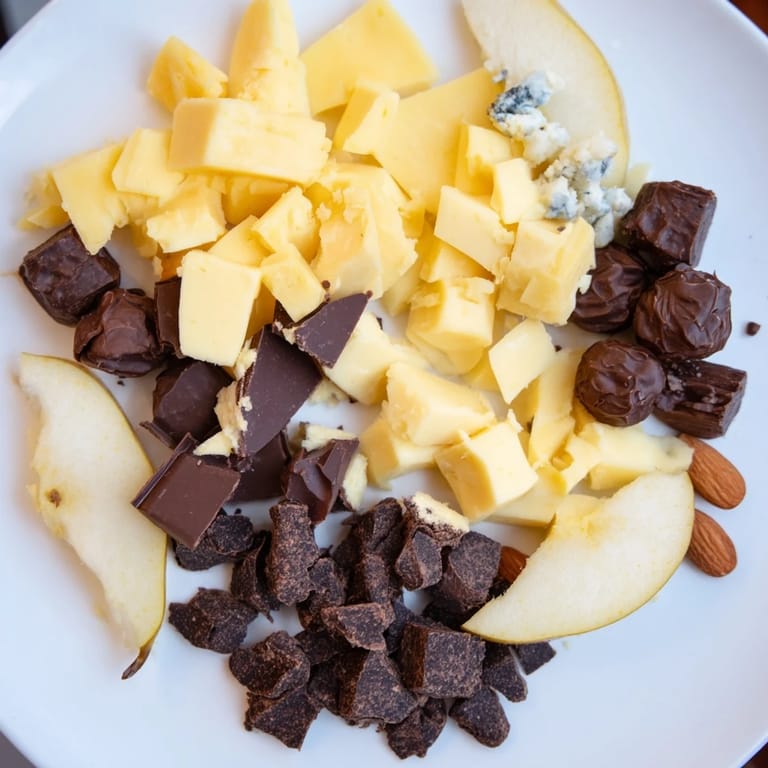
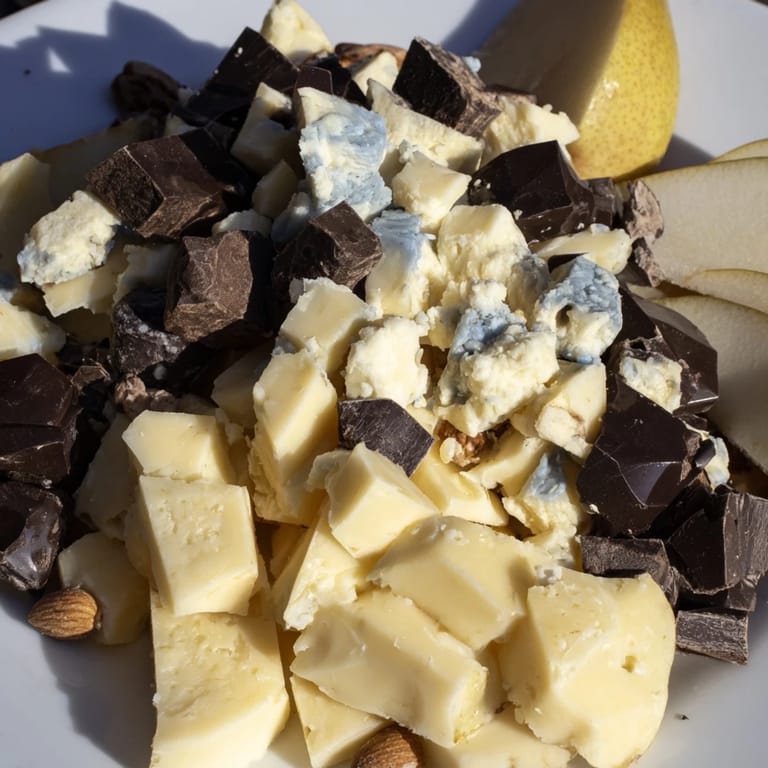
- Take a large wooden board or platter and start with the cheeses. Place the aged cheddar chunks in one area, letting them sit at different angles so they look natural and generous. Add the gouda wedges nearby, then scatter the blue cheese throughout. Don't arrange them in lines or patterns. Let them cluster and scatter like someone who was creating as they went, because that's exactly what you're doing.
- Create the Chocolate Landscape:
- Now add your chocolate pieces, chocolate-covered almonds, chocolate-dipped figs, and truffles. Think of these as accent pieces that catch the eye. Group them so there's visual rhythm across the board. A cluster here, a small group there. The dark chocolate pieces especially should be visible and inviting, like little treasures waiting to be discovered.
- Fill the Spaces:
- Arrange the baguette slices around the cheeses and chocolates, leaning them slightly so they're easy to grab. Scatter the roasted nuts throughout. Lay the pear and apple slices gracefully, perhaps fanning a few. Place a small bowl of honey somewhere central where it can be reached easily. Step back and look. Does it feel abundant and thoughtfully arranged? Good.
- Prepare the Cocoa Base:
- Pour the milk into a saucepan and set it over medium heat. Watch it carefully. You want it steaming, a few wisps of steam rising from the surface, but not boiling. You'll hear the milk starting to whisper as it heats, and that's your signal.
- Melt and Whisk:
- Add the chopped dark chocolate, cocoa powder, sugar, and a pinch of salt to the heating milk. Using a whisk, start breaking down the chocolate. At first it will seem like you're stirring chocolate pieces in milk. Keep going. The heat will begin to melt the chocolate, and then suddenly, as if by magic, it comes together into something silky and cohesive. Whisk until there are no visible chocolate pieces and the color is deep and uniform. This takes maybe three to four minutes of constant whisking.
- Finish with Warmth:
- Remove from heat and stir in the vanilla extract. The vanilla adds a whisper of something warm and familiar. Pour into mugs, and if you'd like, top each with a dollop of whipped cream and a small handful of shaved chocolate. The warmth will soften the chocolate slightly, and it becomes part of the drink itself.
- Bring It All Together:
- Place your finished platter and the mugs of cocoa on a table where people can gather. There's something about sharing food this way, where everyone can choose and create their own experience, that feels more connected than a plated meal.
 Save
Save I think what I love most about this platter is how it respects both the food and the people sharing it. There's no rush. Someone can take time with a piece of aged cheese, then try chocolate, then come back to the cheese to taste it again with new understanding. The hot cocoa doesn't demand attention; it sits warm and ready. I've watched friendships deepen over this exact combination, over small conversations that stretched longer than expected because nobody wanted to move.
Building Your Board with Intention
A platter like this is really about creating opportunity for mindfulness. Every element you choose should be something you'd actually want to eat yourself. I learned this the hard way by once adding crackers I didn't love, thinking guests needed them. Nobody touched them. The best boards are made from what genuinely delights you. The aged cheeses should be ones you'd seek out for yourself. The chocolate should be quality enough that you'd eat a piece while cooking. This authenticity somehow translates. People sense that you've chosen carefully, and that care becomes part of the experience.
The Temperature Contrast That Changes Everything
There's a reason we pair hot cocoa with a room-temperature cheese board, and it's not accidental. The warmth of the cocoa makes your palate receptive and open. Then you taste the coolness and subtle complexity of aged cheese, the sweetness of fruit, the deep bitterness of dark chocolate. Your mouth travels through sensations. It becomes a journey rather than just eating. The temperature difference also means you can alternate between sipping and tasting, between warming yourself and exploring flavors. This rhythm is what makes the experience feel luxurious even though you've barely spent twenty-five minutes.
Pairing Wisdom and Final Thoughts
Red wine or port would elevate this into an evening event, but this platter is equally beautiful with just cocoa, or even with a simple herbal tea for those avoiding caffeine or alcohol. The point isn't the alcohol; it's the gathering. I've also found that this works wonderfully with sparkling water and fresh lemon, especially if you're serving during the day. The key is giving people options and letting them create their own perfect evening.
- Prep your cheeses and chocolate the morning of, but don't arrange them until guests are arriving. There's a certain energy to creating the platter in real-time.
- Keep your cocoa warm in a small pot or slow cooker set to low. People will want second servings as the evening stretches on.
- Leave plenty of negative space on your board. It looks more generous than one that's crowded, even though it has the same amount of food.
 Save
Save This platter has become my answer to almost every cold-weather gathering. It says: I'm glad you're here, let's take our time together, and everything on this board is chosen because it matters.
Recipe FAQ Section
- → What cheeses are best for this platter?
Aged cheddar, gouda, and blue cheese offer a mix of sharp, creamy, and tangy notes that complement the chocolates and accompaniments perfectly.
- → Can I substitute the dark chocolate with something else?
Yes, feel free to use any high-quality dark chocolate or chocolate varieties you prefer to suit your taste.
- → How should the hot cocoa be served?
Serve the hot cocoa warm, optionally topped with whipped cream and shaved chocolate for added richness.
- → What nuts work best alongside the cheeses and chocolates?
Roasted walnuts or pecans provide a crunchy texture and earthy flavor that pairs well with the creamy cheeses and sweet chocolate.
- → Are there gluten-free options for the bread component?
Absolutely, substituting the baguette with gluten-free bread or crackers maintains the elements without gluten concerns.