 Save
Save I'll never forget the first time I built an Evergreen Wreath Board for a holiday gathering. My sister had challenged me to create something that looked like it belonged in a design magazine, but I wanted it to taste even better than it looked. Standing in my kitchen surrounded by colorful ingredients, I realized this wasn't just another cheese board—it was an edible centerpiece that would start conversations the moment guests saw it. The moment someone's eyes lit up as they discovered the creamy feta dip hidden in the middle, I knew I'd created something special.
The real magic happened when my cousin brought her three-year-old to the party. That little one walked right past the cookies and desserts and made a beeline for this board, carefully selecting grapes and cheese like they were treasures. Watching her face light up reminded me that sometimes the most beautiful food is the kind that brings pure joy to everyone at the table, regardless of age.
Ingredients
- Brie cheese (100 g, sliced into wedges): Brie melts slightly at room temperature and creates a luxurious creamy element—slice it just before assembling so it stays pristine
- Aged cheddar (100 g, cubed): The sharpness cuts through the richness and adds a golden warmth to your color palette
- Goat cheese (100 g, cut into rounds): Tangy and elegant, these rounds add textural contrast and a sophisticated touch
- Prosciutto (80 g, folded): Skip the slicing—folded prosciutto creates height and visual drama on the board
- Salami (80 g, sliced): Choose a quality variety and cut just thick enough to hold its shape when nestled between cheeses
- Red and green grapes (2 cups halved): The jewel tones are essential to the wreath effect—halving them makes them easier to snack on
- Pomegranate arils (1/2 cup): These ruby gems add bursts of color and a tart sweetness that brightens every bite
- Cherry tomatoes (1 cup): Look for mixed colors—yellow, orange, and red create sections of the wreath
- Mini cucumbers (1/2 cup, sliced): Their cool crispness balances the richness of the cheeses beautifully
- Roasted almonds (1/2 cup): The toasted crunch is essential—raw almonds lack the depth these need
- Mixed olives (1/2 cup): Green and black olives together create natural color blocking that guides the eye around the wreath
- Dried cranberries (1/4 cup): These tart-sweet morsels add pops of burgundy that echo the festive season
- Fresh rosemary (6–8 sprigs): This is your foliage, literally—choose sturdy sprigs with tight needles that still smell piney and fresh
- Olive branches (a few small, thoroughly washed): These create the wreath's foundation and bring an authentic botanical element
- Whipped feta dip (1 cup): Make or buy—this creamy center is where everything comes together; drizzle generously with good olive oil
- Olive oil (1 tablespoon for drizzling): Use your finest—it's the final flourish that brings everything into focus
- Freshly cracked pepper (1/2 teaspoon): Crack it yourself right over the dip for maximum fragrance and visual appeal
Tired of Takeout? 🥡
Get 10 meals you can make faster than delivery arrives. Seriously.
One email. No spam. Unsubscribe anytime.
Instructions
- Set the Foundation:
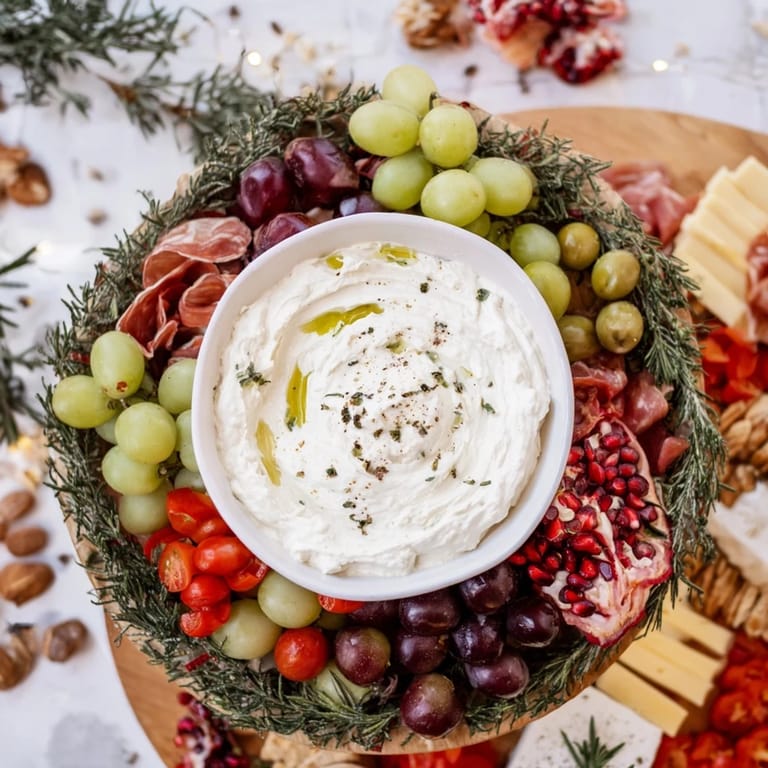
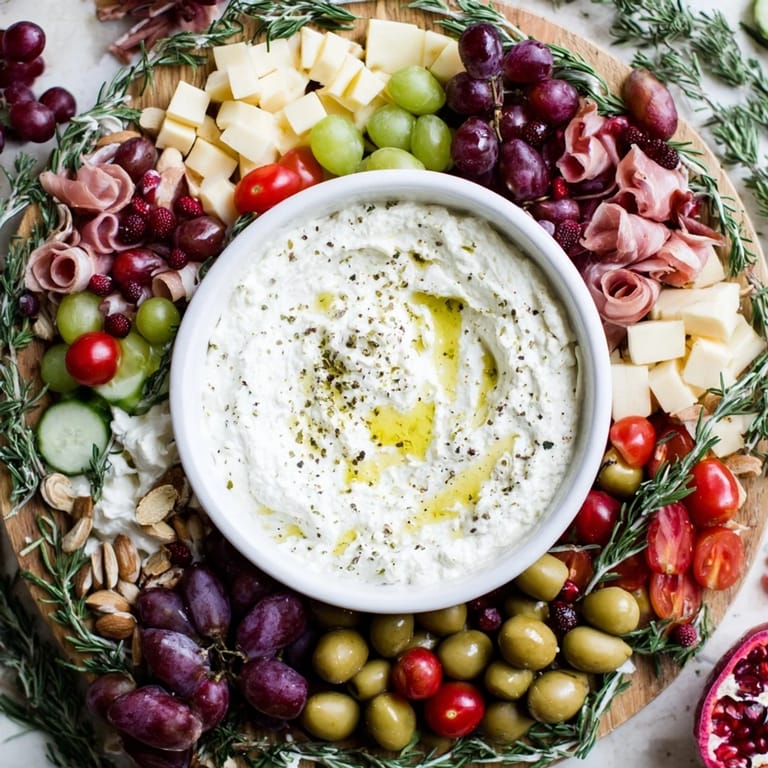
- Place a small bowl dead center on your large round board. This is your anchor point. Fill it generously with whipped feta dip, then drizzle that beautiful olive oil in a deliberate spiral and finish with a crack of fresh pepper. Step back and admire this simple beauty—it's the heart everything else radiates from.
- Create the Wreath Base:
- Arrange your rosemary sprigs and olive branches in a circular shape around the bowl, working as if you're sketching a green crown. These delicate branches should flow naturally, leaving small gaps where your other ingredients will nestle in. This is the moment it starts looking like something magical.
- Layer the Cheeses:
- Now for the real artistry. Arrange your three cheese varieties evenly around the wreath, alternating them as you go—brie wedges, then cheddar cubes, then goat cheese rounds. Think of it as creating sections that guide the eye around the board. Each type should have its own little territory.
- Fold in the Meats:
- Gently fold or roll your prosciutto into loose, airy shapes and tuck them between the cheese pieces like delicate tissue paper. Arrange salami slices so they fan or stand slightly upright—height and dimension are everything here.
- Scatter the Jewels:
- Add your grapes, cherry tomatoes, and cucumber slices, nestling them among the cheeses and meats like you're finding the perfect spot for each one. This isn't a random sprinkle—each ingredient should feel intentionally placed.
- Add the Final Flourishes:
- Scatter your pomegranate arils, almonds, olives, and dried cranberries across the board, focusing on areas that need more color or visual interest. These little pops of color are what transform this from nice to absolutely stunning.
- Perfect the Circle:
- Step back and really look at your wreath. Do any sections feel empty? Does the color flow evenly around the circle? Gently adjust ingredients until the whole thing feels balanced and complete. This is your moment to make it museum-quality.
- Serve with Style:
- Place it on your table and surround it with crackers, bread, or whatever you're serving alongside. Immediately is best—this is meant to be admired before it becomes dinner.
 Save
Save I remember setting this board on the table at a holiday party and watching people actually pause mid-conversation to take photos. That moment when food becomes art, when it's so beautiful that people want to capture it and share it—that's when you know you've created something that's more than just sustenance. It became the centerpiece everyone remembered, the thing friends asked me to bring back the next year.
Building Your Color Story
The secret to making this board visually stunning lies in thinking of it as a color wheel. As you arrange, imagine dividing your round board into four equal sections, each with its own color story. One section might flow from the deep reds of pomegranate and cranberries through the golden cheddar. Another could move from pale cream brie through soft green grapes to bright green herbs. This approach prevents muddy, chaotic-looking arrangements and creates a board that feels intentional and harmonious, even though every ingredient is completely random.
The Texture Lesson I Learned
Early on, I arranged everything at roughly the same height, and the board looked flat and boring. The turning point came when I started thinking in three dimensions—folding the prosciutto to create height, leaving some edges of cheese standing up, tucking grapes down into gaps, and letting olive branches rise above everything else. Suddenly the board became dimensional and inviting, something people wanted to reach into rather than look at from above.
Making It Your Own
The beauty of this board is that it's completely flexible to what you have on hand and what your guests love. I've made versions with fresh figs instead of grapes, swapped the goat cheese for crispy apple slices, and even created a fully vegan version that looked just as gorgeous. The structure of the wreath and the principle of layering and balancing colors stays the same, but the ingredients can dance around based on the season, your market finds, and your mood.
- Add slices of starfruit or kiwi for unexpected tropical brightness and a conversation starter
- If you're making this for a wine pairing, choose ingredients that complement your wine—darker fruits and aged cheeses with Pinot Noir, brighter elements with Sauvignon Blanc
- Set out small appetizer plates and forks nearby—guests are more likely to enjoy it leisurely rather than grabbing handfuls if they feel permission to plate it properly
 Save
Save This board became my signature move not because it's complicated, but because it transforms simple ingredients into something that feels like a gift to your guests. Every time I make it, I think of that little girl reaching for the grapes, and I remember why this recipe matters.
Recipe FAQ Section
- → What cheeses work best for this board?
Soft cheeses like Brie and goat cheese paired with aged cheddar add varied textures and flavors to the board.
- → Can this board be made vegetarian?
Yes, omit cured meats and use hummus or vegan dips as alternatives for a vegetarian-friendly option.
- → How do the fresh herbs enhance the board?
Rosemary and olive branches add fragrant, edible greenery that complements the flavors and creates a festive look.
- → What fruits are ideal for this arrangement?
Red and green grapes, pomegranate arils, cherry tomatoes, and cucumber slices bring freshness and a variety of colors.
- → Are there suggestions for wine pairing?
Light, festive wines like Sauvignon Blanc, Pinot Noir, or sparkling wines pair wonderfully with the diverse flavors.
- → How should the dip be prepared and served?
The whipped feta dip goes in the center bowl, drizzled with olive oil and cracked pepper to enhance creamy, savory notes.