 Save
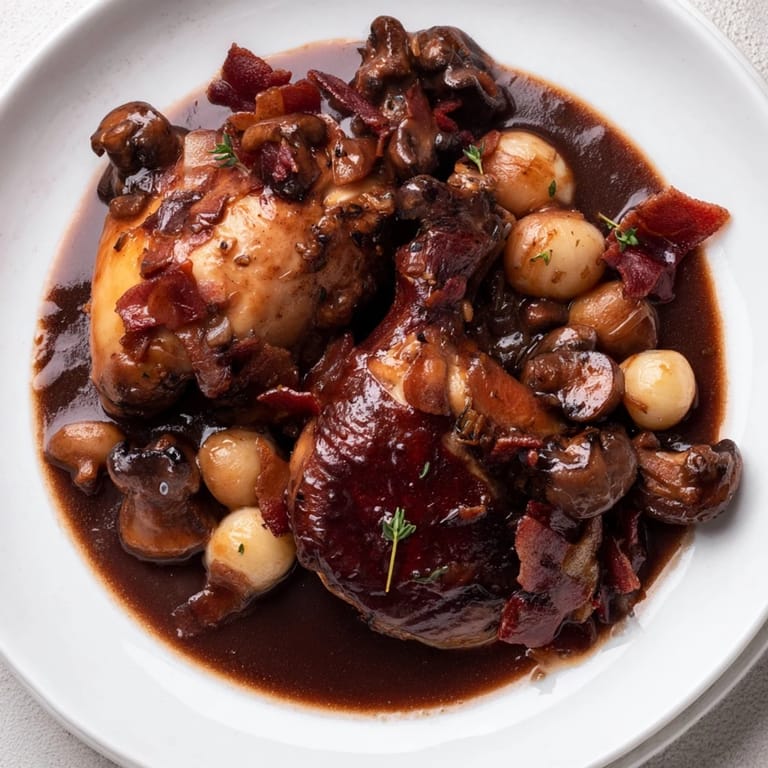
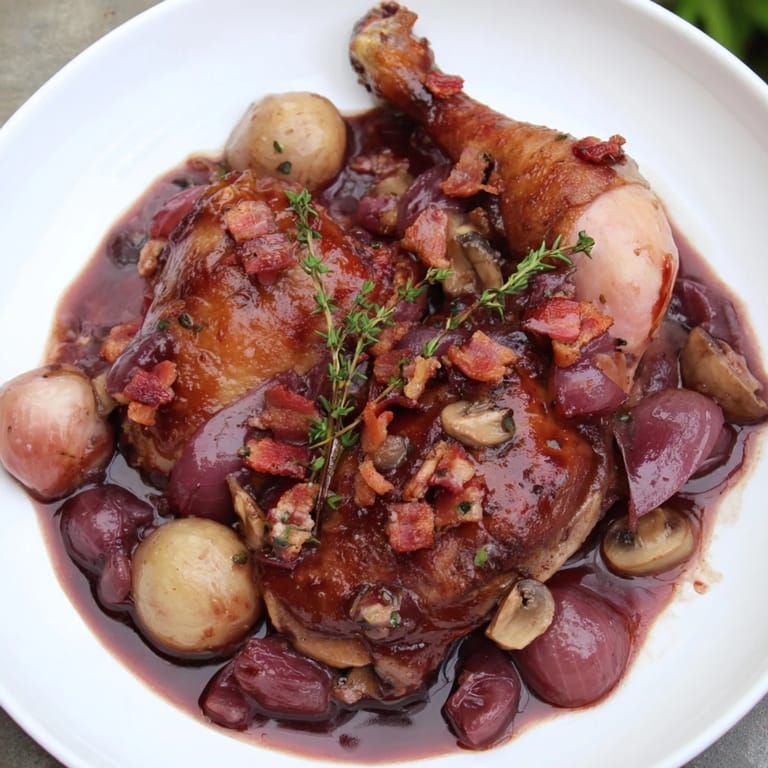
Save The first time I truly understood French cooking wasn't from a textbook—it was from the smell of bacon and wine simmering in my neighbor's kitchen on a cold Sunday afternoon. She'd invited me over casually, almost apologetically, saying she was making something her grandmother taught her. What emerged hours later was coq au vin, and I watched as that humble chicken transformed into something magnificent, the wine deepening to ruby, the vegetables turning glossy and tender. That afternoon changed how I cooked.
I made this for the first time alone, nervous I'd mess it up, and ended up calling my partner home early just to smell the house. He walked in, didn't even take off his coat, and we both just stood there breathing it in. That's when I realized this dish does something most recipes can't—it fills a room with anticipation before anyone even sits down.
Ingredients
- 1 whole chicken (about 1.5 kg), cut into 8 pieces: Thighs stay juicier than breasts during the long braise, but I mix both for different textures—it's your call.
- 150 g smoked bacon or pancetta, diced: This isn't just seasoning; it's the backbone of the whole dish, rendering fat that browns everything better than oil alone.
- 200 g pearl onions, peeled: Yes, peeling them is tedious, but frozen ones work beautifully if you're short on patience.
- 250 g cremini or button mushrooms, cleaned and quartered: Cremini have more earthiness, but buttons are fine—just make sure they're dry before sautéing or they'll steam instead of brown.
- 2 medium carrots, sliced: Cut them on a slight bias so they look intentional and cook more evenly.
- 2 garlic cloves, minced: Fresh garlic is non-negotiable here; powdered will taste flat.
- 750 ml dry red wine (e.g., Burgundy or Pinot Noir): Don't use something you wouldn't drink—the wine becomes the sauce, so its character matters.
- 250 ml chicken stock: Homemade is ideal, but good quality store-bought works; avoid the salty stuff.
- 2 tbsp tomato paste: This adds subtle sweetness and body; don't skip it thinking it's optional.
- 2 tbsp all-purpose flour: It helps thicken the sauce and binds with the fat for a silky finish.
- 2 tbsp olive oil and 2 tbsp unsalted butter: Butter browns better than oil alone, and this combination prevents smoking.
- 2 bay leaves and 4 sprigs fresh thyme: These spend hours infusing the braising liquid—dried thyme is harsh by comparison, so fresh really matters here.
- Salt and freshly ground black pepper: Taste as you go; the wine is acidic, so seasoning in stages makes a difference.
Tired of Takeout? 🥡
Get 10 meals you can make faster than delivery arrives. Seriously.
One email. No spam. Unsubscribe anytime.
Instructions
- Get everything ready and dry the chicken:
- Pat each piece thoroughly with paper towels—moisture is the enemy of browning. Season generously with salt and pepper, then let them sit a few minutes so the seasoning sets in.
- Render the bacon until it's crispy:
- In your largest, heaviest pot (a Dutch oven is ideal), cook the bacon over medium heat until the fat turns golden and the pieces are almost smoking-crispy. Fish them out with a slotted spoon and set aside—you'll need this rendered fat for everything else.
- Brown the chicken in batches without crowding:
- Don't dump it all in at once or it'll steam. Work in two batches if needed, letting each piece sit undisturbed for 3-4 minutes until the skin is deep gold, then flip. The browning happens in that bacon fat, which is why it's so much better than oil.
- Build the base with carrots, onions, and garlic:
- Toss them into the pot with the fond (those brown crusty bits) and let them soften and color slightly, about 5 minutes. You want them lightly golden, not translucent.
- Stir in tomato paste and flour to create a roux-like base:
- Cook this for just a minute—long enough for the flour to coat everything and lose its raw taste, but not so long that it browns and becomes bitter. It's a small step that prevents a floury taste later.
- Return the chicken and bacon, then add the wine and stock:
- Pour in that beautiful red wine (you'll hear it sizzle) and the stock, making sure to scrape up all the browned bits clinging to the bottom. Add the bay leaves and thyme sprigs, then give everything a gentle stir.
- Bring to a simmer, cover, and let time do the work:
- Once it's bubbling gently at the edges, cover it and lower the heat so it barely simmers for 1.5 hours. The low, slow heat is what makes the chicken tender without becoming stringy.
- While that's happening, sauté the mushrooms until golden:
- In a separate skillet, heat butter and oil over medium-high heat. Add the mushrooms in a single layer—don't stir them for the first few minutes or they'll release water and steam. Once they're caramelized on one side, toss and finish cooking. They should be deep brown and smell earthy.
- Finish strong by reducing the sauce and adding the mushrooms:
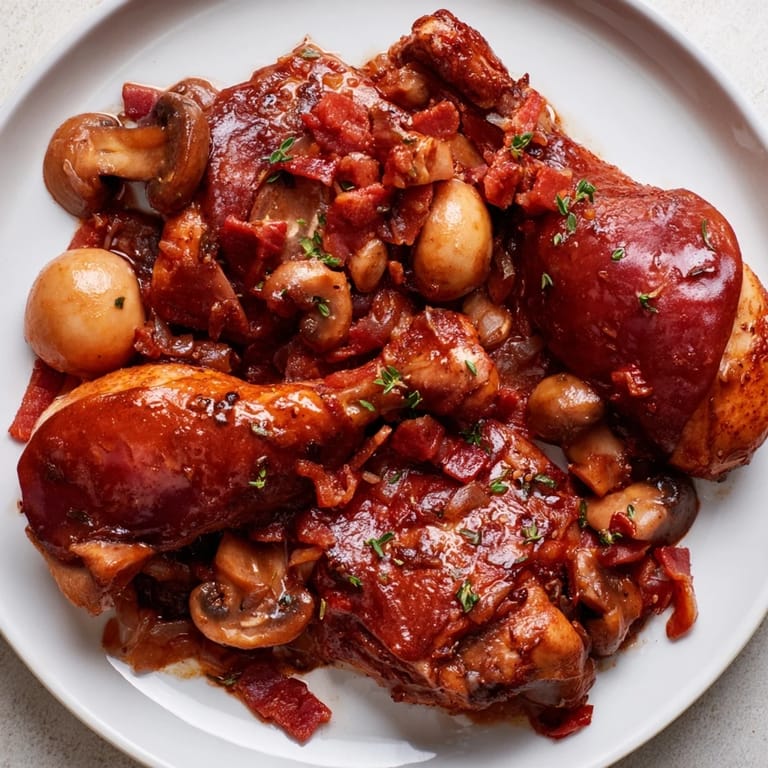
- Remove the lid for the last 15 minutes so the liquid reduces and concentrates. The sauce should coat a spoon, not be soupy. Stir in the mushrooms, taste, and adjust salt and pepper—you might be surprised how much you need.
- Remove the herbs and serve it hot:
- Fish out the bay leaves and thyme sprigs (no one wants to bite into those), then ladle into bowls with crusty bread for soaking up every drop.
 Save
Save I made this for a dinner party where everything was falling apart—I'd burned the appetizer, forgotten to chill the wine properly. But when we got to the coq au vin, something shifted. People slowed down, actually tasted what was in front of them, and for a few hours, nothing else mattered. That's when I learned that this dish has a quiet power.
Why This Dish Deserves Your Time
Coq au vin isn't a weeknight dinner; it's a slow conversation with your ingredients. The long braise gives you flexibility—it's actually better made a day ahead, which means you can reheat it while you set the table. There's something deeply satisfying about a dish that rewards patience instead of punishing it.
What to Serve Alongside It
Crusty French bread is essential—you'll need it to soak up the sauce and make people feel like they're eating in Lyon. Buttered egg noodles are classically Burgundian, or creamy mashed potatoes if you want something richer. Some people serve it with a simple green salad to cut through the wine, which makes sense but feels almost too light.
Variations and Adjustments
Once you understand how this works, you can play with it. I've made it with chicken thighs only (more forgiving, very juicy) and with a splash of brandy added when sautéing the mushrooms (fancy and worth it if you have it). The bones add collagen and body, so don't leave them out. Some cooks swear by adding a beurre manié (butter and flour paste) at the end to thicken without more cooking.
- For gluten-free, use cornstarch or arrowroot instead of flour—it won't quite have the same silky mouthfeel, but it works.
- If your wine is too tannic or aggressive, add a splash of brandy or Cognac during the simmer to smooth it out.
- Leftover coq au vin freezes beautifully for up to three months, making it perfect for future lazy Sundays.
 Save
Save This is the kind of dish that makes you feel like you've traveled, even if you never left your kitchen. Make it once, and you'll understand why French cooking feels less like recipe-following and more like a love language.
Recipe FAQ Section
- → What type of wine is best for this dish?
Dry red wines like Burgundy or Pinot Noir are ideal, offering depth and subtle fruitiness to complement the braise.
- → Can I substitute chicken thighs for whole chicken?
Yes, using chicken thighs adds extra tenderness and works well with the long braising method.
- → How long should the chicken be braised?
Simmer the chicken covered over low heat for about 1.5 hours until tender and infused with flavors.
- → When should mushrooms be added?
Sauté the mushrooms separately and stir them into the stew during the last 15 minutes to retain texture and flavor.
- → What side dishes pair well with this meal?
Crusty French bread, mashed potatoes, or buttered noodles complement the rich braise perfectly.