 Save
Save I discovered Wiener Schnitzel not in Vienna but in a cramped kitchen in Salzburg, watching my friend's grandmother work with the kind of practiced ease that only comes from making the same dish hundreds of times. She'd pound the veal with confident, measured strokes, and the cutlet would transform under the mallet into something impossibly thin yet still holding together. The way she moved through the breading station—flour, egg, breadcrumbs—felt like a dance she'd perfected decades ago, and when that first golden cutlet hit the hot fat, the sound made everything stop.
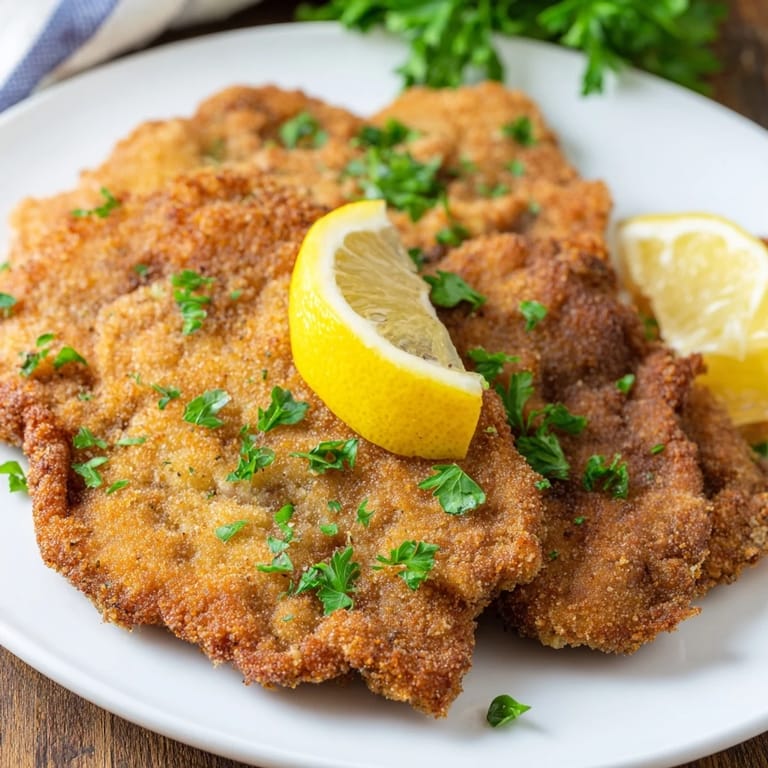
Years later, I made it for a dinner party and watched my guests' faces light up at that first bite—the way the fork cut through the crust with a soft crack, how they couldn't resist squeezing lemon over every bite. One person said it tasted like Austria itself, which made me laugh, but they weren't entirely wrong. That meal reminded me that the best dishes are often the simplest ones, the ones that let good ingredients and technique speak for themselves.
Ingredients
- Veal cutlets (4 pieces, about 150 g each): Pound these to 1/4 inch thickness so they cook evenly and stay tender; thinner means faster cooking and a better crust-to-meat ratio.
- All-purpose flour (100 g): This creates the first layer that helps the egg adhere; don't skip shaking off the excess or your coating gets gummy.
- Eggs (2 large) and milk (4 tbsp): Beat them together to create a binder; the milk makes the mixture less heavy than eggs alone.
- Fine dry breadcrumbs (150 g): Use panko or homemade dried breadcrumbs for the crispiest result; store-bought works but check the ingredient list.
- Clarified butter or neutral oil (250 ml): This is non-negotiable for authentic flavor and crispiness; regular butter will brown too quickly and smoke.
- Lemon wedges and fresh parsley: The lemon cuts through the richness beautifully, and parsley adds a fresh herbal note that balances the heaviness of the fried meat.
Tired of Takeout? 🥡
Get 10 meals you can make faster than delivery arrives. Seriously.
One email. No spam. Unsubscribe anytime.
Instructions
- Pound the veal gently but firmly:
- Place each cutlet between plastic wrap and use even strokes with a meat mallet, working from the center outward. You want the meat thin and even, not torn or mangled; this ensures it cooks through quickly and stays tender.
- Season and pat dry:
- Pat the pounded cutlets with paper towels to remove any moisture—this is what keeps the breading from getting soggy. A light sprinkle of salt and pepper now is all you need.
- Set up your breading station strategically:
- Line up three shallow dishes with flour, the egg mixture, and breadcrumbs in order. Having everything ready means you move quickly and keep one hand dry, one hand wet, which matters more than you'd think.
- Bread each cutlet with a light hand:
- Dredge in flour, shake off excess, dip in egg, then breadcrumbs—but here's the trick: don't press the breadcrumbs in. A loose, light coating will shatter like glass when fried instead of becoming dense and heavy.
- Heat the fat until shimmering:
- Get your skillet screaming hot over medium-high heat; the fat should shimmer and move easily across the pan. Test it with a tiny piece of bread—it should sizzle immediately.
- Fry with confidence, one or two at a time:
- Slide the schnitzels into the hot fat and resist the urge to move them around; let them sit for 2-3 minutes per side until deep golden. Tilt the pan occasionally and baste the top with hot fat for even, gorgeous browning.
- Drain and serve immediately:
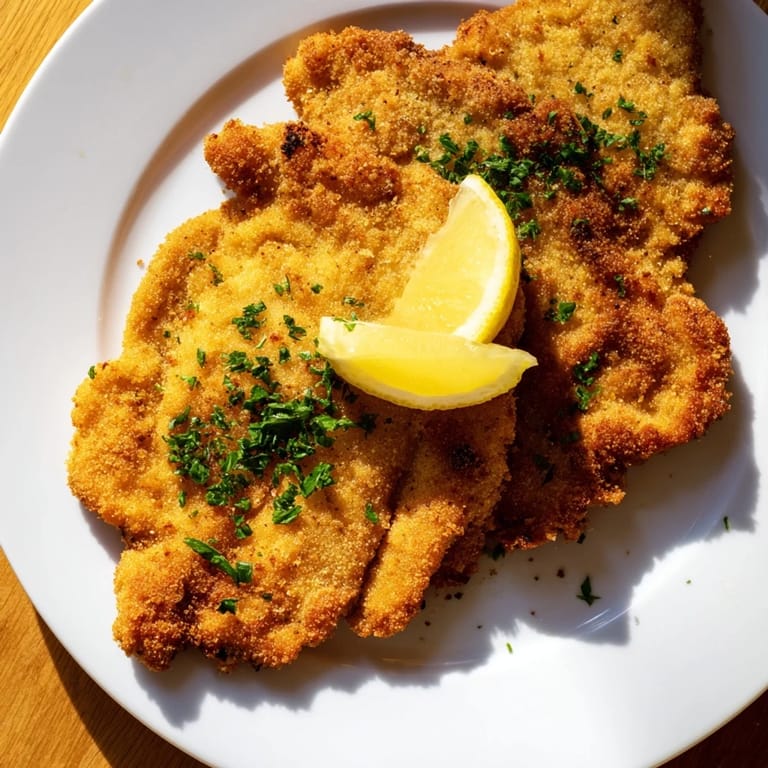
- Lift them out with a slotted spatula and rest on paper towels just long enough to remove excess oil. Serve right away with lemon wedges and a sprinkle of parsley, while the crust is still crackling.
 Save
Save There's a moment when you're frying schnitzel that feels almost meditative—the sound, the smell, the color changing from pale golden to that perfect amber. It's in those moments you understand why this dish has endured for centuries; it's not complicated, but it demands your attention and rewards you for it.
The Perfect Pounding Technique
The mallet feels awkward at first, but after a few cutlets, your muscle memory takes over and you realize you're doing something primal and satisfying. Aim for even thickness rather than maximum thinness; a cutlet at 1/4 inch will cook through without drying out. Some people use a rolling pin or even a wine bottle if they don't have a mallet—I've seen it work, though a proper mallet gives you better control and feedback.
Why Clarified Butter Changes Everything
Clarified butter is basically butter without the milk solids, which means it has a higher smoke point and won't burn at the high heat needed for that golden crust. If you can't find it, make your own by melting butter slowly and pouring off the clear golden liquid, or use a neutral oil like vegetable or sunflower. The difference in flavor is subtle but real; clarified butter gives the schnitzel a richness that oil alone can't match.
Serving Traditions and Variations
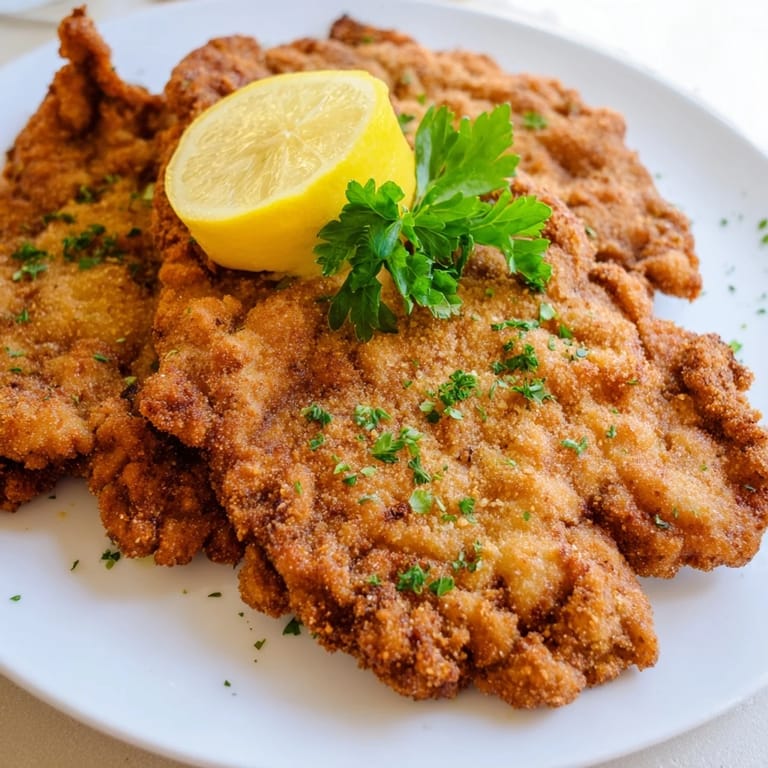
In Austria, you'll find schnitzel served with potato salad, cucumber salad, or lingonberry jam—each pairing has its own logic and charm. The potato salad is warm and slightly vinegary, cutting through the richness; the cucumber salad is cool and crisp; the lingonberry jam adds a touch of sweetness that balances the savory meat. You don't need all three, but picking one elevates the whole meal from just dinner to an experience.
- Make your potato salad while the schnitzel rests; they're both best served warm.
- Slice your lemon into wedges ahead of time so they're ready the moment the schnitzels come out of the pan.
- If serving for a crowd, you can pound and bread the cutlets hours ahead; keep them on a parchment-lined tray in the fridge until you're ready to fry.
 Save
Save Make this schnitzel and you'll understand why it's survived generations in Austrian kitchens. It's humble but elegant, simple but deeply satisfying—the kind of dish that tastes like home to anyone who's ever had the real thing.
Recipe FAQ Section
- → What type of meat is best for Wiener Schnitzel?
Veal cutlets are traditional, prized for their tender texture and mild flavor.
- → How thin should the cutlets be pounded?
Veal should be pounded to about a quarter inch thick to ensure even cooking and tenderness.
- → Why is the breadcrumb coating kept loose?
A light and loose coating prevents the breading from becoming soggy and ensures a crisp, golden crust.
- → What fat is recommended for frying?
Clarified butter is preferred for its rich flavor and high smoke point, though neutral oils can be used.
- → How is the dish traditionally served?
Typically accompanied by lemon wedges and optionally garnished with fresh parsley; sides may include potato or cucumber salad.