 Save
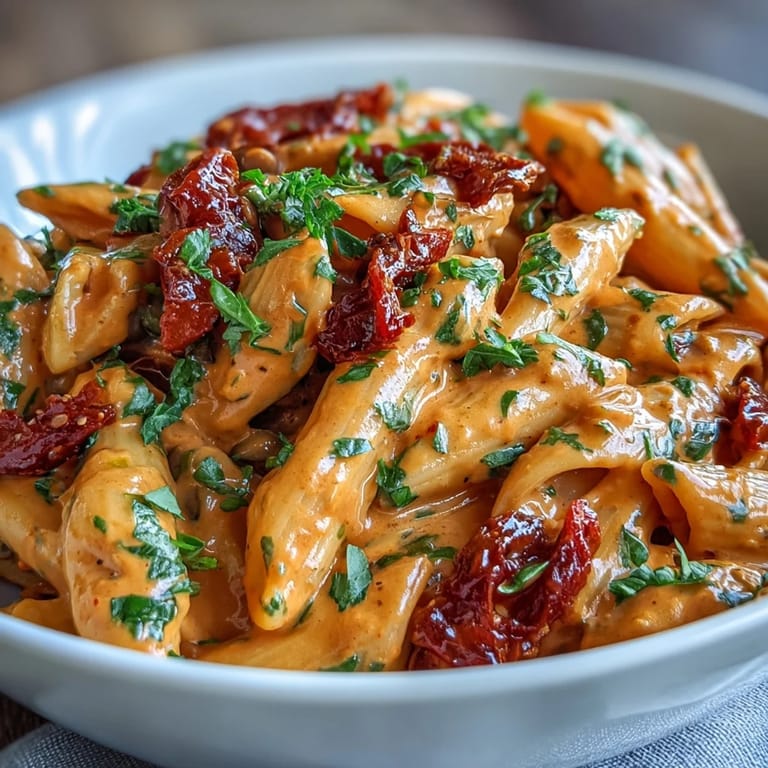
Save There's a particular Tuesday evening that comes to mind whenever I make this pasta—I was testing recipes for a friend who'd just gone vegan, standing in my kitchen with roasted red peppers cooling on the counter, wondering how to make something that felt luxurious without cream. The moment I blended those peppers with lentils and tasted that first spoonful of sauce, something clicked. It was silky, it was rich, and nobody would ever guess the protein hiding in there.
I served this to my family one random Wednesday, and my dad—who's skeptical about vegan cooking—came back for seconds without asking what was in it. That quiet moment of him tasting something unexpected and actually enjoying it, no performance, no politeness, just genuine satisfaction, is when I knew this recipe had staying power.
Ingredients
- Dried penne or fusilli pasta (340 g): The tube or spiral shape catches the sauce beautifully, so avoid flat noodles here.
- Roasted red bell peppers (2 large): Buy jarred if you're short on time, but fresh roasted ones give a deeper, smokier flavor that makes the difference.
- Yellow onion (1 medium, chopped): Sautéing this first builds a sweet foundation that balances the peppers' slight bitterness.
- Garlic (3 cloves, minced): Add it after the onions soften so it doesn't burn and turn harsh.
- Cooked lentils (120 g, well-drained): Brown or green lentils work beautifully; red lentils make the sauce slightly sweeter and lighter in color.
- Unsweetened plant-based milk (120 ml): Oat milk gives the creamiest result, though almond and soy work fine too.
- Olive oil (2 tbsp total): Use good quality here since it's one of the few fats carrying flavor.
- Nutritional yeast (2 tbsp): This is what gives that savory, almost cheesy depth that makes people ask what the secret ingredient is.
- Tomato paste (1 tbsp): A small amount adds complexity and slight umami without making it taste tomatoey.
- Smoked paprika (1 tsp): The smoke is essential; regular paprika won't give you the same warmth.
- Dried oregano (1/2 tsp): Dried works better than fresh here because the heat helps release its oils.
- Salt and black pepper (1/2 tsp and 1/4 tsp): Taste as you go because nutritional yeast adds saltiness too.
Tired of Takeout? 🥡
Get 10 meals you can make faster than delivery arrives. Seriously.
One email. No spam. Unsubscribe anytime.
Instructions
- Boil the pasta with intention:
- Set your water to a rolling boil, salt it generously, then cook your pasta according to package directions while you prep everything else. Before draining, scoop out about 120 ml of that starchy cooking water and set it aside—this liquid gold will adjust your sauce's consistency later and help it cling to the pasta.
- Soften the aromatics:
- Heat 1 tablespoon of olive oil in your skillet over medium heat, then add the chopped onion. Listen for that gentle sizzle and watch until the onion turns translucent and sweet, about 4 to 5 minutes. Add your minced garlic and let it bloom for just 60 seconds until the kitchen smells incredible.
- Blend until impossibly smooth:
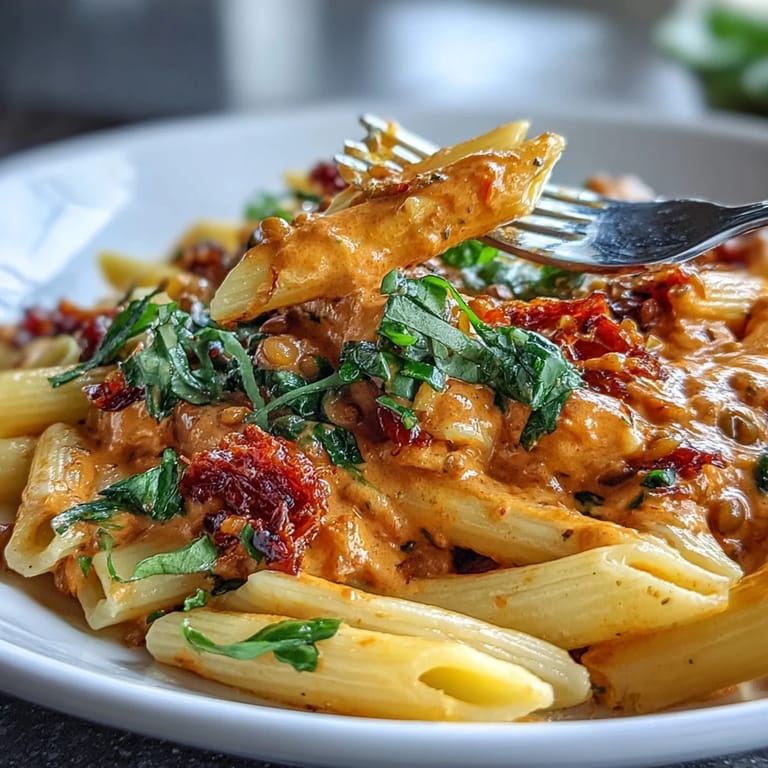
- Transfer your sautéed onion and garlic to a blender along with the roasted red peppers, drained lentils, plant milk, nutritional yeast, tomato paste, smoked paprika, oregano, salt, and pepper. Blend on high until the mixture is completely smooth and creamy with no visible specks—this is what creates that luxurious mouthfeel that feels nothing like vegetables.
- Adjust and taste:
- Pour the sauce back into your skillet over low heat and stir in the remaining 1 tablespoon of olive oil. Add your reserved pasta water a splash at a time until the sauce reaches that perfect consistency—it should coat the back of a spoon but still move easily. Taste a small spoonful and adjust salt and pepper as needed.
- Bring everything together:
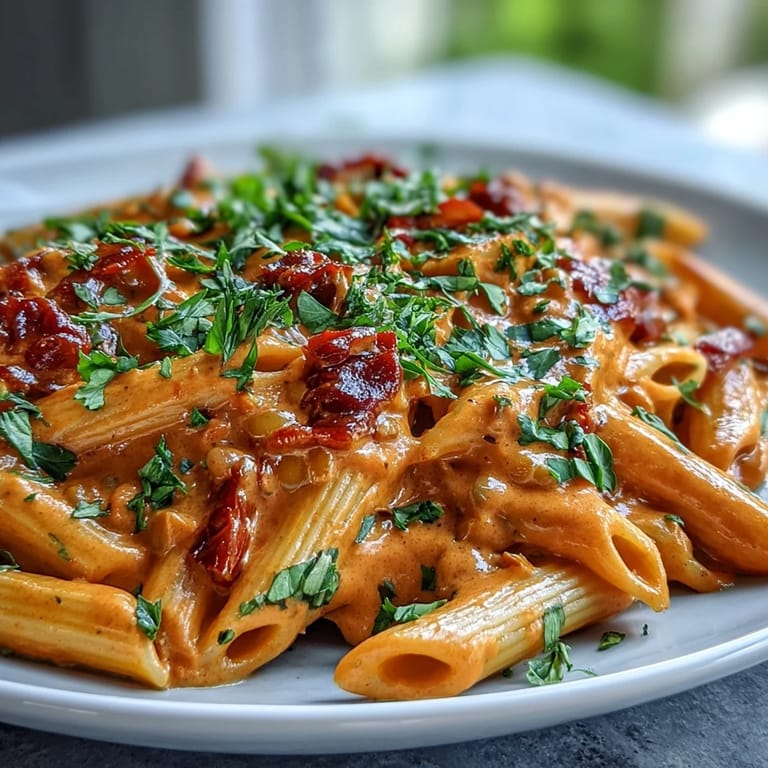
- Add your drained pasta to the sauce and toss gently for 1 to 2 minutes until every strand is coated and warmed through. The pasta will continue absorbing sauce, so if it seems a bit loose, that's actually right.
- Finish with joy:
- Divide among bowls and scatter fresh basil leaves, a pinch of vegan parmesan or extra nutritional yeast, and a small flurry of red pepper flakes if you like heat. Serve immediately while it's warm and the basil is still bright.
 Save
Save What struck me most about this dish was watching people's surprised reactions when they learned it was vegan. Not the performative surprise some people do, but genuine interest in what made it taste so complete and satisfying. It reminded me that plant-based cooking isn't about substitution or compromise—it's about understanding how ingredients work together to create something whole.
Why Red Peppers Matter Here
Roasted red peppers have a sweetness and silky texture that raw peppers can't match, and when blended, they become almost buttery in consistency. The roasting process concentrates their sugars and mellows their bitterness, which is why jarred roasted peppers are genuinely a smart shortcut rather than a compromise. I've made this with fresh red peppers I roasted myself and with jarred ones, and while the homemade version has a slightly deeper complexity, the jarred version saves you 20 minutes and tastes remarkable.
The Secret Power of Lentils
Brown and green lentils are nutritional powerhouses, but what I love about them here is how completely they disappear into the sauce while transforming it. They add creaminess, protein, and a subtle earthiness that rounds out the peppers' sweetness, but you'd never identify them by taste or texture. I've had people eat this three times before I even mentioned lentils were in it, and their disbelief when they learned was honestly my favorite part of serving it.
Making It Your Own
This recipe is more adaptable than it might seem, and the best discoveries happen when you start playing with it. I've added sautéed spinach, roasted zucchini, and even a handful of sun-dried tomatoes depending on what's in my fridge. One time I stirred in some white beans for extra heartiness, and another time I used half the pasta and served it as a sauce for roasted vegetables instead. The foundation is solid enough to support your creativity without falling apart.
- Red lentils will give you a sweeter sauce that's slightly lighter in color, while brown or green lentils provide earthier depth.
- Fresh basil is worth buying even if it adds an extra stop at the market, but dried oregano in the sauce is fine because it needs the heat to release its flavor.
- If your sauce thickens up while sitting, just add a splash more plant milk and stir gently over low heat to loosen it back up.
 Save
Save This pasta has become my go-to recipe when I want to cook something that feels like genuine comfort food but happens to be vegan. There's something satisfying about a dish that proves you don't need cream to make something feel luxurious.
Recipe FAQ Section
- → What type of pasta works best for this dish?
Penne or fusilli pasta hold the sauce well, but gluten-free options can also be used to suit dietary needs.
- → Can I use other legumes instead of lentils?
Brown or green lentils are preferred for creaminess and texture, but red lentils can be substituted for a sweeter flavor.
- → How do I roast red bell peppers properly?
Roast whole peppers under a broiler or over a flame until charred, then peel off the skin and remove seeds for a smoky, rich taste.
- → What alternatives exist for plant-based milk in the sauce?
Oat, almond, or soy milk work well, providing creaminess without dairy; choose unsweetened varieties to maintain flavor balance.
- → How can I adjust the sauce thickness?
Use reserved pasta water to thin the sauce gradually while heating, achieving the desired consistency before tossing with pasta.