 Save
Save There's something about the Swiss Alps in winter that makes you crave fondue—or maybe it's just the smell of melted Gruyère that transports you there. I first made this at a tiny apartment in Geneva with a borrowed fondue pot and cheese from a market I could barely navigate. My hands were shaking a bit, worried I'd mess it up, but the moment that wine hit the pot and the cheese started to melt, something clicked. It felt less like cooking and more like performing a small, intimate magic trick for friends huddled around a table.
Years later, I made this for my partner on a random Tuesday when it was raining outside and we both felt like we needed something warm and shared. I remember how quickly the bread cubes disappeared, how we laughed when someone's vegetable fell off the fork into the pot, and how the whole kitchen smelled like white wine and nutmeg for hours afterward. That meal didn't cost much, but it felt like celebration.
Ingredients
- Gruyère cheese, grated (200 g): This is the backbone of the fondue—its nutty, slightly sweet character is what makes this dish sing. Buy it from a good cheese counter and grate it fresh; pre-shredded versions often have anti-caking agents that can make the sauce gritty.
- Emmental cheese, grated (200 g): The gentler partner to Gruyère, it melts silkily and prevents the fondue from becoming too intense or sharp.
- Dry white wine (1 cup / 240 ml): This is your solvent—it keeps the cheese smooth and prevents clumping. Use something you'd actually drink; cheap wine tastes cheap.
- Kirsch, optional (1 tbsp / 15 ml): A splash of cherry brandy adds an unexpected depth that people won't be able to name but will definitely notice. It's worth seeking out even if you have to order it online.
- Cornstarch (1 tbsp / 8 g): This might seem like a small detail, but it's your secret weapon against a separated, greasy fondue. It stabilizes everything.
- Garlic clove, halved: Just one, and you're only using it to flavor the pot—this isn't a fondue that screams garlic, it whispers it.
- Freshly grated nutmeg (1/4 tsp) and ground white pepper (1/4 tsp): These seasonings are what elevate fondue from good to memorable. White pepper is worth the extra step because black specks would look odd in the cream-colored fondue.
- Bread cubes and vegetables: Crusty bread is non-negotiable, and slightly stale is actually better because it won't fall apart on the fork. Blanch the vegetables first so they cook faster and hold together.
Tired of Takeout? 🥡
Get 10 meals you can make faster than delivery arrives. Seriously.
One email. No spam. Unsubscribe anytime.
Instructions
- Season the pot:
- Cut a garlic clove in half and rub the inside of your fondue pot with the cut sides. This is subtle seasoning—you're building flavor, not overpowering. Discard the garlic and set the pot aside.
- Heat the wine:
- Pour the white wine into the pot and set it over medium-low heat. You want it to just start simmering—watch for tiny bubbles rising, not a rolling boil. This takes about 3 to 5 minutes.
- Prepare the cheese:
- While the wine warms, toss your grated cheeses with cornstarch in a small bowl until every strand is coated. The starch creates a protective coating that keeps the cheese from clumping when it hits the heat.
- Melt the cheese slowly:
- Once the wine is simmering, start adding the cheese in small handfuls, stirring constantly in a figure-eight motion. This motion matters—it keeps everything moving and prevents the bottom from sticking or the cheese from separating. Each handful should be mostly melted before you add the next one. This will take about 5 to 7 minutes total.
- Add final seasonings:
- Once the cheese is smooth and silky, stir in the kirsch (if using), nutmeg, and white pepper. Give it a final minute of gentle stirring to blend everything together, then reduce the heat to the absolute lowest setting. Never let it boil—boiling will break the emulsion and turn it grainy.
- Set up for serving:
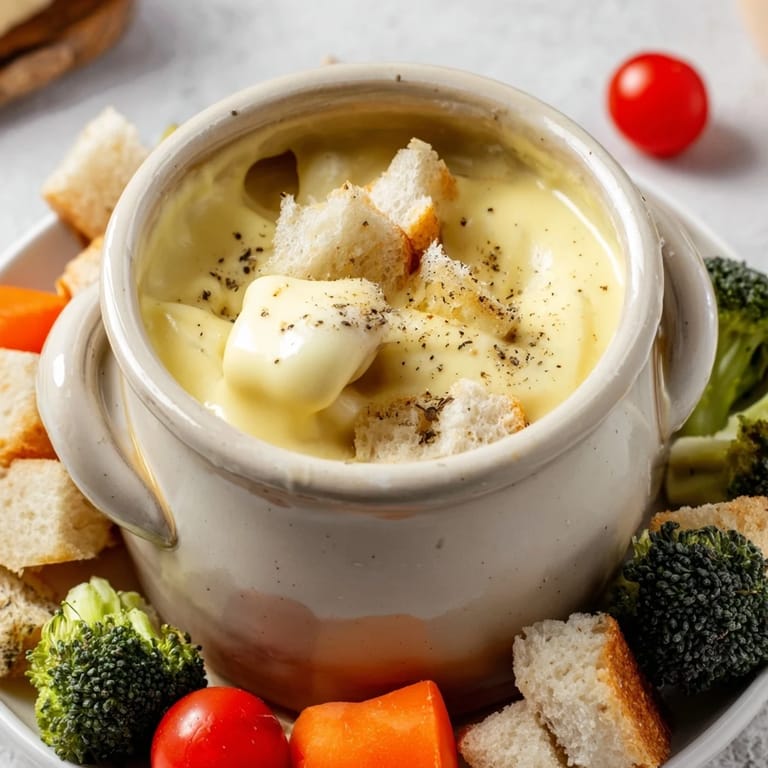
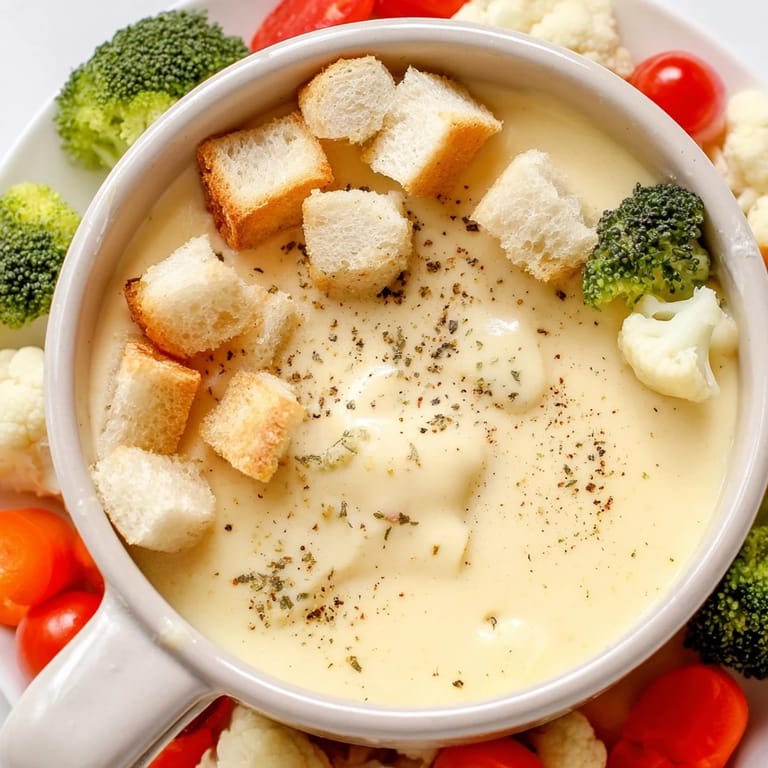
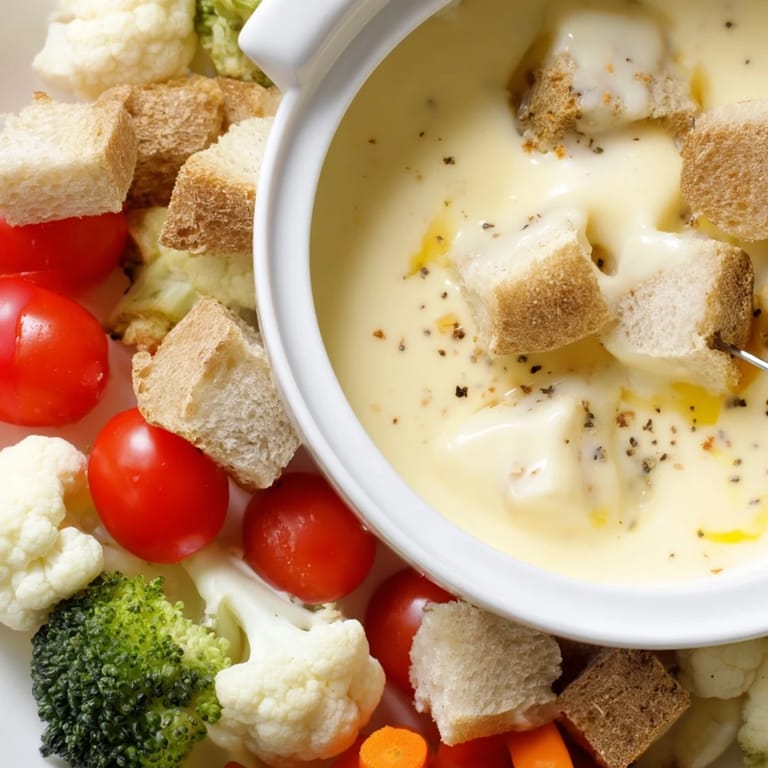
- Transfer the pot to a tabletop burner to keep it warm at the table. Arrange your bread cubes and blanched vegetables on a board around the pot, hand out fondue forks, and watch people's faces light up.
 Save
Save I think the real magic of fondue isn't just in the taste—it's in the act of it. Everyone gathered around the same pot, taking turns, sharing forks, laughing when someone's bread falls in the cheese. There's something primal about feeding yourself from a communal source that makes people relax and open up.
Why This Matters
Fondue has been part of Swiss culture for centuries because it solves a real problem—what do you do with aged, hard cheeses and bread that's past its prime? Instead of throwing them away, someone figured out how to turn them into something elegant and joyful. There's wisdom in that thriftiness, and there's courage in serving something so simple with such confidence.
What to Serve Alongside
Fondue doesn't need much, but what you pair it with matters. A crisp, dry white wine like Fendant or Chasselas is traditional—something that won't compete with the richness of the cheese. If wine isn't your thing, a light lager beer works beautifully, cutting through the cream and cleansing your palate between bites.
The Setup and Small Details
The ritual of fondue is half the meal. A proper fondue pot, real fondue forks instead of regular utensils, a burning candle or small burner beneath the pot—these things matter because they signal to everyone at the table that this moment is special, even if it's just a Tuesday night. Before you start serving, always stir the fondue once more and taste it; you might need a tiny pinch more nutmeg or pepper depending on your cheese.
- Keep the fondue pot covered with a cloth while you set everything up so a thin skin doesn't form on top.
- If the fondue seems to be getting too thick as people dip, a splash of warm wine stirred in will loosen it without breaking it.
- A little kirsch on hand as a finisher is insurance—just a teaspoon stirred in if the texture starts to seem gluey.
 Save
Save Make fondue when you want to slow down and be present with people. It's not about impressing anyone with complicated technique—it's about creating a moment where everyone feels cared for.
Recipe FAQ Section
- → What cheeses are best for the fondue blend?
Gruyère and Emmental are traditional choices, providing a smooth melt and balanced flavor. You can substitute part with Appenzeller for a stronger taste.
- → Why is white wine used in this dish?
White wine adds acidity and depth, helping to create a velvety texture and enhancing the cheese flavors without overpowering.
- → What tips help prevent bread from falling off the fondue forks?
Using slightly stale bread cubes offers better grip, reducing the chances of slipping into the cheese.
- → Can kirsch be omitted?
Yes, kirsch is optional and adds a subtle cherry flavor; omitting it won’t compromise the creamy texture.
- → How can the fondue stay warm during serving?
Keep the fondue pot over a low heat source like a tabletop burner to maintain ideal dipping temperature without boiling.