 Save
Save There's something almost magical about the quiet efficiency of opening a tin of salmon and transforming it into something that feels entirely made by hand. One Tuesday evening, I was rifling through the pantry, hoping to find something quick but not boring, when that familiar can caught my eye. Twenty minutes later, I had a bowl in front of me that tasted like it came from a proper kitchen, not a shortcut, and I realized then that the best meals don't always require hours or complicated technique.
I made this for a friend who was skeptical about canned salmon until she tasted that first spicy, cool bite of creamy fish against warm rice. Watching her expression shift from polite to genuinely pleased reminded me that some of the best meals aren't the ones that demand your attention for hours, but the ones that deliver real flavor in the small window between hunger and the moment you sit down.
Ingredients
- Jasmine or sushi rice, 1 cup uncooked: These varieties cook fluffy and light, the better to soak up the creamy salmon and any extra sriracha you drizzle on top.
- Water, 2 cups: The ratio that keeps rice from turning into gluey paste without being as fussy as some recipes pretend.
- Canned salmon, 1 can (6 oz / 170 g), drained and flaked: The whole foundation here—don't skip draining it well or your mixture gets watery and sad.
- Mayonnaise, 2 tablespoons: This is what makes the salmon luxurious instead of dry; there's no shame in this shortcut.
- Sriracha sauce, 1–2 teaspoons: Start with one and taste; the heat creeps up on you in the best way.
- Soy sauce, 1 teaspoon: A whisper of umami that makes everything taste more like itself.
- Toasted sesame oil, ½ teaspoon: A tiny amount goes a long way; it's the difference between this feeling like a real dish and a bowl of stuff.
- Shredded carrot, ½ cup: Sweet crunch that won't wilt, and bright color that makes the whole bowl more inviting.
- Cucumber, ½ cup, thinly sliced or julienned: Keeps things fresh and crisp; the cooler contrast to warm rice is essential.
- Avocado, ½, sliced: Creamy against the spicy mayo, soft enough that it feels indulgent on a quick dinner.
- Scallions, 2 tablespoons, sliced: A sharpness that cuts through richness and adds a green note you can actually see.
- Toasted sesame seeds, 1 teaspoon: The final flourish that adds nuttiness and makes it look intentional rather than thrown together.
- Edamame, ½ cup, shelled (optional): If you have them, they add protein and a pleasant firmness that's different from everything else in the bowl.
- Nori sheets, cut into strips (optional): For when you want it to feel more restaurant-like, though honestly the bowl is perfect without them.
Tired of Takeout? 🥡
Get 10 meals you can make faster than delivery arrives. Seriously.
One email. No spam. Unsubscribe anytime.
Instructions
- Rinse and cook the rice:
- Rinse the rice under cold water, moving it around with your fingers until the water runs almost clear; this removes excess starch so you don't end up with mushy clumps. Bring the water to a boil in a covered saucepan, then immediately drop the heat low and leave it alone for 12–15 minutes until the rice is tender and the water is absorbed.
- Make the creamy salmon mixture:
- In a bowl, combine your drained salmon with the mayo, sriracha, soy sauce, and sesame oil, stirring until everything is coated and creamy. Taste it straight from the spoon and add more sriracha if you want real heat, not just a whisper of it.
- Prepare the vegetables:
- Slice or julienne the cucumber into thin pieces so it stays crisp, slice the avocado into neat pieces (or mash it if that's your style), and make sure the carrot is finely shredded so it distributes evenly. If you're using edamame, steam or microwave them just until warm.
- Assemble the bowls:
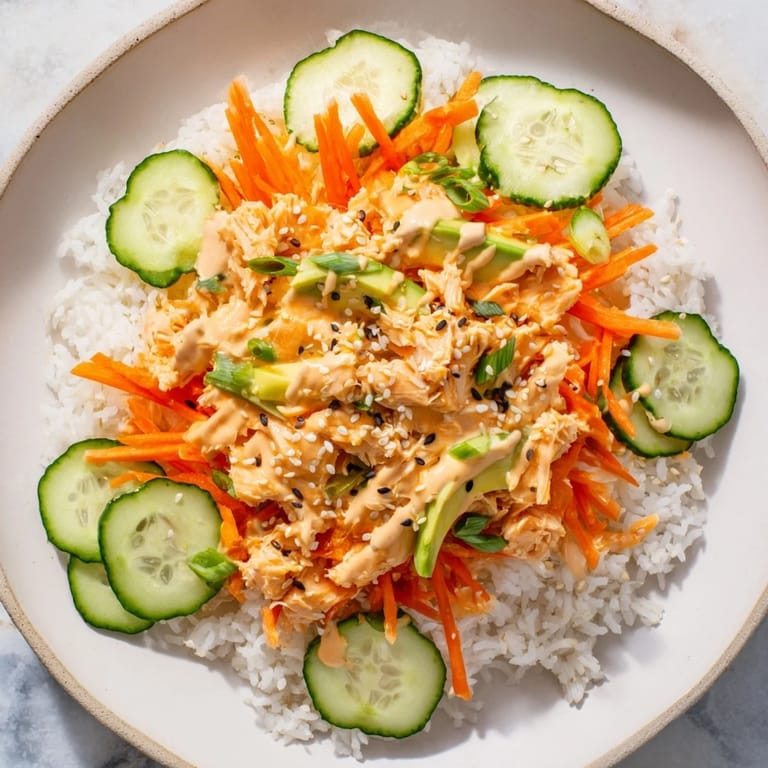
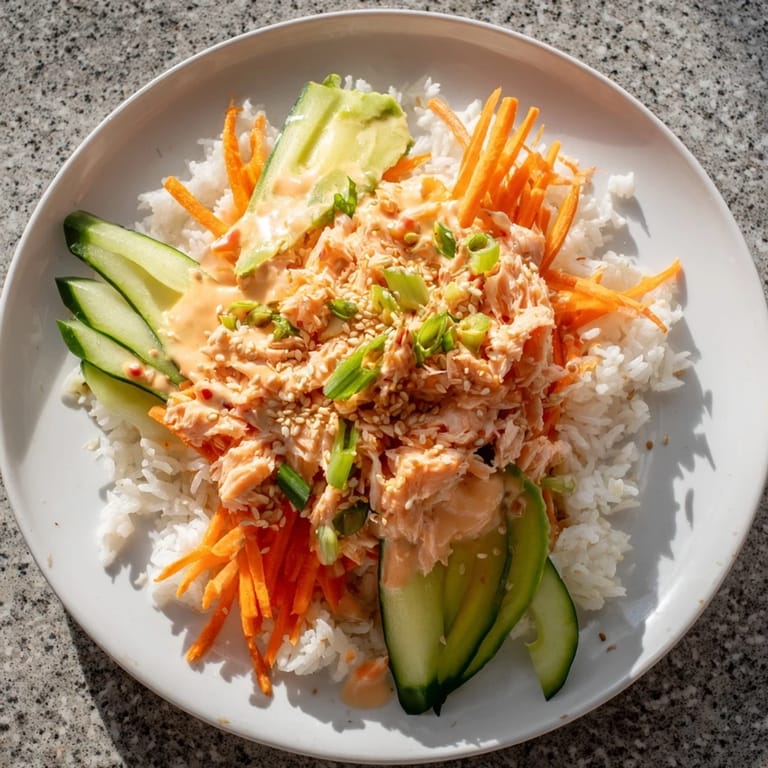
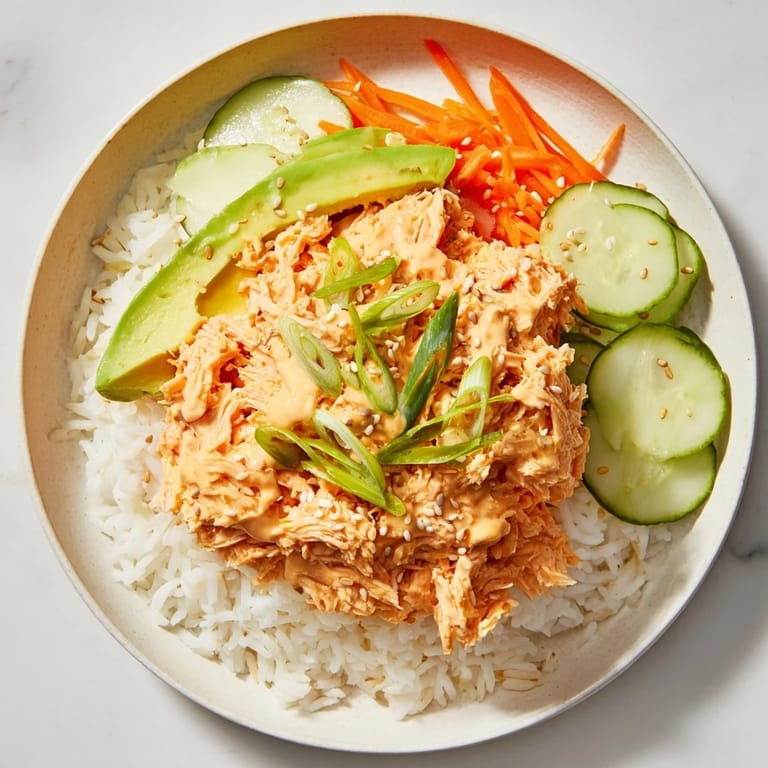
- Divide the hot rice between two bowls, then spoon half the salmon mixture onto each portion, letting some of that creamy sauce pool into the warm rice. Arrange all the vegetables around the salmon in a way that makes you happy to look at it.
- Finish and serve:
- Sprinkle scallions and sesame seeds across the top, add nori strips if you want them, and set down in front of yourself or whoever you're feeding. Serve with small bowls of extra sriracha and soy sauce on the side so people can adjust the heat and salt to their taste.
 Save
Save I remember eating this bowl standing at the kitchen counter while my housemate was telling me about his day, half listening because I was too busy thinking about how good it was, and realizing that sometimes the meals that matter most aren't the ones you spend hours planning. They're the ones that happen on accident when you combine ingredients you already have with a little bit of intention.
Why Canned Salmon Deserves Your Respect
There's a weird food snobbery around canned salmon that I've never understood, especially when I've tasted expensive fresh fish that was handled poorly and canned salmon that was packed at peak freshness. The canned version is actually precooked, which means you don't have to worry about doneness or texture—it's already flaked and ready to eat, which is precisely why this bowl comes together so fast. Beyond speed, canned salmon has soft, edible bones that are an excellent source of calcium if you don't mind them, and the fish is often caught in the Pacific where sustainability standards are stricter. Stop thinking of it as a compromise and start thinking of it as an ingredient that's already done half the work.
Building Flavor Without Fussiness
The sriracha mayo is doing all the heavy lifting here, and that's intentional design, not laziness. Mayo as a base catches and carries all the other flavors—the salty soy, the earthy sesame oil, the heat from sriracha—and distributes them across every bite instead of letting them sit in one corner of the bowl. The vegetables add texture and freshness that would get lost if you tried to cook them, and the rice becomes a neutral base that lets all of this shine instead of competing for attention. This is how you cook for yourself when you're hungry now, not when you're performing for an imaginary audience.
Variations and Swaps That Actually Work
Canned tuna works beautifully here if you prefer it, and honestly, the whole thing tastes just as good with brown rice or cauliflower rice if you want to go that direction. I've added pickled ginger when I had it on hand and it cut through the richness like a small knife, and I've left the avocado off entirely on mornings when I didn't have any and didn't miss it because everything else had enough fat and richness. The blueprint here is flexible enough that you can swap almost any raw vegetable you like into those empty spaces—radish, bell pepper, snap peas, shredded daikon—as long as you're thinking about contrast in texture and color.
- If you add radish, slice it paper-thin so it stays crisp and doesn't overpower the softer vegetables.
- Pickled ginger or a squeeze of fresh lime juice brightens the whole bowl if you feel like it's getting too rich.
- Edamame can be swapped for any protein you have on hand, though the whole point of this dish is that you probably don't have time to cook something new.
 Save
Save This is the kind of meal that reminds you that feeding yourself well doesn't require stress or pretension, just a few good ingredients and five minutes of gentle attention. Make it exactly as written the first time, and then make it entirely your own the second time.
Recipe FAQ Section
- → Can I substitute jasmine rice with other grains?
Yes, brown rice or cauliflower rice work well as substitutes for a healthier or low-carb option.
- → How spicy is the salmon mixture?
The spice level depends on the amount of sriracha used; you can adjust it to your taste preference.
- → What vegetables complement the bowl?
Carrots, cucumbers, avocado, scallions, and edamame contribute freshness and texture to the bowl.
- → Is it necessary to use mayonnaise in the salmon mix?
Mayonnaise provides creaminess to the salmon mixture but can be omitted or replaced with alternatives if desired.
- → Can this be prepared ahead of time?
Yes, the components can be prepped in advance but assemble just before serving to maintain freshness.