 Save
Save The first time I made paella, I was standing in a friend's kitchen in Barcelona, watching her grandmother work a massive pan over an open flame with the kind of ease that only comes from decades of practice. She never looked at a recipe, never stirred the rice after the stock went in, and somehow knew exactly when to pull it off the heat by the sound it made. That afternoon taught me that paella isn't fussy or complicated—it's just about respecting a few simple rules and letting the rice do what it wants to do.
I made this for a dinner party last spring when I wanted to impress people without spending all day in the kitchen. My partner kept peeking over my shoulder asking if I was sure about not stirring it, and I had to keep shooing them away. When we pulled the lid off after those final five minutes of resting, the whole table went quiet for a second before everyone dove in, and I realized that sometimes the simplest techniques create the most memorable meals.
Ingredients
- Saffron threads: These tiny golden strands are worth the splurge because they don't just add color—they bring this subtle floral, slightly earthy note that makes people ask what your secret ingredient is.
- Short-grain paella rice (Bomba or Arborio): These varieties actually absorb liquid without falling apart, which is why regular long-grain rice won't give you the same creamy texture.
- Fish or seafood stock: Use the real thing if you can find it; the difference between boxed stock and quality seafood stock is noticeable in every bite.
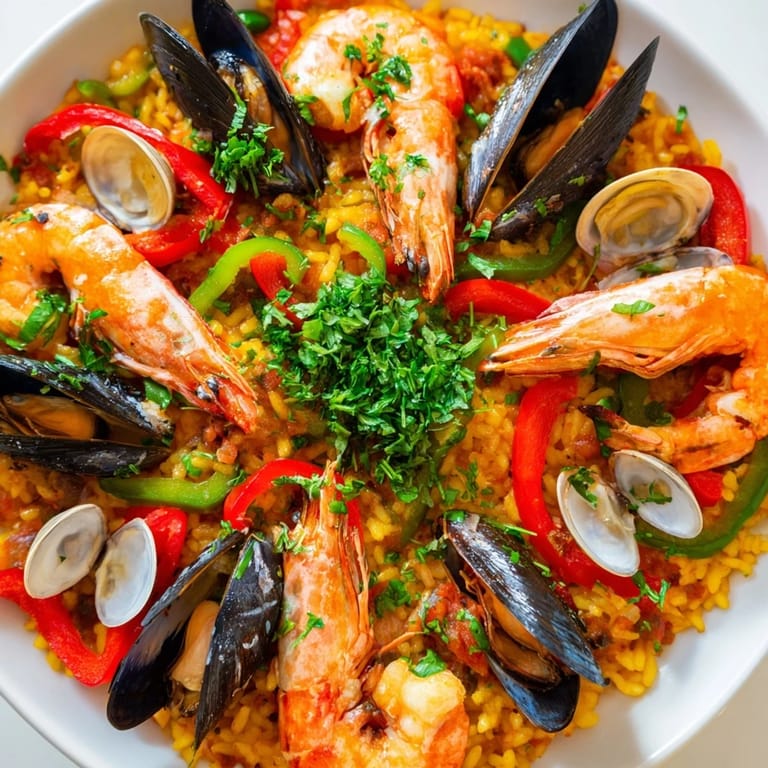
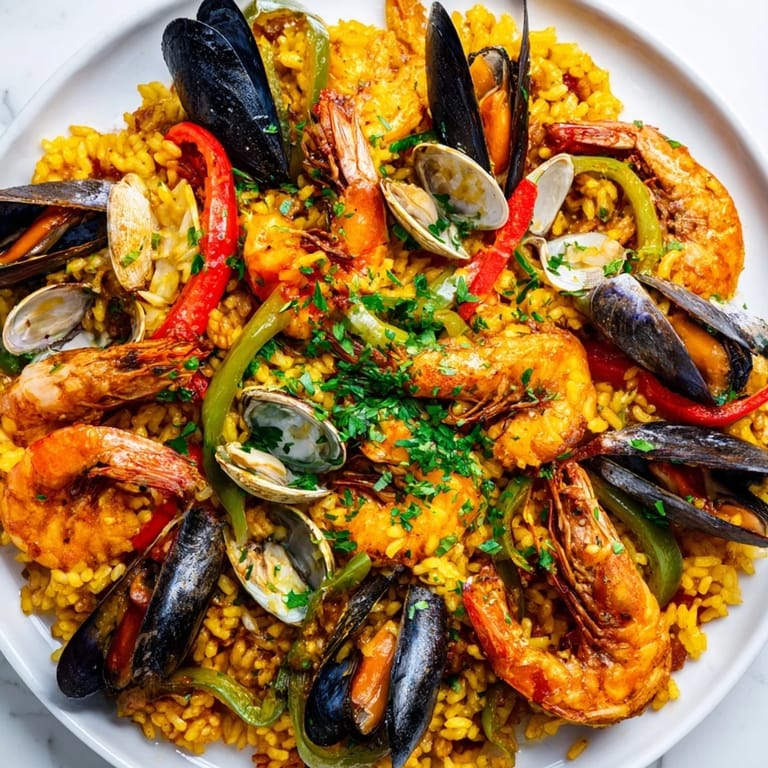
- Shrimp, mussels, and clams: Buy them as fresh as possible and check that the shells are tightly closed before cooking, discarding any that stay open after cooking.
- Smoked paprika: This gives you that subtle depth and a whisper of smokiness without overpowering the delicate seafood flavors.
- Bell peppers: The red and green create a visual contrast that makes the dish feel festive, and they soften just enough to add sweetness without falling apart.
- Olive oil: Good olive oil carries the flavors of the aromatics, so don't use the cheapest bottle you can find.
Tired of Takeout? 🥡
Get 10 meals you can make faster than delivery arrives. Seriously.
One email. No spam. Unsubscribe anytime.
Instructions
- Steep the saffron:
- Pour your stock into a saucepan and add those saffron threads while it's warm—they'll bloom and release their color and flavor. Keep it at a gentle simmer so it stays hot when you need it later.
- Build your flavor base:
- Heat olive oil in your paella pan and start with the onion, letting it soften until it turns translucent. Add garlic and let it get fragrant for just a few seconds before it can burn.
- Soften the peppers:
- Add your bell pepper strips and let them cook down slightly, then grate in the tomato and let it cook until most of the liquid evaporates. This concentrates the flavors and creates a flavorful bed for your rice.
- Toast and coat the rice:
- Add the rice and stir it around so every grain gets coated with oil and vegetables, then sprinkle in your paprika, salt, and pepper. This toasting step prevents the rice from getting mushy.
- Add the stock without stirring:
- Pour in that saffron-infused broth and distribute the rice evenly with your spoon, then put your spoon down and don't touch it. This is the hardest part if you're a stirrer, but trust the process—the rice needs this undisturbed time.
- Cook the seafood:
- Arrange your shrimp, mussels, and clams over the top and cover loosely with foil or a lid. Cook over medium-low heat for 20 to 25 minutes until the rice is tender and the shellfish have opened their shells.
- Rest and finish:
- Pull the pan off heat and let it sit covered for 5 minutes—this gives the rice one last moment to absorb any remaining liquid and lets everything settle. Garnish with fresh parsley and serve with lemon wedges.
 Save
Save The best moment came when my teenage niece, who usually doesn't eat seafood, tried a forkful and actually asked for seconds. She said she liked how the shrimp had absorbed all these flavors without getting tough, and I realized that was exactly what her grandmother in Barcelona was trying to teach me all those years ago.
The Paella Pan Debate
Technically you need a paella pan, but I've made this successfully in a large wide skillet when I didn't have one. A paella pan's shape helps the rice cook evenly and lets you get those crispy bits on the bottom, but what really matters is having enough surface area and medium-low heat for even cooking. If you're buying a paella pan, go for 14 inches if you're cooking for four people—anything smaller and you'll have too much depth.
Playing with Your Seafood
This recipe is flexible with the seafood in a way that feels freeing. I've added frozen peas in step five just before the seafood goes on, which gives you little pockets of sweetness, and I've substituted calamari rings or chunks of firm white fish when I couldn't find all the shellfish I wanted. The only rule is to use something that tastes good with saffron and won't fall apart in 20 minutes of gentle cooking.
Wine and Timing
Serve this with a crisp Spanish white wine like Albariño or Verdejo, something with enough acidity to cut through the richness of the olive oil and seafood. The whole dish comes together in just over an hour from start to finish, so it's perfect for a weekend dinner when you want to feel like you've accomplished something without spending your whole day cooking.
- Prep your seafood and vegetables before you start cooking so you're not scrambling when things are happening quickly.
- If your stock cools down, warm it up again before adding it to the rice, because cold liquid will stop the cooking process.
- The crispy bits on the bottom are called socarrat and they're a feature, not a mistake, so don't worry if you hear them crackling.
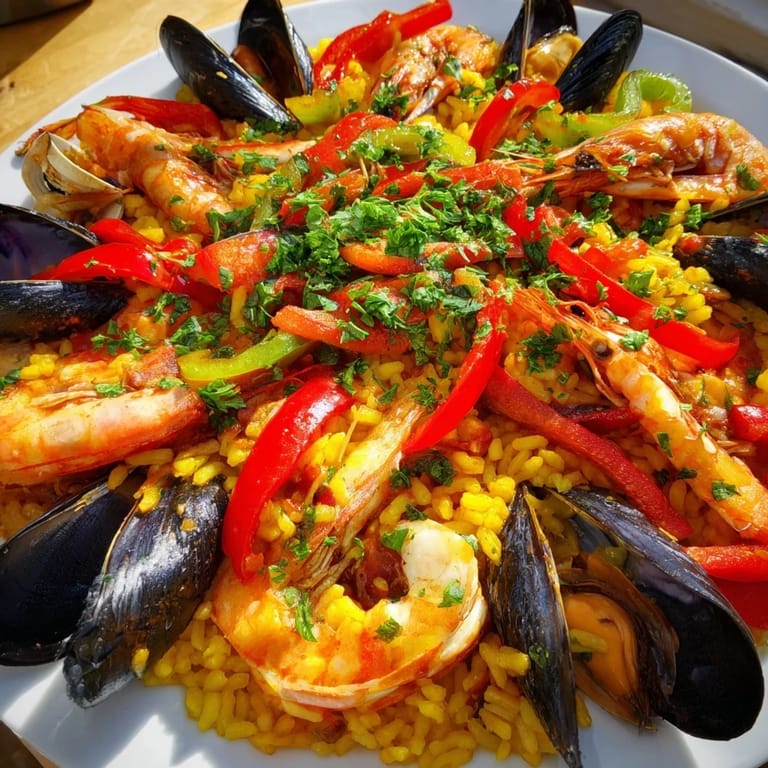 Save
Save There's something magical about bringing a steaming paella to the table and watching people's faces light up before they even taste it. This dish has a way of turning an ordinary dinner into something that feels celebratory.
Recipe FAQ Section
- → What type of rice is best for this dish?
Short-grain rice varieties like Bomba or Arborio absorb flavors well and maintain texture during cooking.
- → How is the saffron flavor infused?
Saffron threads are steeped in warm fish or seafood stock to release color and aroma before adding to the rice.
- → Can I substitute the shellfish?
Yes, calamari or firm white fish can be used in place of some shellfish for variation.
- → What is the key to cooking the rice evenly?
Do not stir after adding the saffron stock; this allows the rice to cook uniformly and develop a crust.
- → How do I know when shellfish are cooked?
Shellfish are done when their shells open; discard any that remain closed after cooking.
- → What sides pair well with this meal?
A crisp Spanish white wine such as Albariño or Verdejo complements the dish perfectly.