 Save
Save There's a particular evening I can't quite forget—standing in a small kitchen in Lisbon, watching my neighbor Maria stir a pot of Caldo Verde while steam fogged her glasses. The soup was so simple, just potatoes and kale going from raw ingredients to something that smelled like home, even though it wasn't mine. She handed me a bowl without ceremony, and I understood then why this dish has been feeding Portuguese families for generations. It's the kind of soup that doesn't ask for much but gives everything back.
I made this soup for my sister on a cold Tuesday, right after she'd moved into her first apartment. She was overwhelmed with boxes and decisions, so I showed up with groceries instead of advice. By the time we finished a bowl together at her kitchen counter, surrounded by half-unpacked belongings, she'd stopped worrying about whether she'd made the right choice. That's when I realized Caldo Verde isn't just Portuguese—it's a little act of quiet care that translates everywhere.
Ingredients
- Potatoes (600 g): Choose a starchy variety like Yukon Gold—they break down into the broth and create that signature creamy texture without needing cream.
- Onion (1 large): Dice it finely so it practically melts into the background, building flavor without announcing itself.
- Garlic (2 cloves): Minced, not sliced, so it distributes evenly and becomes part of the base rather than a surprise bite.
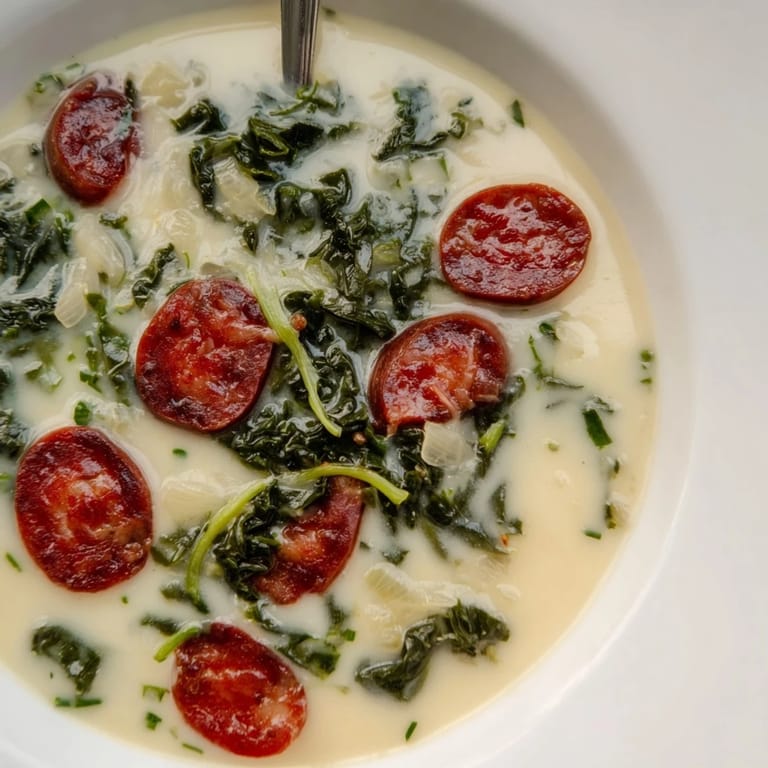
- Kale (120 g): Portuguese couve is ideal, but regular curly kale works beautifully—slice it thin so it wilts quickly and clings to the creamy soup.
- Chorizo (150 g): The smoky sausage does the heavy lifting here; Portuguese chouriço is traditional, but Spanish chorizo brings warmth and color in a pinch.
- Chicken or vegetable broth (1.2 L): Use good broth, the kind that tastes like it was made from something real—it's the foundation of the whole dish.
- Olive oil (2 tbsp): Extra virgin, the fruity kind that tastes green—it's added at the end and makes everything taste a little more alive.
- Salt and pepper: Season in stages, not all at once; the chorizo brings salt, so taste as you go.
Tired of Takeout? 🥡
Get 10 meals you can make faster than delivery arrives. Seriously.
One email. No spam. Unsubscribe anytime.
Instructions
- Warm the oil and build the base:
- Pour a tablespoon of olive oil into a large pot and let it heat gently over medium. Add the onion and garlic, stirring until they turn translucent and soft, about 4 minutes—you'll smell when they're ready, that sweet, caramelized edge.
- Let the flavors bloom:
- Add the diced potatoes and chorizo slices to the pot. Stir for about 3 minutes, letting the heat draw out the smoky oils from the sausage and coat everything evenly. This is where the soup starts to smell like something real.
- Simmer until tender:
- Pour in the broth and bring it to a gentle boil, then lower the heat, cover the pot, and let it simmer for 20 minutes. The potatoes will soften and start to break apart at the edges—that's exactly what you want.
- Set the chorizo aside:
- Once the potatoes are tender, carefully fish out the chorizo slices with a slotted spoon and place them on a small plate. You'll add them back at the very end.
- Puree into creaminess:
- Using an immersion blender, puree the soup right in the pot until it's smooth and creamy, about 2 minutes of gentle blending. If using a regular blender, work in batches and let the pot cool slightly for safety—the texture should be velvety, not thin.
- Wilt in the kale:
- Return the chorizo to the pot, add the thinly sliced kale, and simmer for another 5 to 7 minutes until the greens turn soft and dark. Stir occasionally so everything melds together.
- Finish with grace:
- Stir in the remaining olive oil, taste for salt and pepper, then ladle into bowls. The olive oil finish is the difference between good soup and soup that tastes like someone cared.
 Save
Save What I didn't expect was how this soup became the thing I made when I didn't know what else to offer—not just for comfort, but as a small promise that someone was paying attention. It's never fancy, but it's always exactly what's needed.
Variations That Work
If chorizo isn't in your house or budget, crispy bacon does something similar—it adds smokiness and a bit of richness without changing the soul of the dish. For a vegetarian version, smoked paprika sprinkled into the broth right before blending captures that depth you'd lose without the sausage. Some people add a splash of white wine after the onions soften, letting it cook off before adding the potatoes—it's not traditional, but it's never wrong.
What to Serve It With
Crusty bread is the obvious choice, and honestly, it's the right one—something with a good crust that can hold up to the weight of the soup without falling apart. A simple green salad with lemon and olive oil cuts through the richness if you're eating this as your whole meal. Some people grate cheese over the top, which isn't traditional but isn't unwelcome either, especially if it's a sharper cheddar or a good aged manchego.
The Small Moments That Matter
There's something about making soup that slows you down—the way you have to pay attention to texture, to timing, to the small signs that tell you everything is ready. It's one of those dishes where rushing shows, and taking your time is the whole point.
- If your soup is too thick after blending, thin it with a splash of warm broth or water—it will continue to thicken slightly as it cools.
- Make this soup a day ahead if you can; it tastes richer and more integrated the next day, like the flavors have had time to become friends.
- A drizzle of fruity olive oil and a crack of fresh pepper on top isn't decoration—it's the final word that says this was made with intention.
 Save
Save Make this soup when someone needs feeding, or when you need to remember that good cooking doesn't require fussiness, just attention. It's the kind of dish that tastes like home, wherever that is for you.
Recipe FAQ Section
- → What type of greens is used in Caldo Verde?
Portuguese Caldo Verde typically uses collard greens or Portuguese couve, thinly sliced and added towards the end of cooking.
- → Can I substitute chorizo with another meat?
Yes, Spanish chorizo is a common substitute, or you can omit meat for a vegetarian version, adding smoked paprika for depth.
- → How do you achieve the creamy texture?
The soup is pureed after simmering the potatoes and aromatics, resulting in a smooth and creamy consistency.
- → Is olive oil added during cooking or at the end?
Olive oil is used both for sautéing the aromatics at the start and stirred in at the end for extra flavor and richness.
- → What is the recommended serving suggestion?
Serve this hearty soup hot, accompanied by crusty bread to complement its rich and smoky flavors.