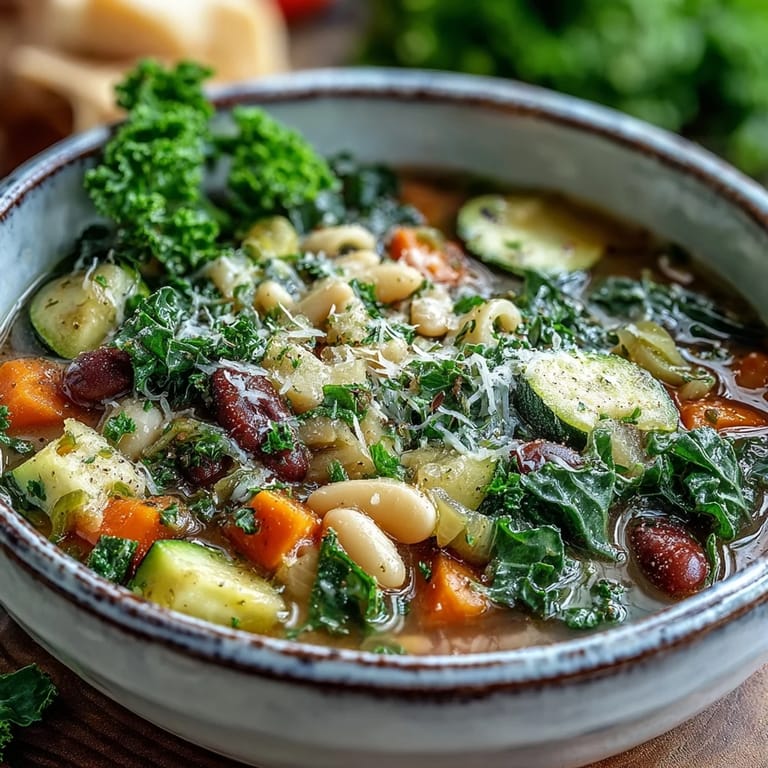
 Save
Save My neighbor Maria taught me that minestrone isn't about following rules, it's about using what's in your kitchen and making something warm that feeds people you care about. She'd throw open her pantry while I stood there uncertain, insisting that vegetables are flexible but the soul of the soup—that soffritto base of onion, carrot, and celery—that never changes. The first time I made it alone, I realized she was right; the dish is forgiving, honest, and tastes even better the next day.
I made this soup on a rainy Tuesday when my sister was visiting and hadn't eaten a real meal in days, too busy with work chaos to think straight. She sat at the counter while I chopped vegetables, and by the time the smell started filling the kitchen—that moment when herbs and tomatoes and broth became something alive—she actually smiled for the first time that week. That bowl, with a heap of Parmesan and torn parsley on top, somehow fixed nothing and everything at once.
Ingredients
- Olive oil: Two tablespoons creates the base where everything else blooms; don't skimp or use something flavorless.
- Yellow onion, diced: The foundation that sweetens as it softens, building flavor you won't taste but absolutely need.
- Carrots: Two medium ones sliced thin cook down to tender sweetness and give the broth a gentle color.
- Celery stalks: Often overlooked but they're the quiet backbone, adding earthiness that ties everything together.
- Garlic: Two cloves minced just before hitting the hot oil, so the fragrance explodes into the kitchen.
- Zucchini: One medium, diced small so it softens into the broth without falling apart.
- Potato: Peeled and diced into half-inch cubes; it adds body and makes the soup more substantial.
- Green beans: One cup chopped into bite-sized pieces, they stay slightly firm and add a bright texture.
- Diced tomatoes: A 400g can brings acidity and depth that balances all the vegetables around it.
- Cannellini beans: Drained and rinsed from a 400g can, they're creamy without being heavy and add protein quietly.
- Small pasta: Ditalini or elbow macaroni, one cup; it should cook in the soup so it absorbs the broth flavor.
- Vegetable broth: Six cups of it, the liquid canvas everything else lives in—use good broth because it matters here.
- Dried Italian herbs: Two teaspoons mixed oregano, basil, and thyme whisper Mediterranean warmth into every spoonful.
- Bay leaf: One leaf that perfumes the whole pot but must come out before serving.
- Salt and black pepper: Added at the end because vegetables release their own salt as they cook.
- Baby spinach or kale: Two cups added at the very end, so it stays bright and fresh rather than becoming dark mush.
- Fresh parsley: Two tablespoons chopped just before serving, the green note that wakes everything up.
- Parmesan cheese: Grated fresh over the top if you want it; it melts slightly into the hot soup and adds a salty, umami depth.
Tired of Takeout? 🥡
Get 10 meals you can make faster than delivery arrives. Seriously.
One email. No spam. Unsubscribe anytime.
Instructions
- Build the base with heat and time:
- Heat olive oil in a large pot over medium heat until it shimmers, then add the diced onion, carrots, and celery together. Let them soften for a full five minutes, stirring occasionally, so they release their natural sweetness and create the foundation everything else rests on.
- Layer in the harder vegetables:
- Stir in the minced garlic, diced zucchini, potato, and green beans, cooking for another three minutes until garlic becomes fragrant and everything starts to soften at the edges. This moment feels quiet in the pot but it's when flavors start speaking to each other.
- Bring the broth and power together:
- Add the canned tomatoes, drained cannellini beans, vegetable broth, dried herbs, and bay leaf all at once. Bring the whole thing to a boil over medium-high heat, which takes about five minutes; you'll see the surface start to move and steam rise up.
- Let it simmer into softness:
- Reduce heat to medium-low, cover the pot, and let it simmer for twenty minutes so all the vegetables become tender and the broth deepens. This is when you can step away, start your table, pour a glass of wine.
- Add the pasta and finish the vegetables:
- Stir in the small pasta and simmer uncovered for eight to ten minutes, stirring occasionally so the pasta doesn't stick, until both pasta and vegetables are completely tender. The broth will get slightly creamy as the pasta releases its starch.
- Wilt in the greens at the last moment:
- Remove the bay leaf and add the spinach or kale, stirring until it wilts completely in about two minutes. The greens should still taste fresh and slightly bright, not cooked down.
- Taste and season with intention:
- Taste a spoonful of broth and add salt and pepper until it makes you want another spoonful. Remember that Parmesan added later will bring saltiness, so don't oversalt the pot.
- Serve with the finishing touches:
- Ladle the hot soup into bowls, scatter fresh parsley over the top, and offer grated Parmesan cheese on the side so everyone adds what they want. A crusty piece of bread alongside makes it feel like an actual meal.
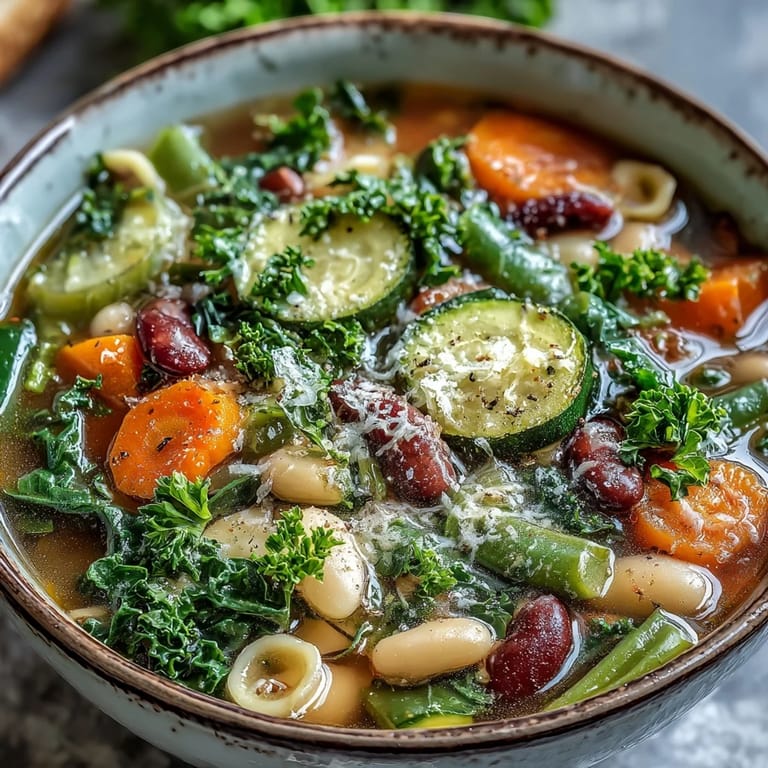 Save
Save Years later, I realized minestrone taught me something my cooking needed to learn: that abundance doesn't mean complicated, and that feeding people something honest and warm is one of the few things that never feels like wasted effort. When my own kitchen gets chaotic and I'm unsure what to make, this soup always answers back.
Why This Soup Works Every Single Time
Minestrone succeeds because it's built on layers rather than precision, and because vegetables are genuinely flexible in how they contribute. The soffritto—that aromatic base of onion, carrot, and celery—stays constant and creates familiarity, while everything after can shift with seasons or what you have on hand. This balance between structure and freedom is what makes it reliable without being boring.
Making It Your Own
The recipe I've given you is a template that earned its shape through years of Italian home cooking, but your version should taste like your kitchen and your preferences. Some people add a splash of red wine, others throw in a Parmesan rind during simmering for umami richness, and I've known families who toss in a handful of white beans instead of cannellini because that's what they have. The soup forgives reinvention because it was born from reinvention—every grandmother's minestrone is slightly different, and they're all right.
- Try adding seasonal vegetables like cabbage, peas, or diced butternut squash in place of what the recipe calls for.
- For vegetarian Parmesan, wrap a piece in cheesecloth during simmering so you can fish it out easily afterward.
- Make a double batch because it freezes beautifully for up to three months, minus the pasta which you can add when reheating.
Pairing and Serving Ideas
Minestrone sits happily alongside crusty bread for soaking up the last spoonfuls of broth, and it pairs quietly with a light Chianti or a simple white wine that doesn't compete with the vegetables. Some people serve it as a first course before a secondi of grilled fish or chicken, while others—and I'm in this camp on tired evenings—make a big pot and call it dinner, complete with salad and bread.
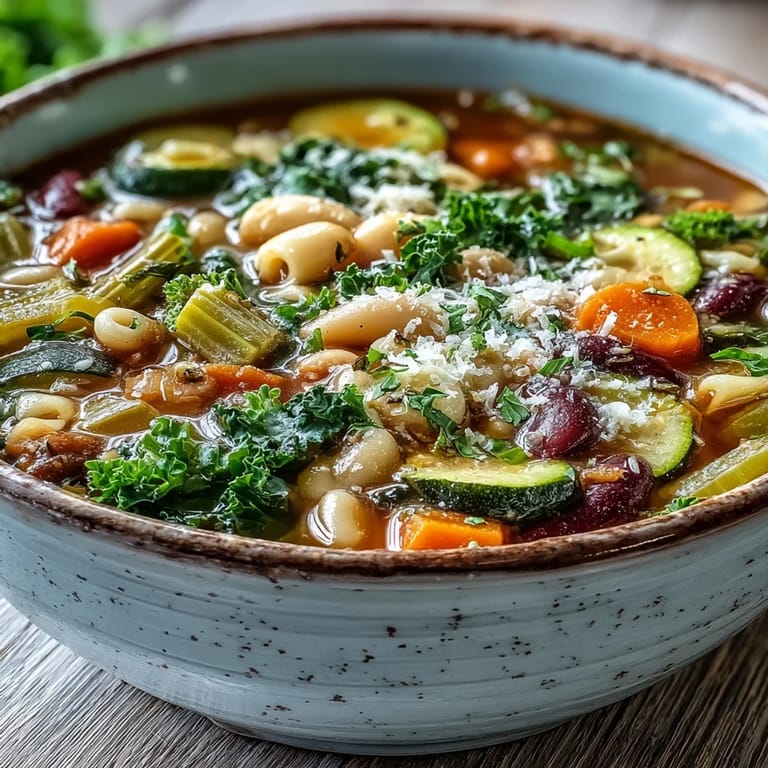 Save
Save This soup is an argument for cooking, for being patient with heat and time, for believing that simple ingredients handled with care become something worth remembering. Make it tonight, and you'll understand why it's lasted centuries.
Recipe FAQ Section
- → What vegetables work best in minestrone?
Traditional minestrone includes onions, carrots, celery, zucchini, potatoes, and green beans. You can adapt based on seasons—add cabbage in winter, fresh peas in spring, or bell peppers in summer. The key is using a variety of colorful vegetables for depth of flavor.
- → Which pasta shape should I use?
Small pasta shapes like ditalini, elbow macaroni, or small shells work perfectly as they fit well on a spoon. For gluten-free options, choose rice-based small pasta. The pasta absorbs broth as it cooks, creating a thicker, heartier consistency.
- → Can I make minestrone ahead of time?
Absolutely. In fact, minestrone often tastes better the next day as flavors meld. Store in the refrigerator for up to 4 days. Note that pasta will continue absorbing liquid, so you may need to add more broth when reheating.
- → How do I store and freeze leftovers?
Cool completely before refrigerating in airtight containers for up to 4 days. For freezing, omit the pasta and add fresh pasta when reheating. Frozen portions keep well for 3 months. Thaw overnight in the refrigerator before warming.
- → What can I serve with minestrone?
Crusty Italian bread or focaccia is ideal for soaking up the flavorful broth. A simple green salad with vinaigrette balances the heartiness. For a complete Italian meal, pair with a glass of Chianti and finish with light fruit dessert.
- → How can I add more protein?
Cannellini beans already provide good protein. For more, add shredded chicken during the last 5 minutes of cooking, or stir in a scoop of ricotta cheese just before serving. A dollop of pesto also adds protein and vibrant flavor.