 Save
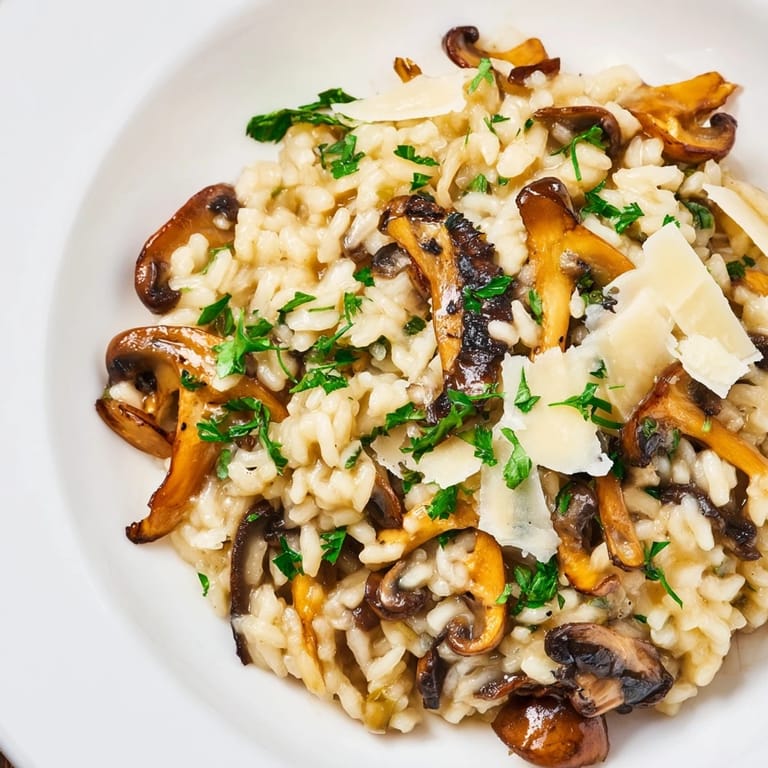
Save The first time I truly understood risotto was on a rainy Tuesday when my Italian neighbor Marco stopped by with a bag of wild mushrooms from the farmers market. He watched me nervously stir a pot of rice, then gently took the spoon and showed me the rhythm—slow, patient, attentive—that transforms simple ingredients into something silky and alive. That afternoon taught me that risotto isn't fussy; it just needs your presence and a little bit of care.
I served this risotto at a dinner party last fall, and I remember the quiet moment when everyone took their first bite—there was this collective pause, then someone asked for the recipe. That's when I realized this dish has a quiet kind of elegance; it doesn't need to announce itself. The creamy texture and the umami from the mushrooms did all the talking.
Ingredients
- Arborio Rice (1 ½ cups): This short-grain rice has a high starch content that releases during cooking, creating the signature creamy texture risotto is famous for—don't substitute with long-grain rice or you'll lose that luxurious mouthfeel.
- Warm Vegetable Broth (5 cups): Keeping the broth warm in a separate pot is the secret that nobody talks about; cold broth will shock the rice and interrupt the cooking process.
- Mixed Wild Mushrooms (400 g): Cremini, shiitake, and porcini each bring their own earthiness to the party—use whatever looks best at the market, and don't rush the sautéing step because that's where the deep, golden flavor develops.
- Yellow Onion (1 medium, finely chopped): The onion becomes almost invisible as it cooks, but it builds the flavor foundation that everything else rests on.
- Garlic (2 cloves, minced): Added after the onion so it doesn't burn and turn bitter—timing matters more than quantity here.
- Unsalted Butter (4 tbsp total): Divided between the initial cooking and the finish, butter is what gives risotto that silky, luxurious finish that makes people ask if there's cream in it.
- Olive Oil (2 tbsp): This helps prevent the butter from burning at the higher heat needed for the mushrooms.
- Dry White Wine (½ cup): The acidity brightens everything and the alcohol cooks off, leaving only the flavor behind—it's worth splurging on wine you'd actually drink.
- Freshly Grated Parmesan Cheese (¾ cup, plus extra): Pre-grated cheese has anti-caking agents that prevent the risotto from becoming creamy; freshly grated is a non-negotiable difference here.
- Cold Butter Cubes (2 tbsp): These are stirred in at the end to create that final, velvety richness—this technique is called mantecatura and it's genuinely transformative.
- Fresh Parsley (2 tbsp, chopped): Added at the very end for brightness and color; fresh herbs should always be your last addition so they don't lose their flavor.
- Salt and Black Pepper: Season as you go rather than all at once at the end, tasting and adjusting until everything sings.
Tired of Takeout? 🥡
Get 10 meals you can make faster than delivery arrives. Seriously.
One email. No spam. Unsubscribe anytime.
Instructions
- Sauté the Aromatics:
- Heat the oil and butter together over medium heat and add your finely chopped onion, stirring it gently until it becomes soft and translucent—this takes about 3 to 4 minutes and you'll know it's ready when the sharp bite of the raw onion is completely gone. Don't rush this step; the slower, gentler heat means the onions release their natural sweetness rather than browning.
- Add Garlic and Mushrooms:
- Add your minced garlic and let it fragrance the oil for just a minute, then tumble in all those mushroom slices. Here's where patience pays off: let them cook undisturbed for a few minutes so they can develop golden edges, then stir and continue cooking for 5 to 7 minutes total until they're deeply browned and any liquid they've released has evaporated.
- Toast the Rice:
- Pour in the Arborio rice and stir it constantly for 1 to 2 minutes, coating each grain in the buttery mushroom mixture. You'll hear a gentle clicking sound as the grains toast—this is the sound of the rice beginning its transformation.
- Add the Wine:
- Pour in the white wine and stir continuously, watching as the rice absorbs every drop of that liquid. This usually takes 2 to 3 minutes and gives you a moment to breathe and admire what you're creating.
- Begin the Broth Addition:
- Using a ladle, add one ladleful of warm broth to the rice and stir gently but frequently until most of the liquid is absorbed and you can draw your spoon across the bottom of the pot leaving a brief trail. This is the dance of risotto: add, stir, wait, repeat—it typically takes 18 to 20 minutes from start to finish.
- Finish and Rest:
- Once the rice is creamy and tender but still has a slight firmness when you bite it (this is al dente), remove the pot from heat and immediately stir in the cold butter cubes and freshly grated Parmesan. Let it sit undisturbed for 2 minutes—this resting period allows the residual heat to meld everything into one silky, cohesive dish, then serve right away garnished with fresh parsley and a shower of extra cheese.
 Save
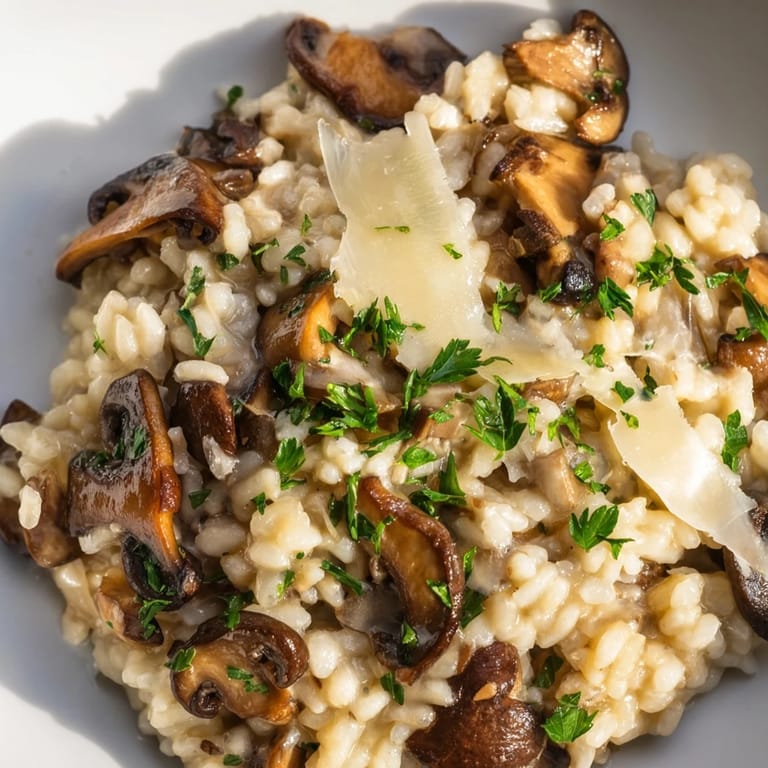
Save There was an evening when my mother, who usually sticks to simpler meals, asked me to make this risotto for her bridge club. Watching her serve it with such pride, listening to her friends ask for the recipe—that's when I understood that food is sometimes about more than taste. It's about the care you show for the people sitting at your table.
The Mushroom Question
The beauty of this risotto is that it adapts to whatever mushrooms look best at your market that day. I've made it with button mushrooms in winter when wild varieties are scarce, and with a mix of cremini, shiitake, oyster, and porcini in fall when the farmers market becomes a mushroom lover's dream. The technique stays the same, but each variety brings its own character—cremini are mild and earthy, shiitake have a deeper umami punch, and if you can find porcini, even just a handful of dried ones rehydrated and added to the broth, the whole dish gains this incredible depth. Some people are afraid to substitute, but honestly, risotto is more forgiving than its reputation suggests.
Building Flavor with Time
One trick I learned from Marco that afternoon is that you can deepen the flavor by adding a handful of rehydrated dried porcini mushrooms to your fresh ones, and using some of their soaking liquid (strained carefully through cheesecloth or a coffee filter to remove any grit) mixed into your broth. It's an extra step, but it transforms the dish from delicious to something you'll be craving for weeks. The porcini liquid is like concentrated mushroom essence—a little goes a long way. I always keep a small bag of dried porcini in my pantry for moments like this, and they're worth the investment because they last forever.
Wine and Pairings
The white wine you choose actually matters because it's not just about the alcohol cooking off—it leaves behind its character and acidity. A crisp Pinot Grigio or Chardonnay will serve you well both in the pot and in the glass beside it. If you don't drink alcohol or prefer not to cook with wine, you can replace it with a splash of vegetable broth and a squeeze of lemon juice; the acid is what's important, not the wine itself. Some people worry about the taste of wine lingering, but after the simmering and the richness of the butter and cheese, it simply adds depth rather than tasting noticeably of wine.
- If you're vegetarian (as this recipe is), make sure your broth and cheese are truly vegetarian, because some Parmesans use animal rennet.
- Leftover risotto is dense and cold the next day, but you can transform it into crispy risotto cakes by pan-frying patties in a bit of oil until golden.
- Make the broth-warming step easier by using a second burner or even a thermos to keep broth at a gentle simmer throughout cooking.
 Save
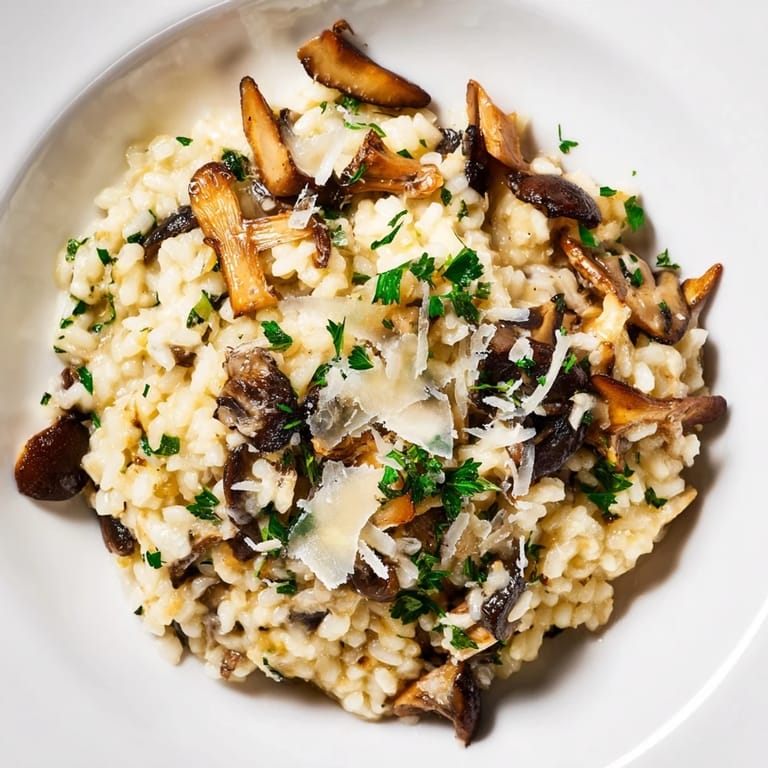
Save This risotto has become my answer when someone asks what I want to cook for comfort—it's the kind of dish that asks for your focus and rewards you with something truly nourishing. Once you've made it a few times, the rhythm becomes almost meditative, and you'll find yourself making it not because it's complicated, but because it feels like home.
Recipe FAQ Section
- → What type of rice is best for this dish?
Arborio rice is ideal due to its high starch content, which creates the creamy texture characteristic of this dish.
- → Can I use other mushrooms instead of wild varieties?
Yes, button or cremini mushrooms work well, but wild mushrooms add a deeper, earthier flavor.
- → Why is white wine used during cooking?
White wine adds acidity and complexity, enhancing the overall depth of flavor.
- → How do I know when the rice is done?
The rice should be tender but still slightly firm to the bite, with a creamy consistency in the dish.
- → Can I prepare the dish without butter?
Butter adds richness and creaminess, but olive oil can be used for a lighter version though the texture may differ.