 Save
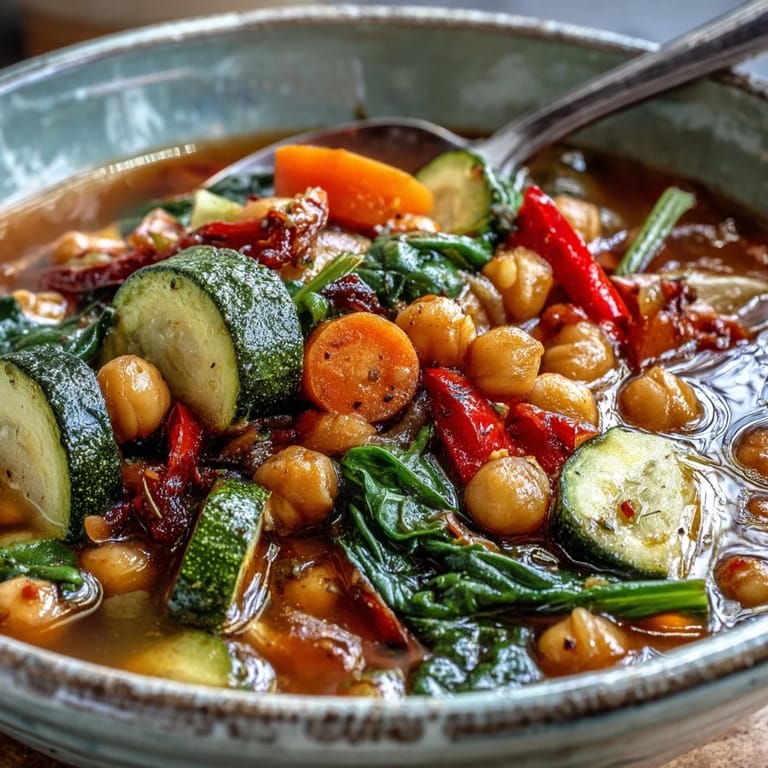
Save There's something about the way a pot of chickpea stew fills your kitchen with warmth that makes you forget it's supposed to be healthy. My partner was going through a phase of wanting to eat more plant-based meals, and I'll admit I was skeptical until I made this one afternoon when the weather turned cool. The spices hit the pan and suddenly our whole apartment smelled like a Mediterranean market, and I realized this wasn't about restriction at all—it was about abundance.
I made this for a dinner party last spring when one of our guests mentioned she'd gone vegan, and I watched people actually ask for seconds—the kind of moment that sticks with you. No one was eating it out of obligation; they were genuinely reaching for more bowls. That's when I realized this stew works because it doesn't apologize for what it is, and it doesn't pretend to be something else.
Ingredients
- Cooked chickpeas (2 cups): These little powerhouses are your protein anchor, and if you have time to cook dried ones yourself, they'll have a creamier texture than canned, though honestly both work beautifully.
- Onion, garlic, carrots, celery, and red bell pepper: This aromatic base is where the magic starts; the combination of these vegetables creates depth that makes people ask what your secret ingredient is.
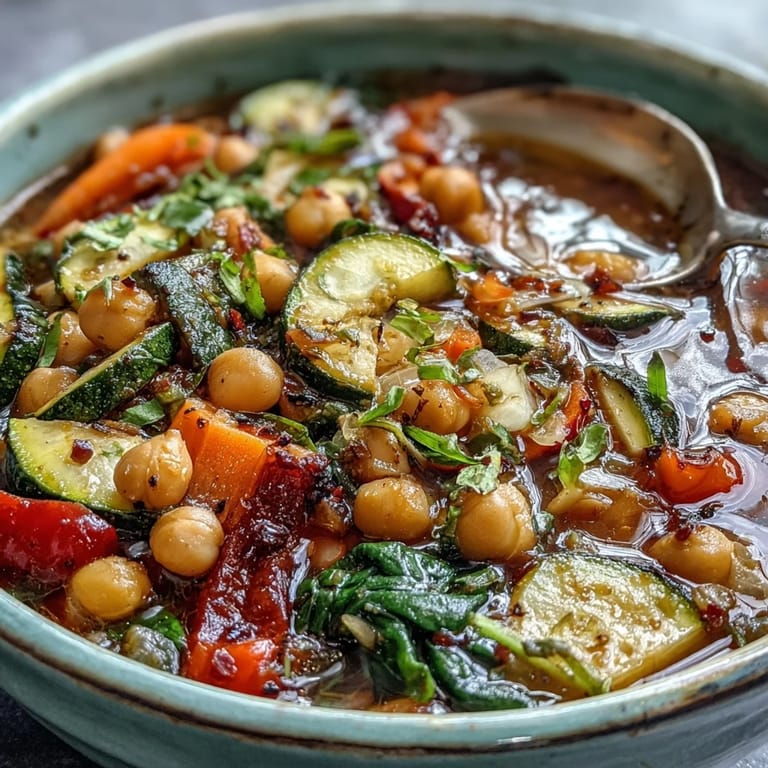
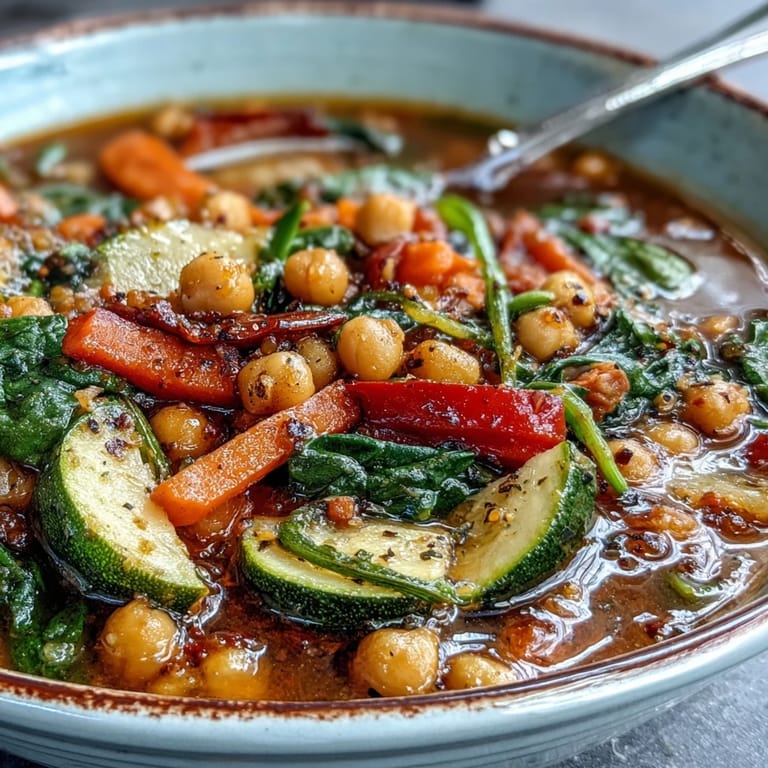
- Zucchini and fresh spinach: These delicate vegetables get added toward the end so they stay bright and maintain their nutritional integrity rather than turning to mush.
- Diced tomatoes and vegetable broth: Together they form your liquid foundation, and using low-sodium broth lets the spices shine without masking them with salt.
- Olive oil (2 tbsp): This isn't just fat; it's your flavor vehicle, helping release the aromatic compounds in your spices and carrying them through the whole pot.
- Cumin, smoked paprika, turmeric, and coriander: Each spice pulls its own weight here—cumin adds earthiness, paprika brings smokiness, turmeric gives warmth and color, and coriander ties everything together with subtle citrus notes.
- Bay leaf: Don't skip this; it's a quiet contributor that rounds out all the brighter flavors without announcing itself.
- Fresh parsley and lemon wedges: These garnishes are the final act, cutting through the richness with brightness and making each spoonful feel fresh.
Tired of Takeout? 🥡
Get 10 meals you can make faster than delivery arrives. Seriously.
One email. No spam. Unsubscribe anytime.
Instructions
- Wake up your aromatics:
- Heat your olive oil until it shimmers slightly, then add diced onion and let it cook for a full three minutes until it turns translucent and softens—this patience pays off with sweetness. You'll know it's ready when the raw onion smell mellows into something almost honey-like.
- Build your flavor base:
- Add garlic, carrots, celery, and red bell pepper, then stir everything together and cook for five minutes while occasionally pushing the vegetables around with your spoon. You're coaxing out their natural sugars and letting them start to soften, which creates a richer foundation for everything that comes next.
- Toast your spices:
- Stir in cumin, smoked paprika, turmeric, coriander, black pepper, and salt, then let them toast in the hot oil for exactly one minute—this unlocks their essential oils and makes them far more vivid than if you skipped this step. The fragrance that rises from the pot will tell you they're ready.
- Bring the stew together:
- Add your chickpeas, canned tomatoes with their juice, vegetable broth, and bay leaf, then increase the heat to bring everything to a boil before immediately dropping it back down to low. This moment transforms your ingredients into a unified whole rather than separate components floating in liquid.
- Let it simmer and develop:
- Leave the pot uncovered for twenty minutes, stirring occasionally so nothing sticks to the bottom—this is when the flavors marry and deepen. The broth will reduce slightly, concentrating the taste and creating a more cohesive sauce.
- Add the tender vegetables:
- Drop in your diced zucchini and cook for seven minutes until it's just tender but still holds its shape—you want it to contribute texture, not dissolve into the broth. This timing is crucial because zucchini goes from perfect to mushy surprisingly fast.
- Finish with green brightness:
- Stir in fresh spinach and cook for two minutes until it wilts into the stew, then remove the bay leaf before tasting. The spinach adds iron and a vibrant color while keeping the pot's texture interesting.
- Season to your taste:
- Give everything a final taste and adjust salt and pepper as needed—this is your moment to make it exactly what you want. Remember that the broth has reduced, so the flavors have intensified since you started.
 Save
Save My favorite moment with this stew came on a rainy Tuesday when a friend stopped by unexpectedly and I reheated a portion I'd made days before—it somehow tasted even better the second day as all the spices continued to deepen their conversation. There's real comfort in having something nourishing that only gets better as time goes on.
How This Stew Supports Your Gut
The combination of chickpeas, fiber-rich vegetables, and turmeric makes this stew genuinely beneficial for your digestive system beyond just tasting good. Chickpeas are loaded with resistant starch that feeds your good bacteria, the vegetables provide both soluble and insoluble fiber, and turmeric has anti-inflammatory properties that researchers have found beneficial for gut health. I started making this regularly because I noticed I felt more energized after eating it, and then I learned why—my body was actually thanking me for the ingredient choices.
Make It Your Own
The structure here is solid, but the beauty of this stew is how forgiving it is with substitutions. If you can't find or don't like one of the vegetables, you can swap it for something else with similar cooking time—kale instead of spinach, butternut squash instead of zucchini, or chickpeas swapped for white beans. I've made this with kale on nights when I wanted something sturdier, and with extra tomatoes when I was in a slightly tangier mood.
Storage and Serving Ideas
This stew keeps beautifully in the refrigerator for up to four days and actually develops even richer flavor as it sits, making it perfect for meal prep. You can freeze it in portions for up to two months, though I'd recommend undercooking the vegetables slightly if you know you're planning to freeze it, since they'll soften more during thawing and reheating.
- Serve it over brown rice, quinoa, or with crusty whole grain bread to catch every drop of that gorgeous broth.
- Drizzle with a squeeze of fresh lemon juice and scatter parsley on top just before eating for brightness that cuts through the richness.
- If you want extra heat, add red chili flakes at the spice-toasting stage rather than at the end, so they infuse throughout the whole pot.
 Save
Save This stew has become my go-to when I want to feed people something that nourishes both their bodies and their spirits. There's real power in a bowl of food this honest and this generous.
Recipe FAQ Section
- → Can I make this stew in advance?
Absolutely. This stew actually develops deeper flavors when refrigerated overnight. Store in an airtight container for up to 4 days and reheat gently on the stovetop.
- → What can I serve with chickpea stew?
Crusty whole grain bread, brown rice, or quinoa make excellent accompaniments. The stew also pairs beautifully with a simple green salad dressed with lemon vinaigrette.
- → Can I use dried chickpeas instead of canned?
Yes. Soak 1 cup dried chickpeas overnight, then cook for about 90 minutes until tender before adding to the stew. You'll need about 3 cups cooked chickpeas equivalent.
- → How do I store leftovers?
Cool completely and transfer to airtight containers. Refrigerate for up to 4 days or freeze for up to 3 months. Thaw overnight in the refrigerator before reheating.
- → Can I add other vegetables?
Certainly. Eggplant, butternut squash, sweet potatoes, or green beans work wonderfully. Just adjust cooking times accordingly - root vegetables need longer, delicate greens less time.