 Save
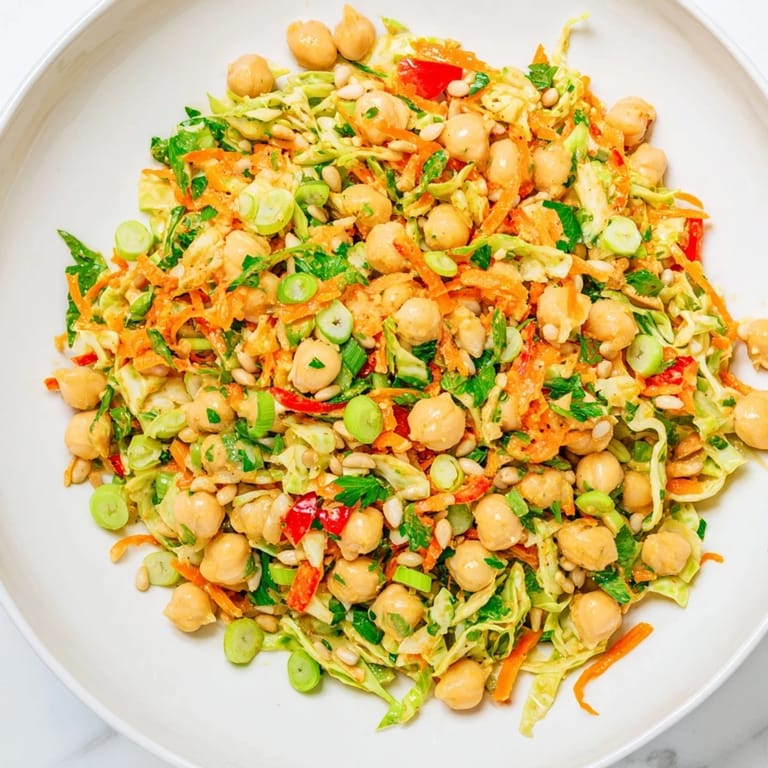
Save There's something about a bowl of chickpea salad that makes me feel instantly more put-together, even when I'm eating lunch at my desk in yesterday's clothes. Years ago, I kept ordering variations of this at Mediterranean cafes, always wondering why mine at home fell flat until I realized the secret was in the dressing—tahini needed time to meld with the lemon, not just a quick stir. One afternoon, I finally nailed the proportions and suddenly understood why this simple combination had haunted my taste buds for so long. The crunch of fresh cabbage against creamy chickpeas felt like a small victory, the kind that makes you want to make it again immediately.
I remember bringing this to a potluck where someone had forgotten the salad course, and watching it disappear while people went back for thirds was oddly satisfying. Someone asked if it had mayo, genuinely shocked when I said tahini and lemon, and I realized right then that this humble salad could surprise people who thought they knew what healthy eating tasted like.
Ingredients
- Chickpeas (2 cups cooked): The backbone of this salad, they provide protein and fiber that actually keep you satisfied, not just pretending to be food.
- Green or red cabbage (2 cups shredded): The crunch factor that refuses to go soft, even as it sits in dressing, and the acidity balances the richness beautifully.
- Carrots (1 cup shredded): They add natural sweetness and a subtle earthiness that rounds out the sharper elements.
- Red bell pepper (1 small, diced): Choose one with thick walls—they stay crisp longer and add a slight sweetness that matters.
- Green onions (2, thinly sliced): The allium bite that wakes everything up, so don't skip them or substitute with dried.
- Fresh parsley (1/4 cup chopped): It's not just garnish here; it adds brightness that tahini dressing sometimes needs as a counterpoint.
- Toasted sunflower seeds (2 tablespoons, optional): These bring texture and a nutty depth that makes the salad feel complete rather than sparse.
- Tahini (3 tablespoons): Find the kind that's just ground sesame, nothing else added—the pre-stirred stuff separates during storage and throws off your proportions.
- Lemon juice (2 tablespoons fresh): Bottled changes the flavor profile; fresh lemon is non-negotiable here.
- Extra-virgin olive oil (1 tablespoon): The fat that makes the dressing silky, so don't cheap out.
- Maple syrup or honey (1 tablespoon): The counterbalance to tahini's slight bitterness, creating complexity instead of just acid and salt.
- Garlic (1 clove minced): Raw garlic sharpens the dressing but add it gradually—you can always add more but you can't take it back.
- Water (2–3 tablespoons cold): Cold water matters because warm water makes the tahini separate; it's a small thing that changes everything.
- Ground cumin (1/2 teaspoon): The warm spice that whispers rather than shouts, tying the whole thing to Mediterranean roots.
- Salt and black pepper (1/2 teaspoon and 1/4 teaspoon): Season the dressing before you pour it over vegetables; they'll need less salt than you think.
Tired of Takeout? 🥡
Get 10 meals you can make faster than delivery arrives. Seriously.
One email. No spam. Unsubscribe anytime.
Instructions
- Build your base:
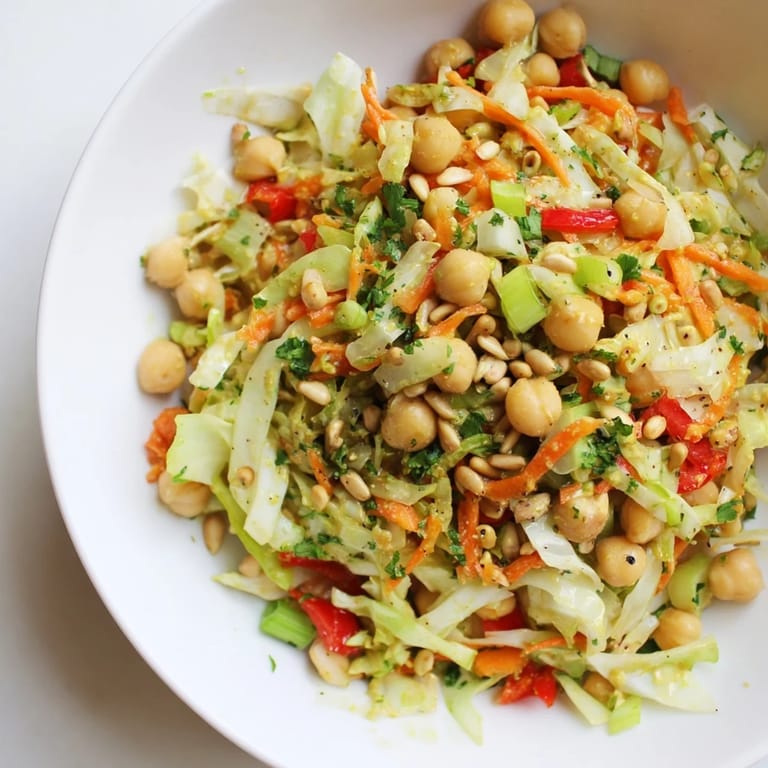
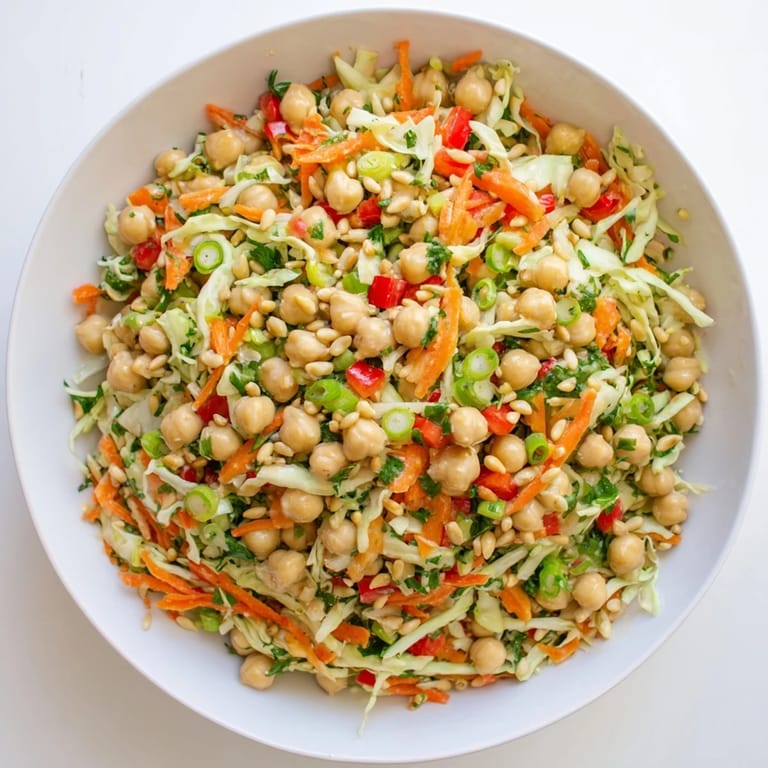
- Combine chickpeas, shredded cabbage, carrots, bell pepper, green onions, parsley, and sunflower seeds in a large bowl, keeping everything separate enough that you can see the colors still. This matters because you'll know when the dressing has coated everything evenly.
- Make the dressing magic:
- In a small bowl, whisk tahini with lemon juice first—they'll look separated and angry at first, but keep whisking and they'll come together into something creamy. Add olive oil, maple syrup, minced garlic, cumin, salt, and pepper, then gradually drizzle in cold water while whisking until you have something that flows but still clings to a spoon.
- Bring it together:
- Pour that tahini dressing over everything and toss until every piece of cabbage and chickpea glistens. The dressing should coat without pooling at the bottom of the bowl.
- Taste and breathe:
- Before serving, taste a forkful and adjust—does it need more salt, more lemon brightness, more garlic punch? Trust yourself here. If you're serving immediately, go ahead, but if you have 30 minutes, let it chill so flavors can actually recognize each other.
 Save
Save There was a moment during a particularly exhausting week when I packed this salad for lunch and realized halfway through eating it that my shoulders had dropped about three inches from their usual anxious position. Simple food doesn't have to be boring, and that salad became my quiet act of self-care in the middle of a chaotic day.
Why This Salad Became a Regular in My Kitchen
Once you nail the tahini dressing ratio, you understand something fundamental about cooking: balance matters more than complexity. I started playing with this formula and suddenly other salads made sense too—I could troubleshoot dressings by ear instead of just following recipes blindly. The confidence it gave me was unexpected, and now whenever I'm in the kitchen feeling lost, I come back to this salad's quiet logic.
Variations That Evolved From My Kitchen
The beauty of this formula is that it can survive almost any substitution without collapsing entirely. I've sworn by different vegetables depending on the season and what's actually good at the market that day—sometimes radishes for extra snap, sometimes cucumber for cooling freshness, and once I added roasted beets when I was feeling adventurous and it worked. The tahini-lemon dressing is forgiving enough to hold whatever combination you throw at it, as long as you keep the ratio of fat to acid relatively steady.
- Trade sunflower seeds for pumpkin seeds or hazelnuts if that's what you have, or skip seeds entirely and add diced avocado for creaminess instead.
- Add a pinch of cayenne or smoked paprika if you want heat, or crumble feta if you're not strict vegan and want richness.
- This salad works cold from the fridge for leftovers, but tastes best within a day or two before the cabbage starts releasing too much water.
How to Serve It and When
I eat this as a standalone lunch when I want something substantial but light, and I've also brought it to barbecues as a side that actually holds its own next to heavier dishes. It pairs beautifully with grilled fish or chicken if you want protein, or stays completely happy as a vegan main with some warm pita bread on the side. The great thing about salad is its flexibility—it doesn't demand to be eaten in any particular way, it just needs to be eaten with intention.
 Save
Save This salad taught me that fiber-rich food doesn't have to feel like punishment, and that the simplest combinations often carry the most quiet satisfaction. Make it, taste it, and let it become the thing you come back to when you need something real.
Recipe FAQ Section
- → How long does it take to prepare the salad?
The salad takes about 15 minutes to prepare, with no cooking time required.
- → Can I use canned chickpeas for this dish?
Yes, drained and rinsed canned chickpeas work perfectly in this salad.
- → What can I substitute for tahini in the dressing?
You can substitute tahini with sunflower seed butter or almond butter for a similar creamy texture.
- → Is this salad suitable for a gluten-free diet?
Absolutely. All ingredients are naturally gluten-free, making it safe for gluten-sensitive diets.
- → Can I add other vegetables to the salad?
Yes, thinly sliced radishes, chopped celery, or diced cucumbers complement the flavors well.
- → How should the salad be stored if not eaten immediately?
Store the salad covered in the refrigerator and toss before serving to redistribute the dressing.