 Save
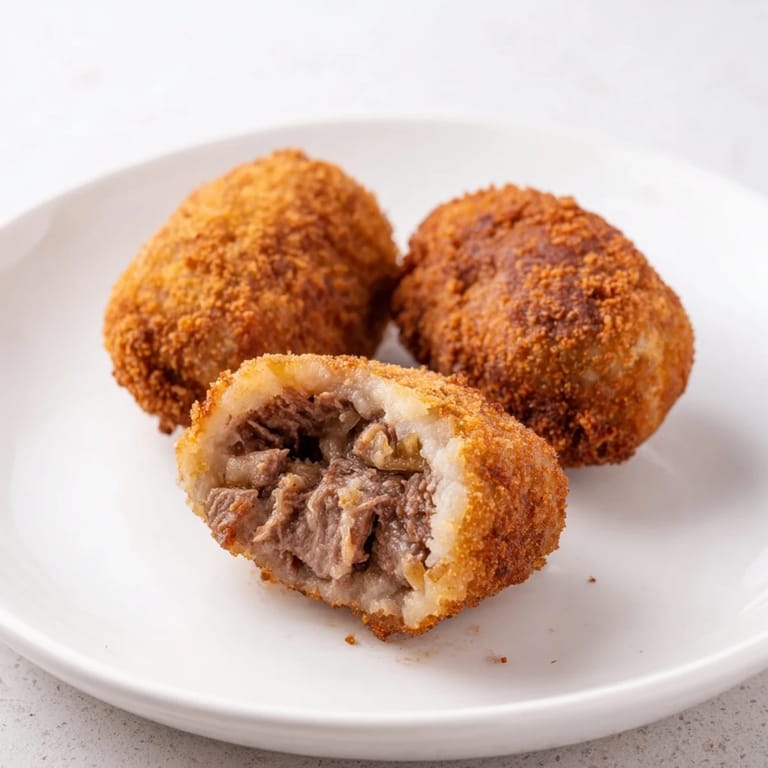
Save My first Dutch croquette came to me on a grey Amsterdam afternoon, handed over with a knowing smile by my neighbor who'd grown tired of watching me struggle with takeout menus. She'd made them that morning, and the kitchen still smelled like nutmeg and golden breadcrumbs when she pressed the warm plate into my hands. One bite—that perfect crack of the crust giving way to creamy, savory beef—and I understood why she'd bothered. Some dishes teach you that comfort doesn't need to be complicated, just honest.
I made these for a dinner party once, convinced I'd somehow ruin them at the last minute, but instead they emerged from the oil in perfect golden cylinders, and my guests stopped mid-conversation to reach for one. Watching someone's face when they bit through that crispy exterior and found the velvety ragout inside—there's a small magic in that moment that makes the effort dissolve.
Ingredients
- Stewing beef, 250 g: Chuck works beautifully here because it breaks down into tender, almost silky shreds after simmering, which is exactly what you want for filling that holds together.
- Beef broth, 500 ml: This is where flavor lives; use good broth if you can, and save that cooking liquid—it becomes the creamy soul of your filling.
- Bay leaf: One leaf, no more; it whispers depth without taking over.
- Onion, 1 small, finely chopped: Sauté it gently until it's soft and sweet, never rushed; this is a meditation, not a race.
- Butter, 1 tbsp plus 40 g: Split between two uses—first for the onion, then for your roux—each bit of fat matters.
- Salt and pepper: Taste as you build layers; croquettes need bold seasoning because the breadcrumb coat muffles flavor.
- All-purpose flour, 40 g plus 100 g: The smaller amount creates the roux that binds everything; the larger dusts your croquettes before breading.
- Whole milk, 150 ml: This softens the broth, creating that creamy texture that makes the filling luxurious rather than just meaty.
- Fresh parsley, 1 tbsp chopped: Optional, but it adds a bright whisper of freshness that cuts through the richness.
- Ground nutmeg, 1/2 tsp: A pinch too much becomes perfume; this measure is exact for a reason, giving warmth without announcing itself.
- Eggs, 2 large, beaten: These are your glue, holding the breadcrumb coat to the filling; beat them until they're uniform.
- Fine dry breadcrumbs, 150 g: Dutch paneermeel or Panko work; finer crumbs give you a more delicate crust, coarser ones crack satisfyingly.
- Neutral oil for frying: Sunflower or canola; the oil carries heat, not flavor, so choose something clean and high-heat tolerant.
Tired of Takeout? 🥡
Get 10 meals you can make faster than delivery arrives. Seriously.
One email. No spam. Unsubscribe anytime.
Instructions
- Simmer the beef until it surrenders:
- Combine beef, broth, bay leaf, and a small pinch of salt in a saucepan, bring it to a gentle boil, then lower the heat so it barely trembles—you're coaxing tenderness, not forcing it. After about an hour, the meat should shred easily with a fork; fish it out, shred it finely, discard that bay leaf, and set aside 200 ml of the cooking liquid for later.
- Coax sweetness from the onion:
- In a skillet, melt 1 tablespoon of butter and add your finely chopped onion, letting it soften and turn translucent over about 3 minutes, stirring occasionally. This isn't searing; it's a gentle awakening of flavor.
- Fold in the shredded beef:
- Once the onion is soft, add your shredded beef and stir it all together, tasting and adjusting salt and pepper as you go. The mixture should taste a little bold because the final crust will mellow it.
- Build the roux, the quiet foundation:
- In a clean saucepan, melt 40 g of butter over low heat, then add 40 g of flour, stirring constantly for about 2 minutes—you're cooking out the raw flour taste and creating a pale, smooth paste. Gradually whisk in your reserved beef broth and milk, moving slowly so lumps have no chance to form; keep whisking until the sauce thickens and clings slightly to your whisk.
- Marry everything into a ragout:
- Pour the beef-onion mixture into the roux, add the nutmeg and parsley if you're using it, and stir until you have a thick, creamy filling that holds its shape. Taste once more, adjust seasoning, then spread it into a shallow dish and refrigerate for at least an hour—patience here ensures your croquettes hold their shape when you fry them.
- Shape with cool hands:
- Once chilled and firm, divide the filling into 10 portions and roll each into a cylinder about 8 cm long, working quickly so your hands don't warm the filling too much. If it gets sticky, pop it back in the fridge for 15 minutes.
- Set up your breading station with intention:
- Arrange three shallow bowls: one with flour, one with beaten eggs, one with breadcrumbs, in that order from left to right. This rhythm—flour, egg, breadcrumbs—becomes almost meditative, and for extra crispiness, you can repeat the egg and breadcrumb coating on each croquette.
- Fry with confidence:
- Heat your oil to 180°C (350°F)—use a thermometer, no guessing—and fry the croquettes in small batches so they have room to move and brown evenly. Three to four minutes should give you a deep golden color; fish them out with a slotted spoon or spider and drain them on paper towels while they're still crackling slightly from the heat.
 Save
Save There's a moment after you pull them from the oil, while they're still crackling and steaming, when the house smells like home—not anyone's specific home, but the idea of it, warm and welcoming and a little bit indulgent. That's when you know they're worth making again.
Make-Ahead Magic
These croquettes are built for convenience. You can breaded and freeze them for up to a month, and they actually fry better from frozen because the filling stays creamy while the outside crisps up. Add just one or two minutes to the frying time when they're frozen, and you'll have the same golden result with zero thawing required. I often make a batch on Sunday, freeze them, and then have restaurant-quality snacks waiting whenever the craving strikes.
Playing with Flavor
Once you understand the structure, these are flexible. I've replaced some of the beef with veal for a lighter, slightly sweeter filling, or stirred in a little Dijon mustard for tang. Some people add finely minced mushrooms to the onion mixture, or a whisper of thyme. The nutmeg is traditional and shouldn't be skipped, but the filling's bones are solid enough that you can gently adjust flavors to suit your mood or what's in your kitchen.
Serving and Pairing
These shine brightest when they're piping hot and served with something to cut through the richness—tangy mustard, pickled cornichons, or a cold, crisp beer like a pilsner or pale lager. In the Netherlands, they're often paired with fries and mayonnaise, a combination that might sound heavy but somehow balances perfectly. I've also served them alongside a simple green salad dressed with sharp vinaigrette, and that brightness against the richness was exactly right.
- Mustard is non-negotiable; choose one with personality, whether it's whole grain, spicy brown, or classic yellow.
- They're best eaten within an hour of frying, but they're still respectable at room temperature if you need to hold them briefly.
- Make extra filling if you're doubling the recipe; the ratios are forgiving, and frozen croquettes are too convenient to pass up.
 Save
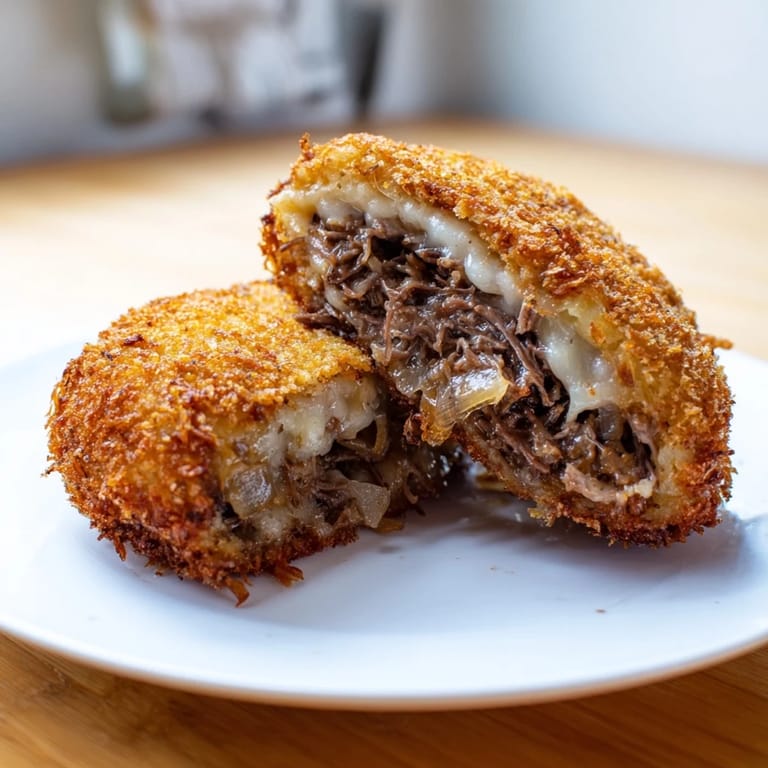
Save There's something deeply satisfying about a croquette—the way tradition and technique converge in something so small and perfect. Make them, share them, and watch people's faces change when they bite through that golden shell into the velvety filling. That moment is why this recipe matters.
Recipe FAQ Section
- → How do you achieve the creamy filling inside the croquettes?
The filling combines slow-cooked shredded beef with a butter and flour roux mixed with milk, creating a thick, creamy ragout that sets firm when chilled.
- → What is the best way to get a crispy coating?
Coat the chilled croquettes sequentially in flour, beaten eggs, and fine breadcrumbs, repeating the egg and breadcrumb step for extra crispiness before frying.
- → Can I prepare the croquettes in advance?
Yes, croquettes can be breaded and frozen before frying. Fry straight from frozen, adding a couple of extra minutes to the cooking time.
- → What oil is recommended for frying?
Neutral oils with high smoke points such as sunflower or canola oil are ideal for deep-frying croquettes evenly and safely.
- → What sides pair well with these croquettes?
These croquettes are delicious served hot with mustard, alongside fries, and complemented by a crisp pilsner or pale lager.