 Save
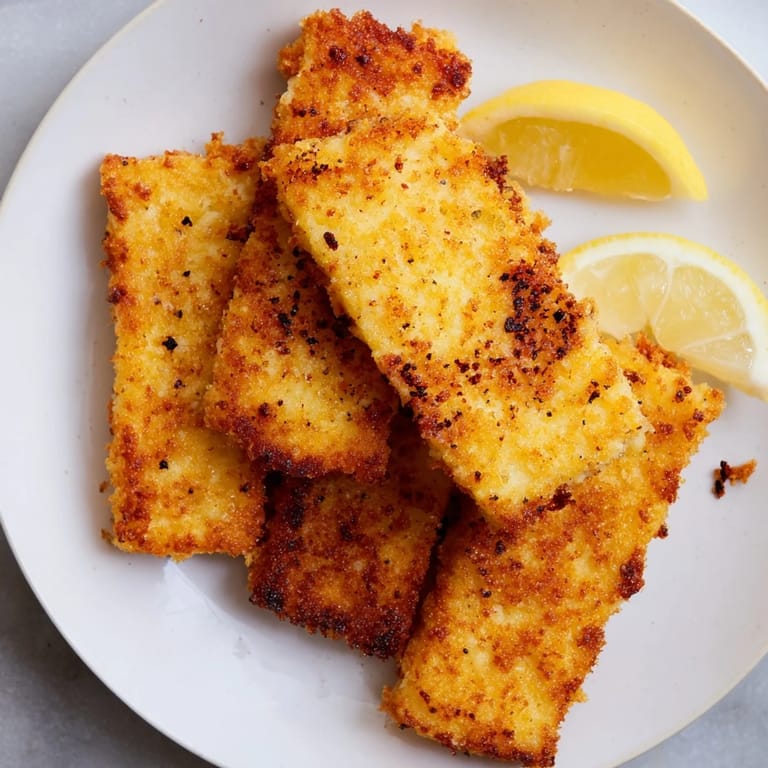
Save The first time I made halloumi, I wasn't expecting it to squeak. I'd bought a block at the farmers market on a whim, intrigued by the vendor's insistence that it wouldn't melt, and when I bit into the raw slice, that startled little squeak made me laugh out loud. Years later, I discovered that same cheese transforms into something magical when it hits hot oil—golden, crispy, and absolutely irresistible. Now it's the first thing I reach for when I need something fast that feels a bit fancy.
I made this for a dinner party once, slightly panicked because a guest cancelled and I'd already prepped everything. Instead of stressing, I turned the halloumi into bites, set out the hot sauce and lemon, and suddenly everyone was gathered around the kitchen, eating straight from the pan. That's when I realized this dish doesn't need ceremony—it just needs to be hot and generous.
Ingredients
- Halloumi cheese (250 g): Look for blocks that feel firm and smell milky, never sour. The thicker you slice it, the better—thin pieces can cook through before the crust forms.
- Panko breadcrumbs (60 g): They're coarser than regular breadcrumbs, which means a more satisfying crunch. Don't substitute with finer crumbs or your coating will be dense.
- All-purpose flour (40 g): This acts as glue for the egg wash, helping the panko stick. Skip it and your coating slides right off.
- Eggs (2 large): Beat them just until combined; you're not making a soufflé. They're your adhesive, so don't overthink it.
- Black pepper and smoked paprika: Season the flour base, not the panko, to avoid burning the spices when frying.
- Neutral oil (250 ml): Shallow frying means less oil and less mess. Sunflower or canola won't compete with the halloumi's mild, salty flavor.
- Lemon and hot sauce: These aren't garnishes—they're essential. The brightness cuts through the richness, and the heat makes people reach for another piece.
Tired of Takeout? 🥡
Get 10 meals you can make faster than delivery arrives. Seriously.
One email. No spam. Unsubscribe anytime.
Instructions
- Prepare the cheese:
- Pat your halloumi slices completely dry with paper towels. Moisture is the enemy of crispness, so don't skip this step even though it feels unnecessary.
- Set up your breading station:
- Arrange three shallow bowls or plates: one with seasoned flour, one with beaten eggs, one with panko. You're about to go into an assembly line, so having everything within arm's reach makes it smooth and less chaotic.
- Coat each piece:
- Flour first, then egg, then panko, pressing gently as you coat so the crumbs actually stick instead of falling off in the oil. This takes thirty seconds per piece and changes everything.
- Get your oil hot:
- Medium-high heat, watching until the surface shimmers and a breadcrumb sizzles immediately when dropped in. Too cool and your cheese steams instead of frying.
- Fry in batches:
- Two to three minutes per side, golden brown and crispy on both faces. Crowding the pan drops the temperature and ruins the texture, so be patient and work in groups.
- Drain and serve:
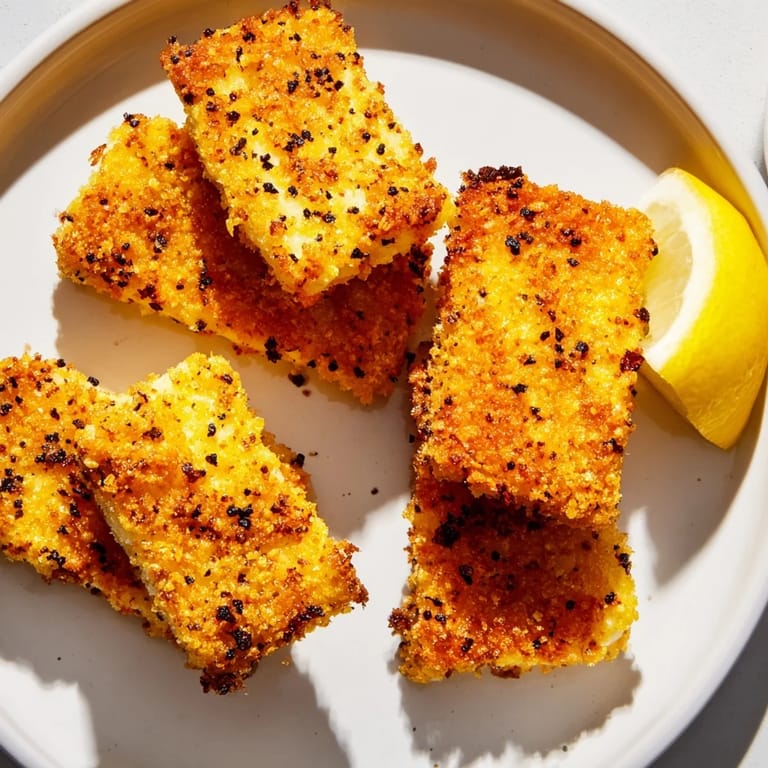
- A slotted spoon lifts them out gently, and paper towels wick away the oil. Serve while they're still hot and the outside is still crunchy.
 Save
Save There was an afternoon when my niece, who doesn't eat much, asked for thirds of these. Her mother looked shocked, and I felt that quiet glow that comes from feeding someone something they actually want. That's the real magic of this dish—it somehow bridges picky eaters and adventurous ones.
Flavor Tricks
If you want to elevate these without adding steps, mix dried oregano or chili flakes directly into the panko before coating. A small pinch transforms them from casual snack to something with character. You can also experiment with smoked paprika in the flour instead of the panko if you prefer the warmth without the risk of burning. One night I added a whisper of garlic powder and suddenly everyone was asking what the secret ingredient was.
Dips and Sides
The obvious move is hot sauce straight from the bottle, but sometimes I make a quick yogurt dip by mixing plain yogurt with lemon juice, garlic, and a pinch of salt. It cools your palate between bites and feels more substantial. A garlic aioli is divine too, though that requires a food processor and actual effort, which defeats the purpose of a 15-minute recipe. Fresh lemon wedges are non-negotiable—squeeze one over each piece right before eating.
Serving and Storing
These are best eaten immediately, straight from the pan while the exterior is still crackling. If you need to make them ahead, you can coat them and refrigerate for a few hours, then fry when people arrive. Leftovers can technically be reheated in a 180°C oven for five minutes, but they won't be as crispy, so plan for eating them fresh.
- Never refrigerate uncooked halloumi in the freezer unless you want a texture like rubber.
- If oil splatters during frying, lower your heat slightly—it means the oil is too hot and the cheese is releasing moisture too fast.
- Have a plate with paper towels ready before you start frying, not after, so draining happens immediately.
 Save
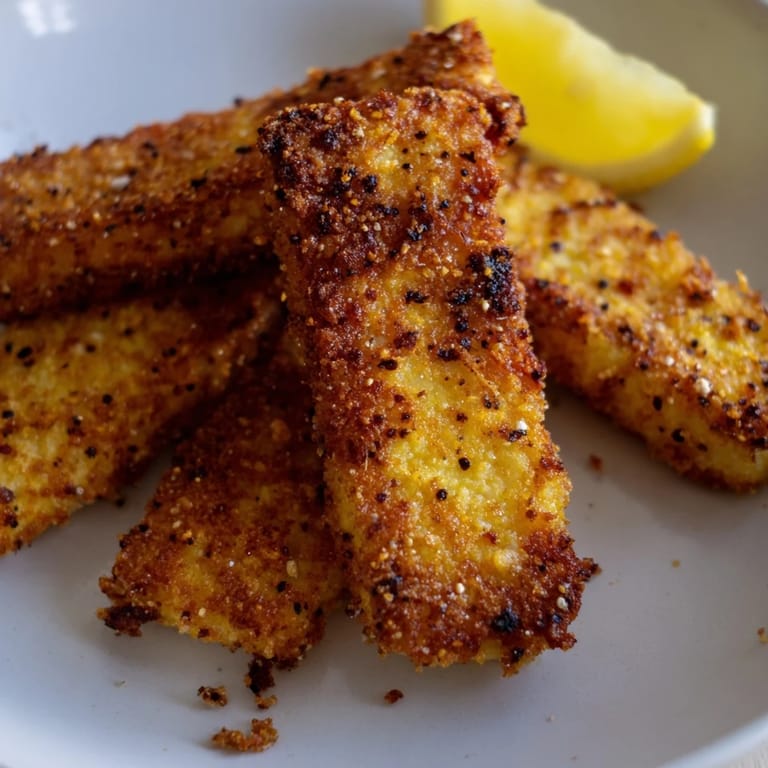
Save Halloumi has this wonderful way of being both comforting and impressive, a cheese that defies expectations the way the best foods do. Once you've made it, you'll find yourself reaching for it again and again.