 Save
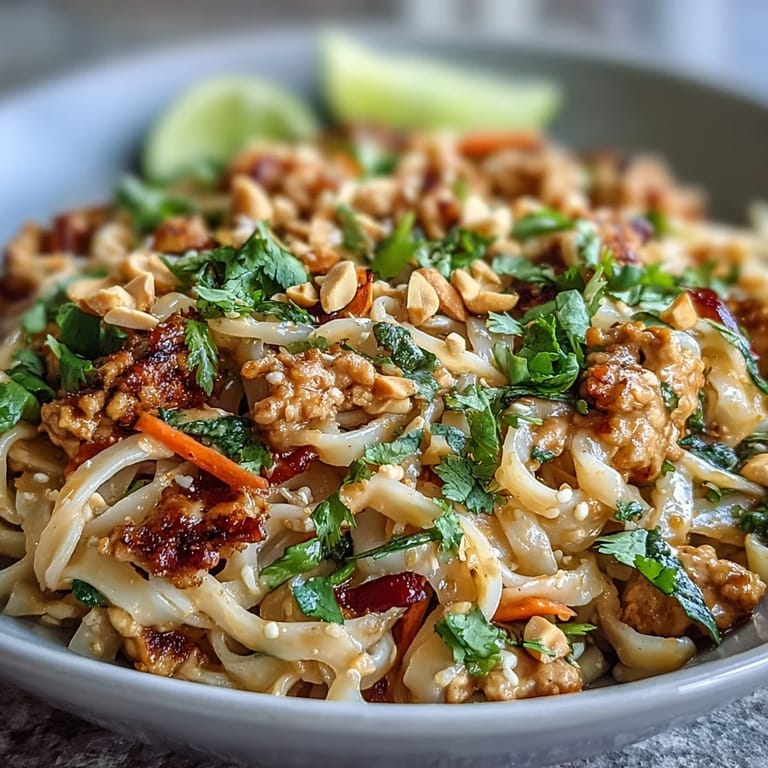
Save My friend texted me a photo of her wok covered in golden, crispy noodles and said simply: "Found the secret." Turns out she'd stolen a technique from potsticker dumpling cooking and applied it to noodles, and the result was this impossibly satisfying bowl that tastes restaurant-quality but comes together in barely 40 minutes. The creamy peanut sauce coats every strand, the chicken stays tender, and those crispy-edged noodles at the bottom? That's where the magic happens.
I made this for my roommate on a gray Tuesday when she came home exhausted, and watching her taste the sauce, her whole face changed. She asked for seconds before finishing her first bowl, and we sat there eating in comfortable silence while rain hit the windows. That's when I realized this wasn't just dinner, it was the kind of meal that quietly does something to a person's mood.
Ingredients
- Ground chicken (1 lb): The protein foundation that stays incredibly moist when you don't overcook it, which is why watching it carefully for those first 5-6 minutes matters.
- Wide rice noodles or lo mein (8 oz): Choose based on what your market has, but rice noodles give a slightly lighter feel while lo mein is more traditional if you prefer chewier texture.
- Red bell pepper (1, thinly sliced): The sweetness balances the spice and heat, plus the color makes the final bowl look alive.
- Shredded carrots (1 cup): They soften slightly but keep a little snap, which is exactly the texture you want in this application.
- Snap peas (1 cup, halved): These are non-negotiable for the bright green pop and the way they crunch if you don't overcook them.
- Green onions (4, sliced): Reserve half for garnish because the fresh bite at the end elevates everything.
- Creamy peanut butter (1/3 cup): The soul of this sauce, and using quality peanut butter actually makes a noticeable difference in flavor.
- Soy sauce (3 tbsp): Use tamari if you need gluten-free, and don't skip the quality here either because it adds depth.
- Rice vinegar (1 tbsp): This cuts through the richness and keeps the sauce from feeling too heavy.
- Honey or maple syrup (1 tbsp): A touch of sweetness that rounds out the flavors without making it dessert-like.
- Toasted sesame oil (1 tbsp): A little goes a long way, and this is where the nutty, toasty notes come from.
- Sriracha or chili garlic sauce (1 tbsp): Adjust this to your comfort level, knowing you can always add more but can't take it back.
- Water (1/2 cup plus more): The vehicle that brings the sauce together and lets you adjust thickness to your preference.
- Roasted peanuts for garnish (1/4 cup, chopped): The final crunch that makes people pay attention to what they're eating.
- Fresh cilantro and lime wedges: These finish the bowl with brightness and a little acid that wakes up your palate.
Tired of Takeout? 🥡
Get 10 meals you can make faster than delivery arrives. Seriously.
One email. No spam. Unsubscribe anytime.
Instructions
- Mix your sauce first:
- Whisk the peanut butter, soy sauce, rice vinegar, honey, sesame oil, and sriracha together in a bowl, then slowly add the water while stirring until everything flows like actual sauce. Taste it now, because this is your moment to adjust the heat or sweetness before it hits the pan.
- Get the noodles ready:
- Boil salted water, cook your noodles to just al dente (they should still have a tiny bit of resistance when you bite), then drain and toss with a light coating of oil so they don't cement themselves together. Set them aside.
- Brown your chicken:
- Heat oil in your skillet or wok over medium-high heat until it shimmers, then add the chicken and use a spoon to break it into small pieces as it cooks. You're looking for no pink remaining, which should take about 5-6 minutes, and then move it to a plate.
- Quick-cook the vegetables:
- In the same pan, add your bell pepper, carrots, snap peas, and half the green onions, stirring constantly for just 2-3 minutes so they stay bright and retain some snap. They should smell incredible at this point.
- Create the crispy edges:
- Add your drained noodles to the pan and press them gently into an even layer across the bottom, then leave them completely undisturbed for 2-3 minutes. Resist the urge to stir, because those golden, crispy edges forming on the bottom are doing exactly what you want.
- Bring it all together:
- Return the chicken to the pan, pour in your peanut sauce, and toss everything together until it's coated and hot. If it feels too thick, splash in a bit more water until you reach that perfect saucy consistency.
- Serve with ceremony:
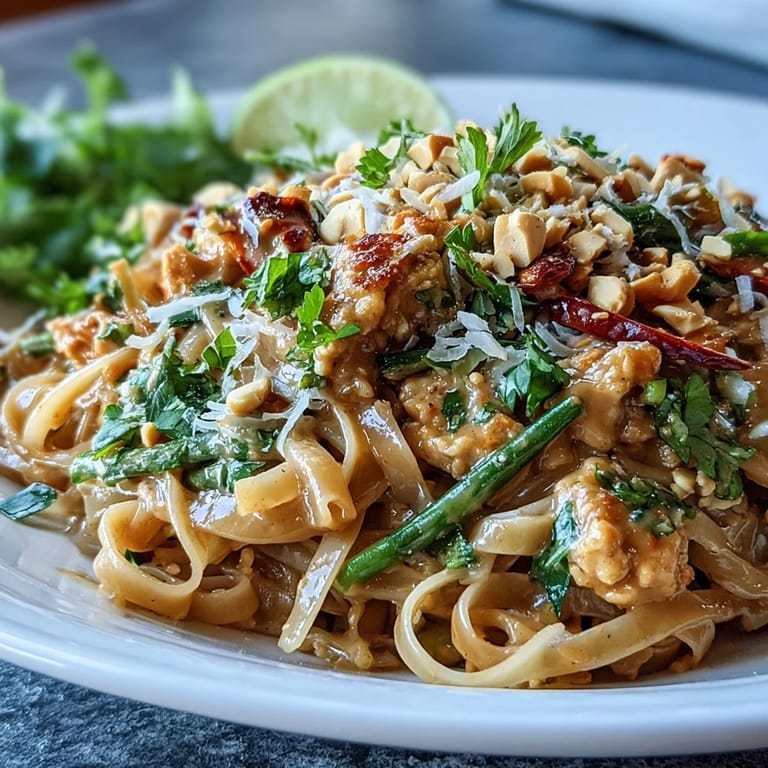
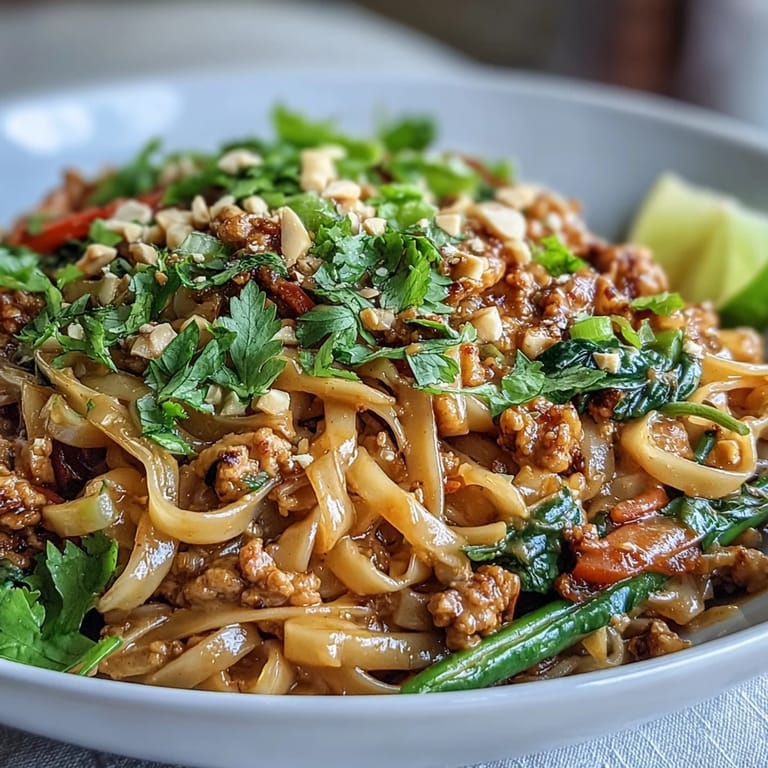
- Divide into bowls and finish with the chopped peanuts, remaining green onions, cilantro, and a lime wedge for squeezing. This is the moment where you step back and feel genuinely proud of what just happened in your kitchen.
 Save
Save 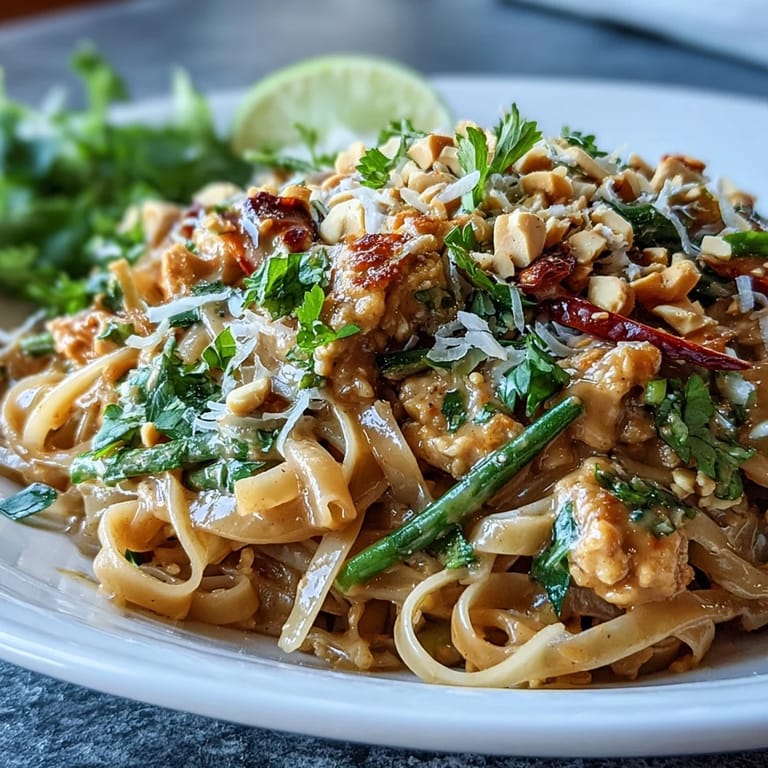 Save
Save The first time I nailed the crispy noodle edges, I actually heard my own gasp when I tilted the pan and saw them golden and curled. It's a small technical moment that transformed how I think about texture in noodle bowls, and now I hunt for that crisp every time I cook them.
Variations That Actually Work
Vegetarians swap the chicken for firm tofu pressed and crumbled, or use a plant-based ground meat that holds its texture. I've also made this with shrimp when I was feeling fancy, cooking them separately just until they pink up, and the sauce carries them beautifully. The vegetables are honestly negotiable too, so lean on what's in your produce drawer, though I'd never skip the snap peas for their color and crunch.
The Sauce Philosophy
This sauce is a study in balance, and once you understand that, you'll make it forever. The peanut butter is richness, the soy sauce is salt and depth, the vinegar is brightness, the honey is smoothness, and the sesame oil is that nutty undertone that makes people wonder what's different about your version. The sriracha is adjustable based on your mood, and honestly, that's the point.
Why This Bowl Became a Weeknight Favorite
It hits every requirement for an easy weeknight meal: it comes together in 40 minutes, uses ingredients you can find at any grocery store, works for dietary restrictions, and tastes like you spent way more effort than you actually did. The potsticker noodle trick feels like a secret you're sharing with whoever's eating it, and that's the kind of small kitchen win that keeps you cooking.
- Make the sauce while your water boils to cut down on active cooking time.
- Prep all your vegetables before you start cooking because the actual cooking moves fast.
- Save noodle cooking water to thin the sauce if needed instead of always reaching for fresh water.
 Save
Save  Save
Save This is the meal you make when you want to feel like you have your life together, and honestly, after one bowl, you might actually believe it. There's real comfort in something this good that doesn't demand hours of your evening.
Recipe FAQ Section
- → What is the potsticker noodle technique?
After draining the noodles, press them into an even layer in the hot pan and let cook undisturbed for 2-3 minutes. This creates crispy, golden edges similar to potstickers, adding satisfying texture contrast to the soft noodles.
- → Can I make this dish vegetarian?
Yes, substitute ground chicken with firm tofu crumbles or plant-based ground meat alternative. The peanut sauce and vegetables provide plenty of flavor, making this easily adaptable for vegetarian diets.
- → How spicy is this dish?
The heat level is easily adjustable. Start with 1 tablespoon sriracha for moderate spice, or reduce to 1 teaspoon for milder flavor. You can always add more chili sauce when serving for those who prefer extra heat.
- → Can I prepare the peanut sauce in advance?
Absolutely. The sauce can be made up to 5 days ahead and stored in an airtight container in the refrigerator. You may need to thin it with additional water when reheating, as it thickens when chilled.
- → What other proteins work well in this dish?
Sliced chicken breast, shrimp, or beef strips work beautifully. For a vegetarian option, try edamame, crispy fried tofu, or simply load up on extra vegetables. The creamy peanut sauce complements most proteins wonderfully.
- → Can I use different noodles?
Wide rice noodles, lo mein, udon, or even spaghetti work well. Rice noodles keep this gluten-free (check labels), while wheat noodles provide a nice chew that holds up to the crispy pan technique.