 Save
Save Last summer, I stood in my kitchen on the hottest day of the year, sweat dripping down my forehead, absolutely refusing to turn on the oven. A friend had just dropped off a bundle of fresh cilantro and ginger from their garden, and somehow that sparked the memory of cold sesame noodles I'd eaten years ago at a tiny restaurant tucked between two office buildings. The dish was so simple, so effortlessly cool, that I decided right then to teach myself how to make it. That first attempt, made more out of desperation than confidence, became the meal I returned to whenever the heat felt unbearable.
I made this for a potluck on a sticky afternoon, bringing it in a glass container with a tight lid. When I opened it to serve, the aroma of toasted sesame and ginger hit everyone at once, and suddenly it was the first dish people reached for, even though the table was covered with hot casseroles and warm breads. Someone asked for the recipe before they'd even finished their first bowl, and I realized this wasn't just my summer solution anymore—it was something worth sharing.
Ingredients
- Wheat noodles or spaghetti (350 g / 12 oz): Any sturdy noodle works here, but wheat or egg noodles hold the sauce better than delicate rice noodles.
- Sesame oil for tossing (1 tbsp): This prevents the cooked noodles from clumping while they cool—a small step that makes a real difference in texture.
- Tahini or Chinese sesame paste (4 tbsp): This is the soul of the sauce; if you can find real sesame paste from an Asian market, it's noticeably richer than tahini.
- Smooth peanut butter (2 tbsp): This adds body and a subtle richness that balances the sesame's earthiness.
- Low-sodium soy sauce (3 tbsp): Low-sodium lets you taste everything else in the sauce instead of just salt.
- Rice vinegar (2 tbsp): The acidity brightens the whole dish; regular vinegar works but tastes harsher.
- Honey or maple syrup (1 tbsp): Just enough sweetness to round out the savory and spicy notes.
- Toasted sesame oil (1 tbsp): Never cook with this—add it to the sauce after it's cooled, so the fragrant sesame flavor stays intact.
- Garlic and ginger (2 cloves and 1 tbsp, finely grated): Grating releases their oils better than mincing, making them perfume the entire dish.
- Chili oil (1–2 tsp, optional): This is where you control the heat; start small and taste as you go.
- Cold water (3–5 tbsp): Add gradually so the sauce goes from paste to pourable without becoming thin.
- Cucumber, carrots, spring onions (julienned and sliced): The crunch is essential; these vegetables wake up your palate between bites of silky noodles.
- Toasted sesame seeds, cilantro, peanuts, lime (2 tbsp plus fresh herbs and optional toppings): Toppings are where you add personality—use what you have, taste as you layer.
Tired of Takeout? 🥡
Get 10 meals you can make faster than delivery arrives. Seriously.
One email. No spam. Unsubscribe anytime.
Instructions
- Boil the noodles and cool them down:
- Bring a large pot of salted water to a rolling boil and cook the noodles exactly according to the package timing—overcooked noodles turn mushy when dressed with sauce. Drain them in a colander, then rinse under cold running water, stirring gently with your fingers until they're completely cool and no longer clumped together. Toss them with sesame oil while they're still slightly damp so every strand gets coated.
- Build the sauce from the bottom up:
- Start with the tahini and peanut butter in a large bowl, whisking them together until they're smooth and glossy. Add the soy sauce, rice vinegar, honey, and grated garlic and ginger one at a time, whisking after each addition so everything emulsifies together instead of separating. Pour in the toasted sesame oil last, then taste and add chili oil if you want heat.
- Adjust the consistency with cold water:
- This is the moment that separates thick, clumpy sauce from silky perfection—add cold water a tablespoon at a time, whisking between additions until the sauce coats the back of a spoon but still flows easily. It should feel creamy and luxurious, not thick like peanut butter.
- Combine noodles and sauce:
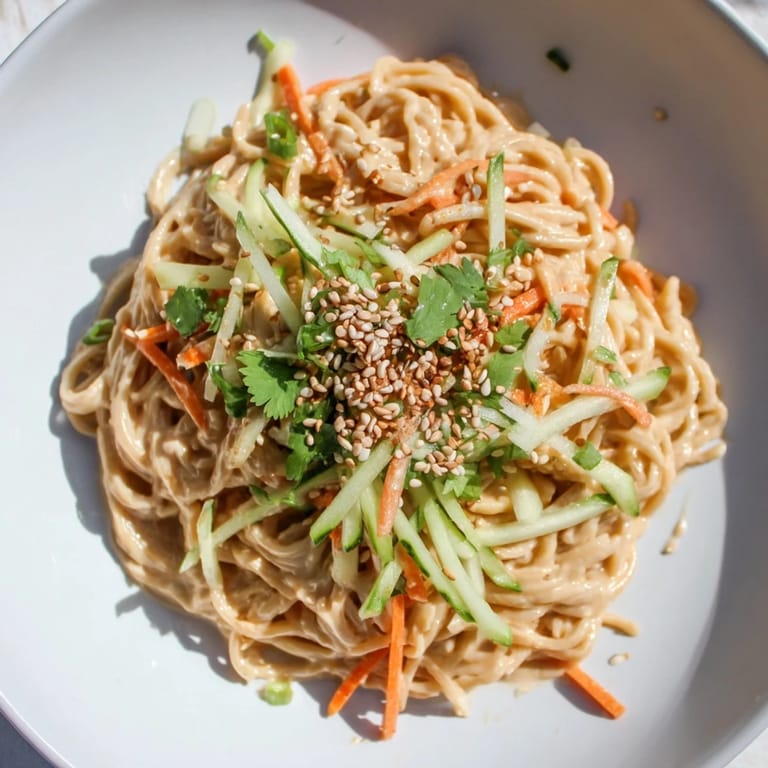
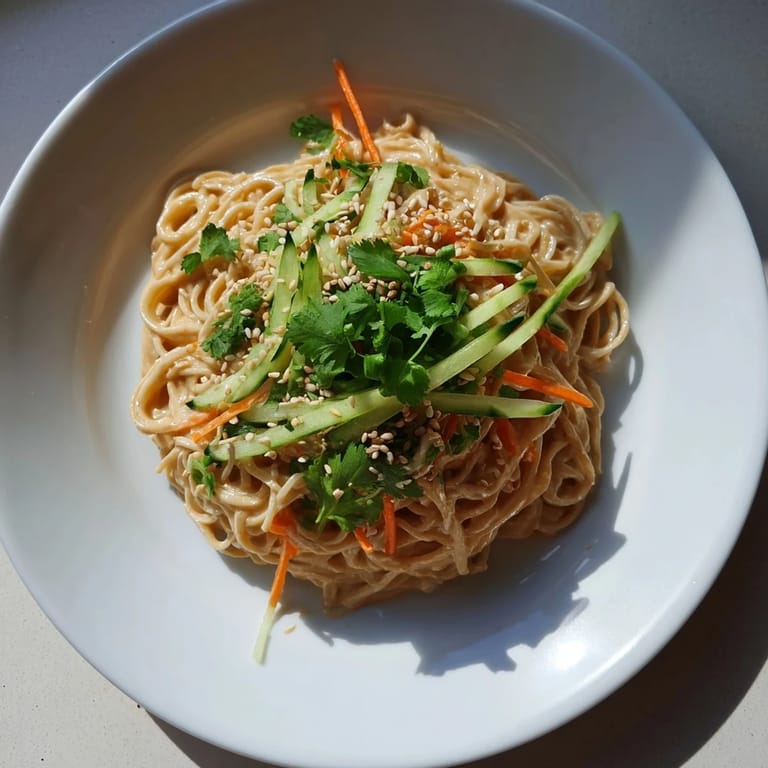
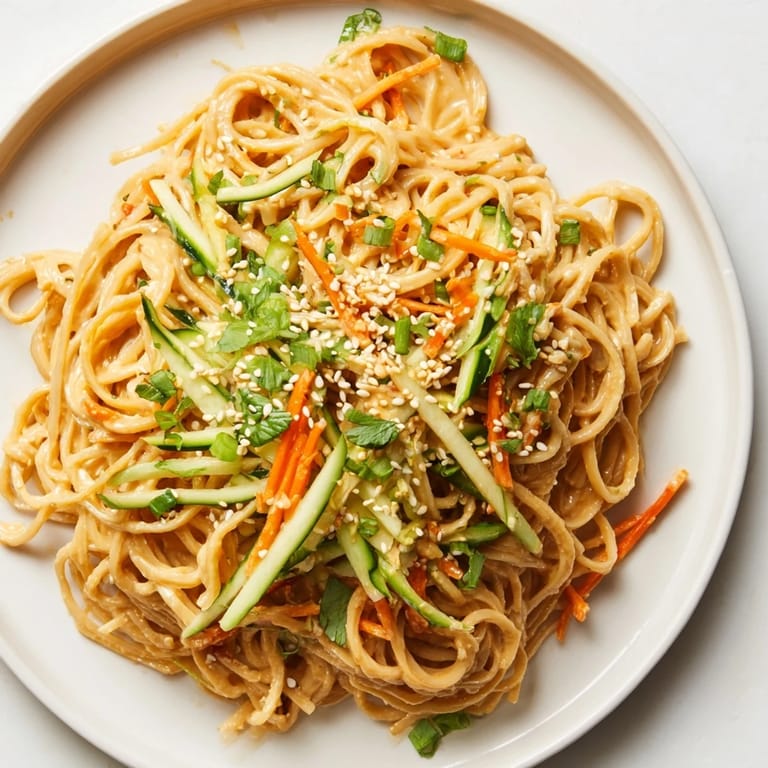
- Place the cooled noodles in a large bowl and pour the sauce over them, then toss gently but thoroughly, making sure every strand gets coated. The color will shift from pale yellow to deep bronze as the sauce fully coats the noodles.
- Assemble and serve:
- Divide the noodles among four bowls or plates, then arrange your vegetables on top in neat piles—the visual contrast matters as much as the flavors do. Scatter sesame seeds and cilantro over everything, add a handful of crushed peanuts if you're using them, and set a lime wedge on the side so people can squeeze it over just before eating.
 Save
Save I learned to make this dish for a friend who'd just moved into a new apartment with no air conditioning. We sat on her kitchen floor in the dark, eating straight from the bowl, barely talking, just letting the cool noodles and the pop of cilantro say everything. It became the dish I made whenever someone needed comfort that didn't involve heat or effort.
The Magic of Sesame
Sesame appears twice in this recipe for a reason. The regular sesame oil gets tossed with the noodles while they're still warm, creating a subtle base note that keeps them from sticking. The toasted sesame oil goes into the sauce after everything else, so its deep, nutty aroma doesn't get cooked away. Together, they create a flavor that's bigger than either one alone—something almost umami-like that makes people taste the dish and ask if you added something they can't quite name. That's the sesame doing its quiet work.
Make-Ahead and Storage
This dish actually improves after a few hours in the refrigerator, as if the sauce is getting to know the noodles better. You can make the whole thing up to three days ahead, keeping it covered in a container, and it tastes better each time you remember it's waiting for you. The vegetables soften slightly, but their crunch comes back as soon as you bite into them. If the noodles seem dry when you're ready to eat, toss them with a teaspoon of sesame oil and they'll feel silky again.
Variations and Additions
Cold sesame noodles are a starting point, not a destination. The base sauce is flexible enough that you can take it in different directions depending on what's in your kitchen or what flavor you're chasing. I've made it spicier with an extra drizzle of chili oil, creamier with a splash of coconut milk, tangier with fresh lime juice instead of some of the rice vinegar. The vegetables change with the season—in spring I use fresh peas and radishes, in late summer I add corn and tomatoes, in fall I sneak in thinly sliced bell peppers. If you want protein, shredded cooked chicken, crumbled tofu, or even cold shrimp work beautifully without changing anything else about the dish.
- For a vegan version, swap honey for maple syrup and use tamari instead of soy sauce if needed.
- If you love spice, add an extra teaspoon of chili oil and a pinch of white pepper to the sauce.
- Leftover sauce keeps for a week and works on salads, roasted vegetables, or scrambled eggs.
 Save
Save Cold sesame noodles taught me that sometimes the best recipes are the ones born from not wanting to cook at all. There's something honest about a dish that refuses heat and asks you to slow down instead, to taste things clearly, to notice the exact moment when cilantro and sesame say hello on your tongue.
Recipe FAQ Section
- → What type of noodles work best?
Wheat noodles or spaghetti are preferred for their texture and ability to hold the sesame sauce well. Gluten-free alternatives can be used.
- → Can I make the sauce ahead of time?
Yes, the sesame-based sauce can be prepared in advance and stored in the refrigerator to deepen flavors before mixing with noodles.
- → How can I adjust the sauce consistency?
Gradually adding cold water lets you achieve a smooth, pourable texture that evenly coats the noodles without clumping.
- → Are there vegan options for the sweetener?
Maple syrup can be substituted for honey to maintain a plant-based profile while keeping the sweetness balanced.
- → What garnishes enhance the dish?
Toasted sesame seeds, fresh cilantro, crushed roasted peanuts, and lime wedges add layers of crunch, freshness, and acidity.
- → Can protein be added?
Yes, toppings like shredded tofu, cooked chicken, or shrimp can be added to boost protein and complement the flavors.