 Save
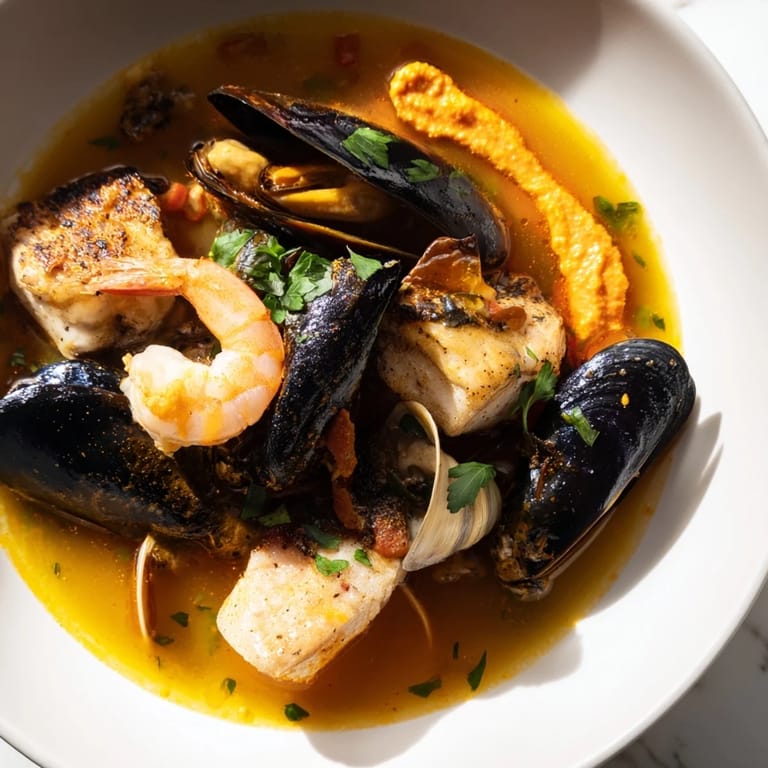
Save The first time I truly understood bouillabaisse was standing in a Marseille fish market at dawn, watching vendors arrange their catch on ice like precious jewels. A weathered fishmonger asked what I was making, and when I said bouillabaisse, he nodded knowingly and started pointing—this mullet, that monkfish, these mussels. He explained that the stew wasn't about following a recipe but about respecting what the sea had offered that morning. That lesson stayed with me, and now whenever I make it, I'm transported back to that salty, bustling market and the generosity of someone who understood that great food starts with great ingredients.
I remember making this for my partner on a rainy Sunday after we'd splurged on a beautiful whole sea bass and a pile of mussels from the market. The kitchen filled with steam, the broth deepened to amber, and by the time we sat down with warm bowls and crusty bread slathered in rouille, the whole mood of the day had shifted. It became less about cooking and more about two people taking time to sit with something that tasted like the Mediterranean, even though it was gray and cold outside.
Ingredients
- Firm white fish fillets (monkfish or sea bass): These hold their shape beautifully during cooking and provide a delicate, clean flavor that anchors the stew without overpowering it.
- Oily fish fillets (red mullet): The richness here is essential—it creates body in the broth and adds depth that a white fish alone cannot deliver.
- Mussels: Buy them the same day you cook, store them on ice, and listen for that satisfying pop when they open—it's your signal they're perfectly cooked.
- Shrimp and scallops: These cook quickly, so they go in last to prevent turning rubbery; scallops are optional but add sweetness if your budget allows.
- Olive oil: Use a good one you actually enjoy tasting; it's not just cooking medium here, it's a flavor cornerstone.
- Onion, leek, and fennel: This trio creates an aromatic base that's almost perfumed; don't skip the fennel bulb, as it's what gives bouillabaisse its signature character.
- Orange zest: This small addition brightens everything and prevents the stew from feeling heavy or one-dimensional.
- Saffron threads: A pinch transforms the broth into liquid gold, and the flavor is unmistakable—never use powder, and always buy from a reputable source.
- Fennel seeds, bay leaf, and thyme: These are the quiet herbalists, working together to build a flavor profile that feels both sophisticated and comforting.
- Tomatoes: Ripe, in-season tomatoes are ideal, but canned whole tomatoes work beautifully in winter—just peel and seed them as you would fresh.
Tired of Takeout? 🥡
Get 10 meals you can make faster than delivery arrives. Seriously.
One email. No spam. Unsubscribe anytime.
Instructions
- Build your aromatic base:
- Heat olive oil over medium heat and add your sliced vegetables—onion, leek, fennel, carrot, and garlic. This should take 8–10 minutes and smell incredible; you're not looking for browning, just soft and fragrant vegetables that will melt into the broth later.
- Wake up the spices:
- Stir in tomatoes, orange zest, bay leaf, thyme, saffron, fennel seeds, and peppercorns. Cook for 5 minutes so the saffron releases its color and warmth, and the dried herbs begin to perfume the oil.
- Deglaze and simmer:
- Pour in white wine, let it bubble for 2 minutes, then add your fish stock. Bring to a gentle boil, then lower the heat and let it simmer uncovered for 25 minutes—this is when the magic happens, flavors melding into something greater than their parts.
- Strain for clarity:
- Push everything through a fine sieve, pressing gently on the solids to extract every last bit of flavor. Return the strained broth to a clean pot; this step removes texture and gives you a silky, refined liquid.
- Cook the seafood mindfully:
- Bring the broth back to a gentle simmer and add your firm fish first, cooking for 5 minutes. Then add everything else—oily fish, mussels, shrimp, scallops—and cook for 5–6 minutes more until the mussels pop open and the seafood is just cooked through. Discard any mussels that stubbornly refuse to open.
- Make the rouille:
- In a bowl, whisk together egg yolk, minced garlic, chopped chili, and saffron soaked in warm water with mustard until smooth. Drizzle in olive oil as if making mayonnaise, whisking constantly until it turns thick, creamy, and a gorgeous golden color.
- Serve with intention:
- Ladle the bouillabaisse into warm bowls, finish with fresh parsley, and serve alongside toasted baguette brushed with olive oil and a generous spoonful of rouille on the side for each person to swirl in as they please.
 Save
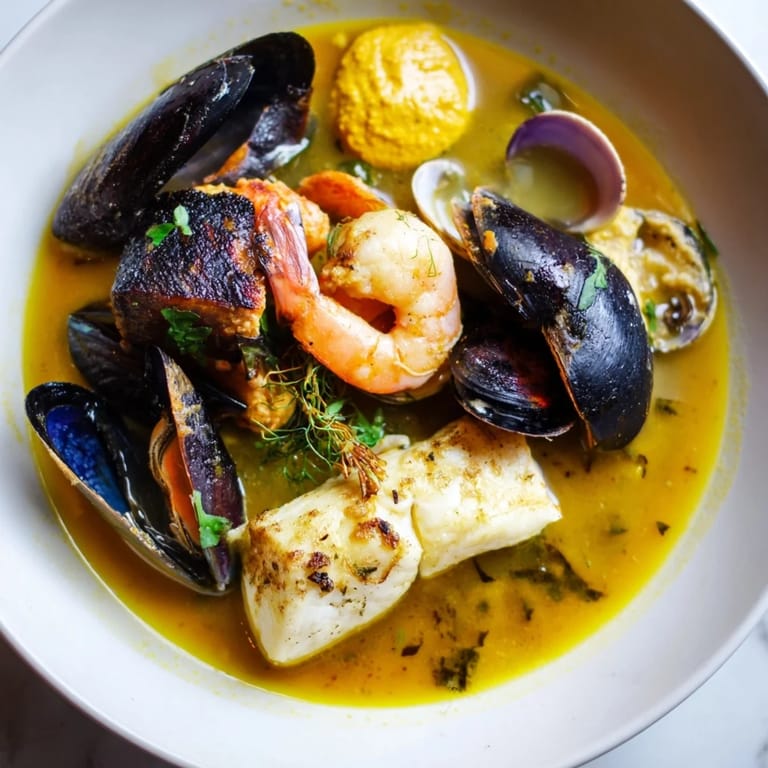
Save There's a moment near the end of making bouillabaisse when you taste the broth before adding the seafood—it's so good you wonder if you should just drink it as-is. But then the mussels open, their brine mingles with the saffron, and you realize this was always meant to be more than a soup. It becomes something you want to linger over, something that calls for wine and conversation and maybe even a second bowl.
The Heart of Provençal Cooking
Bouillabaisse represents everything I love about Provençal cooking—it respects ingredients without fussing over them, builds flavor through patience rather than complexity, and tastes both humble and luxurious at once. The technique isn't secret; what matters is starting with the best seafood your market has to offer and letting time and gentle heat do the work. This is peasant food elevated, and that's exactly what makes it worth making.
Timing and Temperature Matter
The gentle simmer is your best friend here—a rolling boil will toughen the seafood and turn the broth cloudy. Medium-low heat means the broth barely moves, just tiny bubbles at the edges, and the seafood cooks through perfectly in the time given. Watch the mussels; the moment they open, they're done, and a few more minutes in the pot will make them tough and rubbery.
Why Fresh Matters and What to Do if It Doesn't
Ideally, bouillabaisse should showcase the day's catch—in Marseille, that might mean four or five different local fish. In reality, you work with what's available and beautiful at your market, and that's completely legitimate. The important part is diversity of flavor and texture; if you can't find red mullet, use mackerel or sardines; if monkfish isn't available, sea bass or halibut works beautifully. The stew will still taste spectacular because the broth is built to shine with any quality seafood.
- Call your fishmonger ahead and ask what's best that day—they'll often set aside the most beautiful pieces for customers who plan ahead.
- Frozen seafood is acceptable if it's thawed properly; defrost overnight in the refrigerator, never at room temperature, to preserve texture.
- If you have access to a fish stock made from bones and heads, use it instead of water—the difference is noticeable and worth the splurge.
 Save
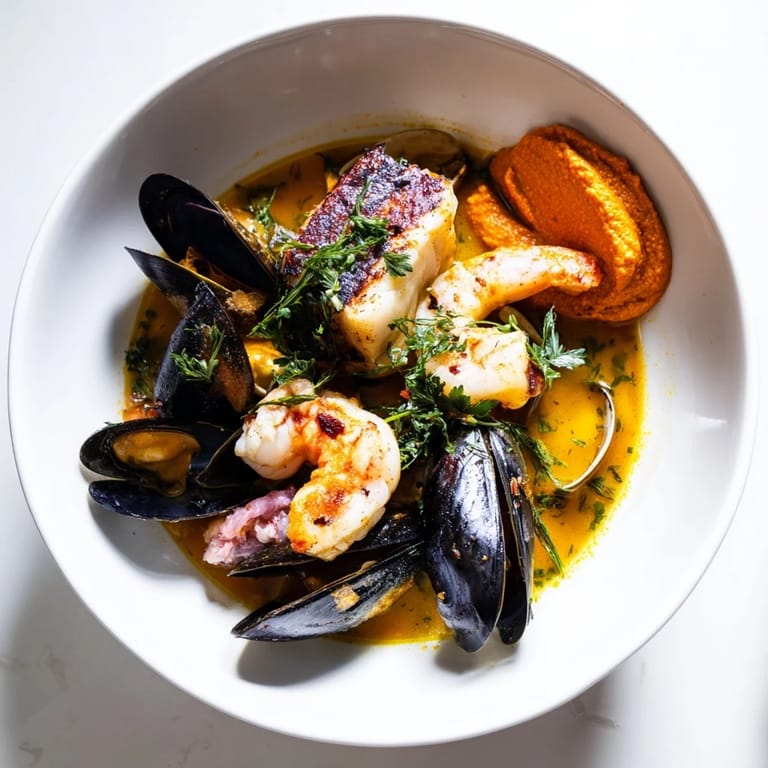
Save Bouillabaisse is about more than a recipe—it's an invitation to slow down and taste the sea in a bowl. Make it for people you want to linger with.
Recipe FAQ Section
- → What types of fish are best for bouillabaisse?
Firm white fish like monkfish or sea bass and oily fish such as red mullet provide a balance of textures and flavors.
- → How is the rouille sauce made?
Rouille is an emulsion of egg yolk, garlic, chili, saffron, mustard, and olive oil, whisked into a creamy, spicy sauce perfect for dipping.
- → Can I prepare the broth ahead of time?
Yes, the broth can be prepared in advance and refrigerated to deepen the flavors before adding seafood.
- → How do I know when the shellfish is cooked?
Mussels and scallops are done when the shells open; discard any unopened shellfish for safety.
- → What wine pairs well with this dish?
A chilled Provençal rosé or crisp dry white wine complements the saffron and seafood beautifully.